
Beautiful Plants For Your Interior
Beautiful Plants For Your Interior
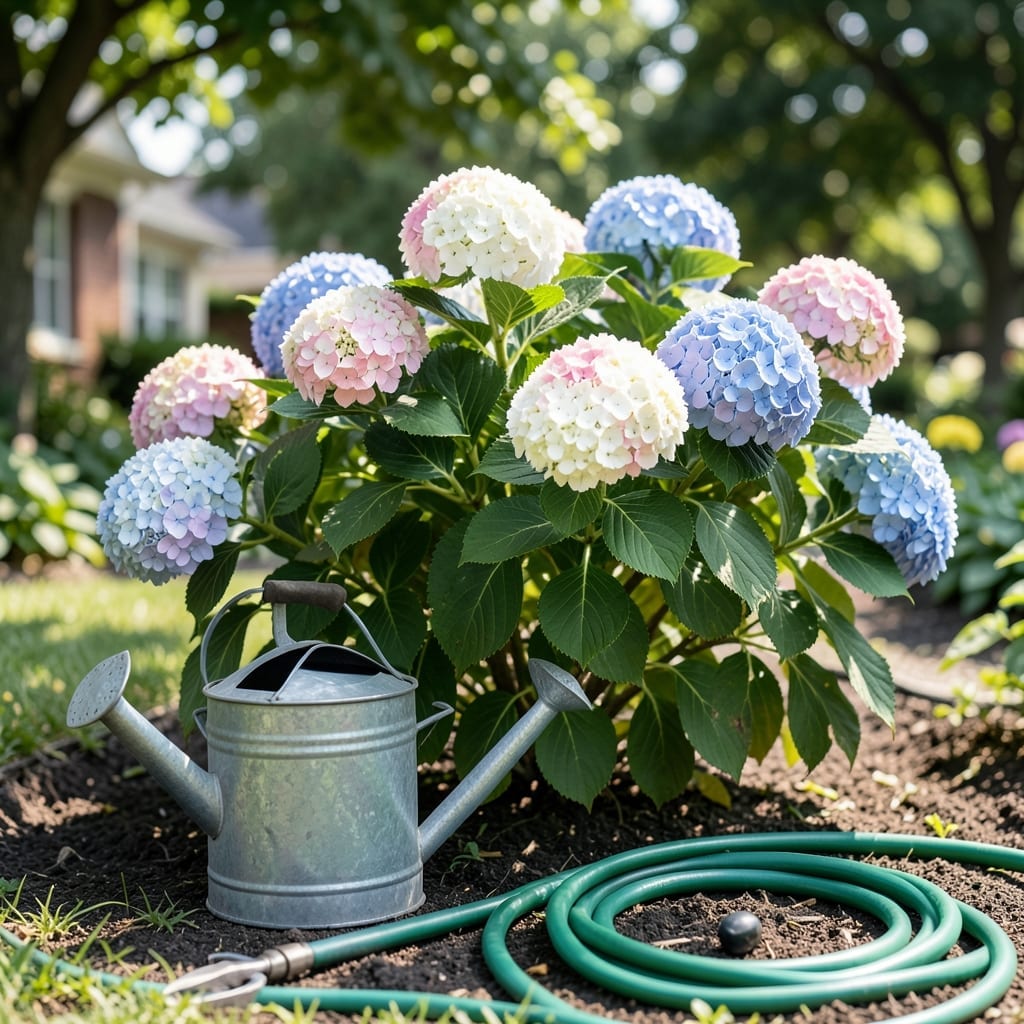
Hydrangeas are beloved for their vibrant, voluminous blooms—but without proper watering, those stunning 🌸 flowers can quickly wilt.
Understanding your hydrangea’s moisture requirements is the key to maintaining lush, healthy plants all season long.
I’ve seen too many gardeners struggle with drooping leaves or lackluster blooms simply because they didn’t know how much or how often to water.
Let me walk you through everything you need to know to keep your Hydrangea thriving with just the right amount of hydration.
I’ve found that hydrangeas thrive with consistent moisture, but the exact amount depends on the variety and season. Bigleaf hydrangeas, for example, need more frequent watering than panicle types.
Weekly deep soaks are ideal for most hydrangeas, especially during growing season. Aim for about 1-2 inches of water per week, including rainfall, to keep the soil evenly moist.
| Variety | Weekly Water Needs | Soil Moisture Tip |
|---|---|---|
| Bigleaf | 1-2 inches | Keep soil consistently moist |
| Panicle | 1 inch | Tolerates slight dryness |
| Oakleaf | 1 inch | Drought-tolerant once established |
In summer heat, I water my hydrangeas 2-3 times weekly. The key is to water deeply so the roots grow strong and deep, not just the surface.
For potted hydrangeas, check soil daily in hot weather. They dry out faster than in-ground plants and often need daily watering in peak summer.
Morning watering is best to reduce evaporation and prevent fungal diseases. I avoid watering in the evening for this reason.
If your hydrangea’s leaves droop or turn brown, it’s likely thirsty. But be careful—overwatering can cause yellow leaves and root rot.
I always check the soil moisture by sticking my finger 2 inches deep. If it’s dry, it’s time to water. Mulching helps retain moisture and keeps roots cool.
Different soil types affect watering too. Sandy soil drains fast and may need more frequent watering, while clay soil holds moisture longer.
In spring and fall, I scale back to weekly watering. Winter dormancy means hydrangeas need very little water, just enough to prevent root desiccation.
Remember, consistency is key. Hydrangeas don’t like soil that swings from soggy to bone dry. Keep it evenly moist for the best blooms 🌸
I’ve found that hydrangeas thrive with consistent, thoughtful watering. The key is deep soaking rather than frequent shallow sprinkles, which encourages strong root growth and vibrant blooms.
To prevent fungal diseases, I always water at the base of the plant early in the morning. This gives foliage time to dry before evening, reducing moisture-related issues.
I prefer using a soaker hose for my hydrangeas because it delivers water directly to the roots. This method is more efficient than sprinklers and reduces water waste significantly.
Mulching is another game-changer. I apply a layer of organic mulch, like pine bark or shredded leaves, around the base of my plants. This helps retain moisture and suppresses weeds.
In hotter climates, I adjust my watering to every 2-3 days during peak summer. However, I always check the soil first—if the top inch is dry, it’s time to water.
Finally, remember that newly planted hydrangeas need extra attention. I water them daily for the first week, then gradually reduce the frequency as they establish.
🌸