
Beautiful Plants For Your Interior
Beautiful Plants For Your Interior
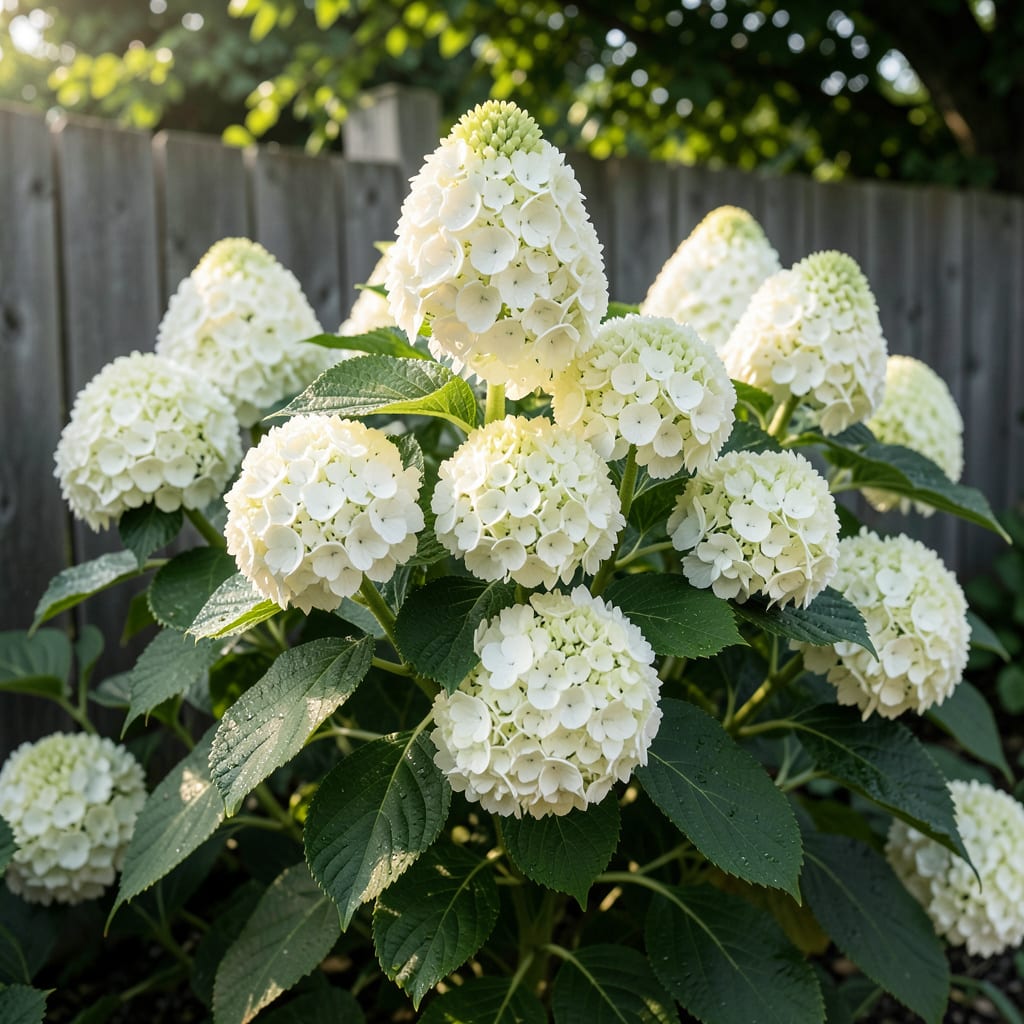
White Wedding hydrangeas stopped me in my tracks at a local garden last July. The cascading blooms, each starting green then turning pure white, created a waterfall effect I couldn’t forget.
This variety thrives in full sun to partial shade with consistent moisture. The panicle flowers appear in midsummer and keep changing as they mature, giving you months of visual interest with minimal effort.
📚 In This Guide
This method ensures vibrant, cascading blooms that transform your garden into a summer spectacle.
Choose a site with full sun to partial shade, as this cultivar thrives with 4-6 hours of morning sunlight and afternoon protection. The soil must be well-draining yet rich in organic matter—avoid heavy clay or sandy patches that retain too much or too little moisture.
Test drainage by digging a 12-inch hole, filling it with water, and checking if it drains within 1-2 hours. If water stands, amend the area with compost or pine bark fines to improve structure. This prevents root rot, which White Wedding is particularly susceptible to in poorly drained conditions.
Dig a hole twice as wide and just as deep as the root ball. Loosen the soil at the sides to encourage outward root growth. Mix the excavated soil with 50% compost or well-rotted manure to boost fertility and moisture retention.
Remove the plant from its container and gently tease apart any circling roots. Position it in the hole so the top of the root ball sits 1-2 inches above the surrounding soil—this accounts for settling. Backfill with the amended soil, pressing lightly to eliminate air pockets.
Water deeply immediately after planting, ensuring the soil is moist to a depth of 6-8 inches. Use a slow trickle from a hose to avoid eroding the soil around the base. For the first 2-3 weeks, water every 2-3 days, adjusting for rainfall.
Apply a 2-3 inch layer of organic mulch (shredded bark or pine straw) around the base, keeping it 3 inches away from the stems to prevent rot. Mulch conserves moisture, suppresses weeds, and regulates soil temperature, which is critical for this hydrangea’s shallow root system.
Prune in late winter or early spring before new growth emerges. Remove dead or crossing branches, and cut back one-third of the oldest stems to the ground to encourage vigorous new growth. White Wedding blooms on new wood, so aggressive pruning won’t sacrifice flowers.
Fertilize in early spring with a balanced, slow-release fertilizer (10-10-10 or 12-4-8) and again in early summer. Avoid high-nitrogen formulas, which promote leafy growth at the expense of blooms. Scratch the fertilizer into the soil surface and water thoroughly to activate it.
During the growing season, check soil moisture weekly by inserting your finger 2 inches into the soil. If it feels dry, water deeply. In extreme heat, provide afternoon shade or use a soaker hose to maintain consistent moisture.
Watch for wilting or yellowing leaves, which often signal under- or overwatering. Adjust your care routine accordingly—this cultivar is forgiving but responds best to steady conditions. By mid-summer, you’ll be rewarded with abundant, cone-shaped white blooms that gradually turn pinkish as they age.
Small details make the difference between a struggling shrub and a showstopper.
Sunlight Strategy: The 4-6 hours of morning sunlight specified in Step 1 is non-negotiable for vibrant blooms. Afternoon shade prevents wilting in hot climates, but don’t plant in full shade—the blooms will be sparse. I’ve seen plants in deep shade produce only a handful of small, sad flowers.
Drainage Test: That 12-inch hole in Step 1 isn’t just busywork. If water doesn’t drain within 1-2 hours, your hydrangea will drown. I learned this the hard way after losing two plants to root rot in clay soil. Amend with compost or pine bark fines before planting.
Planting Depth: Positioning the root ball 1-2 inches above the surrounding soil in Step 2 accounts for settling. Plant it flush with the ground, and it’ll sink too deep as the soil compacts, leading to suffocation. Press the soil lightly to remove air pockets but avoid compacting it too tightly.
Watering Wisdom: The 6-8 inch moisture depth in Step 3 is critical during establishment. A slow trickle from the hose prevents erosion, and watering every 2-3 days for the first 2-3 weeks ensures the roots take hold. I use a moisture meter to confirm the depth—it’s more reliable than guessing.
This stunning shrub typically reaches 6 to 8 feet tall and 4 to 6 feet wide, making it perfect for borders or as a focal point. With proper pruning, you can maintain a more compact size if needed.
Expect beautiful white blooms from mid to late summer, often continuing into early fall. The flowers start creamy white and may develop a soft pink blush as they mature.
It thrives in full sun to partial shade, ideally with at least 4-6 hours of sunlight daily. In hotter climates, afternoon shade helps prevent flower scorch.
This can happen due to high temperatures or soil pH imbalances. Ensure consistent moisture and avoid excessive nitrogen, which may cause greenish hues in the flowers.
If you love the look but want variety, try ‘Limelight’ for chartreuse blooms or ‘Pinky Winky’ for two-toned pink and white flowers—both are also panicle hydrangeas.
