
Beautiful Plants For Your Interior
Beautiful Plants For Your Interior
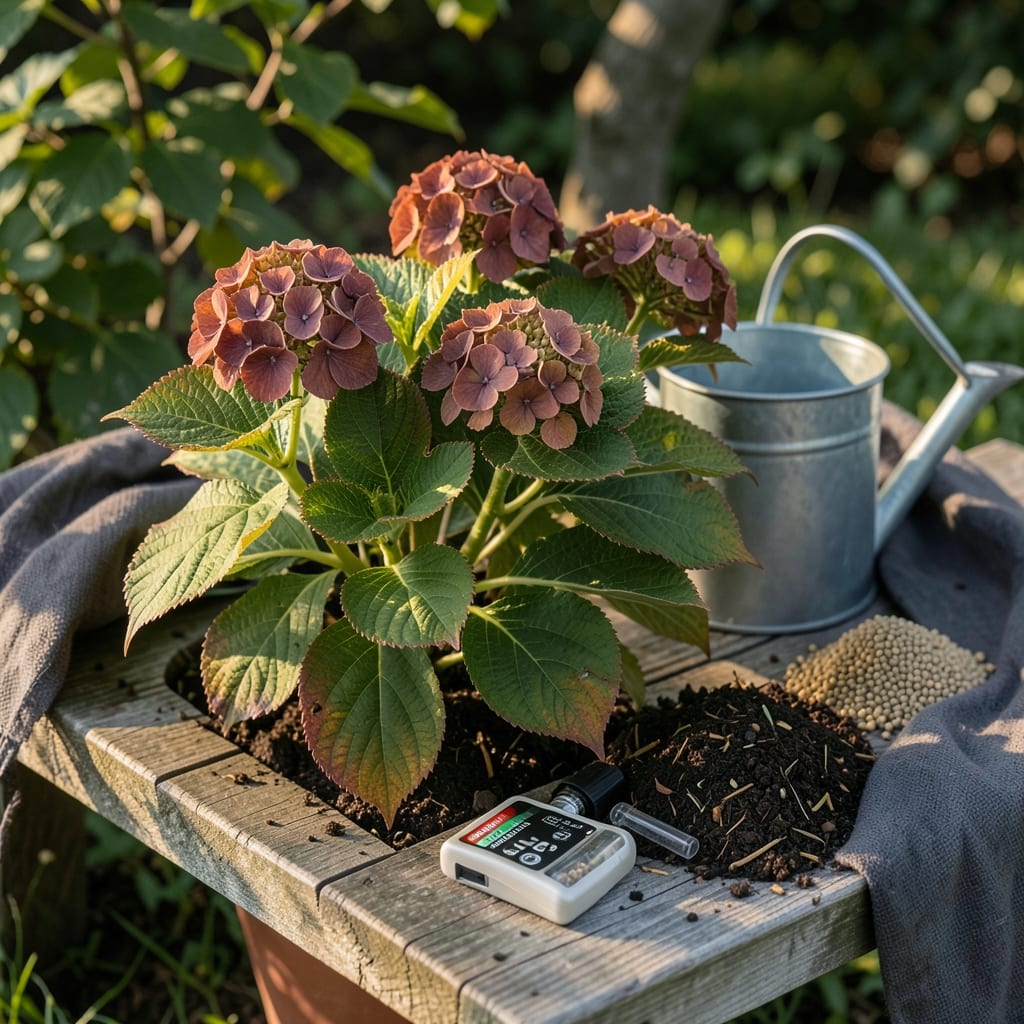
My hydrangea leaves started turning reddish-brown last fall, and I panicked. Turns out it’s often just nature’s way of preparing for cooler weather.
But if it happens in summer, you might be dealing with sunburn, water stress, or nutrient issues. Let’s figure out which one it is and fix it fast.
Nothing exotic—just basics to diagnose and fix leaf discoloration.
| Ingredient | Amount | Notes |
|---|---|---|
| pH Test Kit 🌡️ | 1 piece | For soil acidity check |
| Shade Cloth ☀️ | 1 piece | 30-50% density for sun protection |
| Mulch 🪵 | 2 bags | Organic bark or straw |
| Balanced Fertilizer 🧪 | 1 bag | 10-10-10 NPK formula |
| Watering Can 💧 | 1 piece | With adjustable nozzle |
| Compost 🌾 | 1 bag | Well-aged for nutrient boost |
| Pruning Shears ✂️ | 1 piece | For removing damaged foliage |
| Garden Gloves 🪴 | 1 piece | For handling plants safely |
[recipeingredientscaler]
Start with a pH test kit from any garden center (the good stuff, not the cheap strips). Shade cloth is a game-changer for afternoon sun—Home Depot or Lowe’s carry it in summer. I grab 30% density for most hydrangeas; it cuts sun intensity without blocking all light.
No shade cloth? Old bedsheets work in a pinch (worth the extra dollar for proper material though). Mulch can be straw or bark—whatever you have. If your fertilizer is high in nitrogen, switch to balanced 10-10-10 to avoid leaf burn.
Store pH kits dry and at room temperature. Leftover compost keeps in a sealed bag for 1-2 years. I label my shade cloth by density so I’m not guessing next summer (trust me on this).
Here’s the method I use to nurse hydrangeas back to vibrant green health.
Use the pH Test Kit to check your soil’s acidity level. Hydrangeas prefer slightly acidic to neutral soil (6.0-7.0 pH). If the reading falls outside this range, work the bag of Compost into the top 6 inches of soil to naturally balance pH over time.
Wear your Garden Gloves while handling soil. You’ll see improvement in leaf color within 2-3 weeks as the roots begin absorbing nutrients more efficiently. Don’t expect overnight changes—soil amendments take time to integrate.
Drape the Shade Cloth over the affected plants to reduce direct sunlight exposure by 30-50%. Secure it with stakes or ties, ensuring it covers the entire plant without touching the leaves. This prevents further sunburn damage.
Keep the cloth in place during the hottest part of the day (10 AM – 4 PM). You’ll notice the reddish-brown areas stop spreading within 3-5 days. If new growth appears healthy, you’ve caught the problem early enough.
Spread the 2 bags of Mulch in a 2-3 inch layer around the base of each plant, keeping it 3 inches away from stems to prevent rot. This conserves moisture and regulates soil temperature. Water deeply afterward using the Watering Can until the soil is damp 6 inches down.
Apply the Balanced Fertilizer according to package instructions, typically 1 tablespoon per square foot. This replaces nutrients lost to stress. You’ll see new growth emerge with proper color in 2-3 weeks.
Put on your Garden Gloves and use the Pruning Shears to remove any leaves that are completely brown or crispy. Cut at the base of the leaf stem without damaging healthy tissue. Sterilize the shears with rubbing alcohol between cuts to prevent disease spread.
This helps the plant focus energy on healthy growth. Don’t remove more than 30% of the foliage at once, as this can shock the plant further. You’ll see the remaining leaves begin to recover color within 7-10 days.
If you’re sipping a brew while troubleshooting hydrangea leaves turning reddish brown, consider a crisp Pilsner like Stella Artois. Its light, slightly bitter notes complement the earthy, slightly sweet aroma of hydrangeas, making it a refreshing choice for garden contemplation. For a bolder option, try a Brown Ale such as Newcastle Brown Ale, with its caramel and nutty undertones that pair well with the warm hues of autumnal foliage.
A glass of Pinot Noir, like Meiomi, offers a smooth, fruity profile with hints of cherry and vanilla, enhancing the seasonal charm of reddish-brown hydrangea leaves. For white wine lovers, a Chardonnay such as Kendall-Jackson Vintner’s Reserve brings buttery, oak-infused notes that feel cozy and inviting as you ponder your garden’s health.
For a non-alcoholic treat, try a sparkling Apple Cider like Martinelli’s Gold. Its effervescent sweetness mirrors the vibrant energy of a garden in transition. Alternatively, a Hibiscus Iced Tea offers floral, tangy notes that harmonize beautifully with the earthy tones of hydrangeas shifting seasons.
