
Beautiful Plants For Your Interior
Beautiful Plants For Your Interior
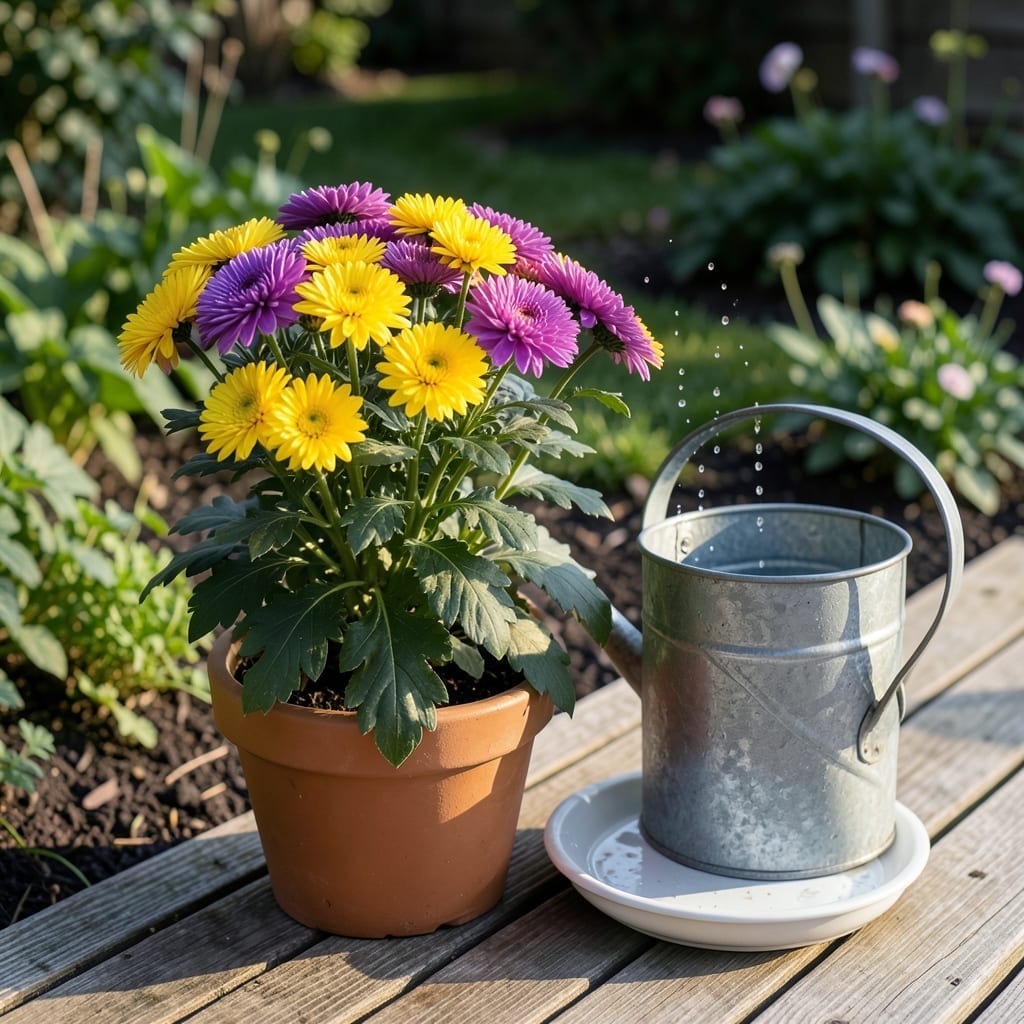
Potted Chrysanthemum 🌼 can transform your porch with vibrant color, but improper watering leaves them wilted and lackluster. We’ve all seen those sad, drooping blooms that never quite recover.
Mastering watering for these autumn favorites ensures blooms that last from early fall through the first frost. It’s simpler than you think, and I’ll show you exactly how to get it right.
Discover the 3 key techniques that keep your potted Chrysanthemum thriving. Let’s make your garden the envy of the neighborhood.
Watering potted mums properly starts with understanding their moisture needs. These autumn bloomers thrive with consistent moisture but despise soggy roots. I always check the top inch of soil first—if it’s dry, it’s time to water.
For best results, water deeply and thoroughly until you see it draining from the bottom of the pot. This ensures the entire root system gets hydrated and prevents salt buildup in the soil.
I’ve found that morning watering works best for potted mums. The cooler temperatures and gentle sunlight give the plants time to absorb moisture before the heat of the day sets in.
During hot summer months, your potted mums might need daily watering. But in cooler fall weather, every 2-3 days is usually sufficient. Always adjust based on your local climate and pot size.
Remember that container size affects watering frequency. Smaller pots dry out faster than larger ones. I use 12-inch containers for most mums, which typically need water every 2-3 days in warm weather.
The type of potting mix matters too. A well-draining mix with perlite or vermiculite helps prevent waterlogging. I always add a layer of mulch on top to help retain moisture between waterings.
If you notice yellowing leaves or a foul odor, you might be overwatering. On the flip side, wilting blooms and dry soil pulling away from the pot edges signal underwatering.
For optimal results, use a watering can with a narrow spout to direct water to the soil level. Avoid overhead watering, especially in the evening, as this can promote mold growth.
With these simple techniques, your potted mums will reward you with vibrant blooms that last well into the fall season. Consistency is key—once you establish a routine, your mums will thrive with minimal effort. 🌼
Even experienced gardeners can make watering mistakes with potted mums. The most common issue I see is overwatering, which leads to root rot and yellowing leaves. Mums prefer moist but not soggy conditions.
Another frequent problem is inconsistent watering. Alternating between drought and flood stresses the plant. I recommend establishing a regular schedule based on your climate and pot size.
Overwatering: Leads to root rot and mold growth. Check soil moisture first.
Underwatering: Causes wilting blooms and dry soil. Water when top inch is dry.
Poor drainage: Always use pots with holes and well-draining soil.
Evening watering: Promotes fungal diseases. Water in the early morning instead.
Wilting leaves don’t always mean thirsty plants. Sometimes they indicate too much water. I always check the soil moisture before assuming the plant needs a drink.
Container choice affects watering too. Plastic pots retain moisture longer than terracotta, which breathes and dries out faster. Adjust your watering frequency accordingly.
Many gardeners forget that mums in hanging baskets dry out faster than those on the ground. These may need daily watering in hot weather, while ground-level pots can often go longer.
Finally, remember that seasonal changes affect watering needs. In cool fall weather, you might water every 3-4 days, but during summer heatwaves, daily watering could be necessary. Always monitor your plants closely. 🌼