
Beautiful Plants For Your Interior
Beautiful Plants For Your Interior
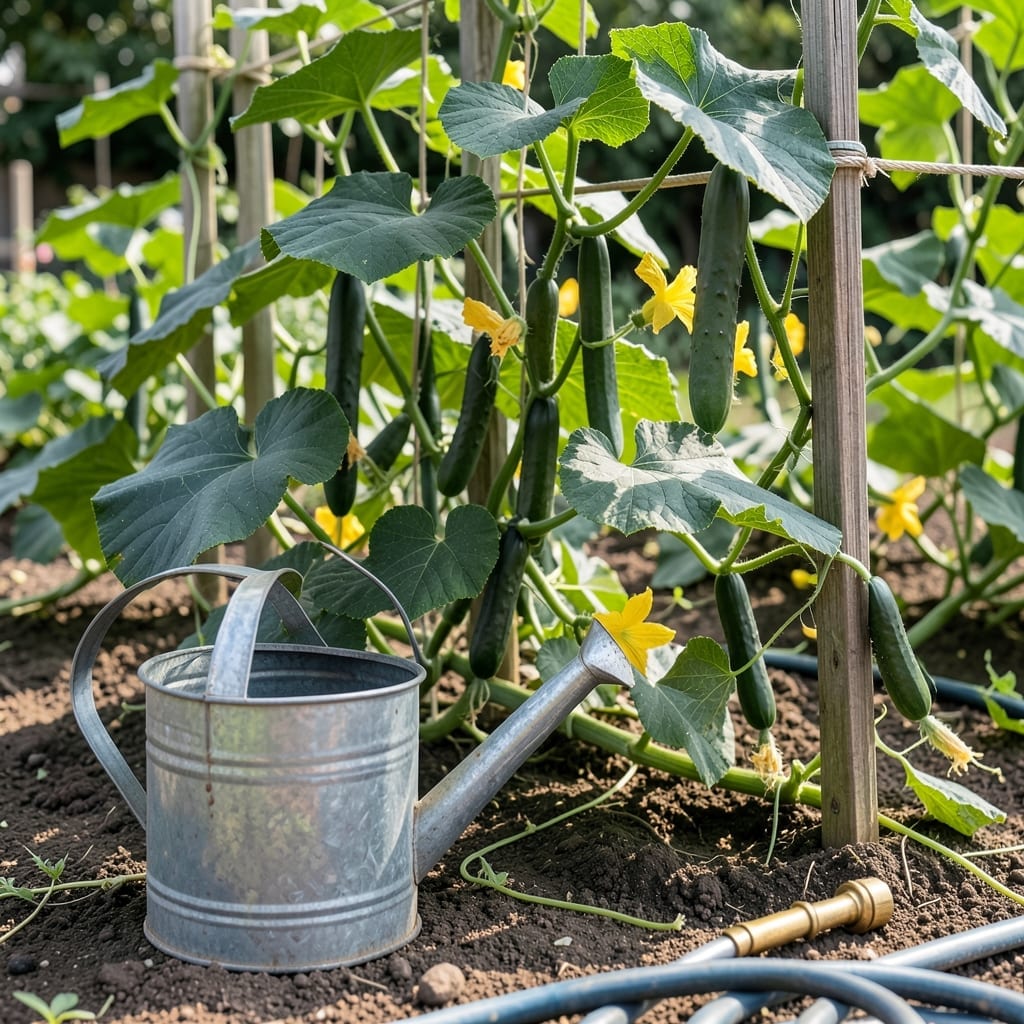
Watering cucumbers the right way can transform your garden from struggling to thriving. The difference between a sparse harvest and a bountiful one often comes down to how you deliver water to your plants.
I’ve seen many gardeners make simple mistakes that leave their 🥒 Cucumbers wilting or waterlogged. The deep soak method is the game-changer for healthy, productive plants.
With this approach, you’ll encourage strong root systems and avoid common pitfalls like disease or stunted growth. It’s all about consistency and technique.
Let me show you how to master watering so your Cucumbers grow bigger, crisp, and full of flavor all season long.
The deep soak method is my go-to for cucumber plants because it encourages strong root growth and prevents fungal diseases. Instead of light sprinkles, I focus on delivering 1-2 inches of water directly to the soil.
This technique ensures consistent moisture without wetting the foliage, which can lead to powdery mildew. I always water in the early morning to give plants time to absorb moisture before the heat of the day.
I’ve found that cucumber plants in raised beds often need more frequent watering than those in in-ground gardens. The soil in raised beds tends to dry out faster, so I check moisture levels every 2-3 days during hot spells.
For container-grown cucumbers, the deep soak method is even more critical. Containers dry out quickly, so I ensure the entire root ball gets moistened. I use a saucer underneath to catch excess water and let the plant absorb it gradually.
Avoid overhead watering at all costs. When water sits on cucumber leaves, it creates the perfect environment for fungal diseases like powdery mildew. I always aim my watering can or hose at the soil level.
In hot summer months, I increase my watering frequency to every 3-4 days. The key is consistency—cucumber plants thrive on a regular schedule. I also adjust based on rainfall, reducing watering if we’ve had a heavy downpour.
If you notice wilting leaves in the afternoon, don’t panic. Cucumbers often wilt slightly in the heat but perk up in the evening. However, if they’re still wilted in the morning, it’s a sign of underwatering and I give them a deep drink.
For the best results, pair the deep soak method with proper mulching. I use organic mulch like straw to keep the soil moist and cool. This also helps suppress weeds, which compete with cucumbers for water and nutrients.
Finally, remember that young cucumber plants need more frequent watering than established ones. As they grow, their root systems become more extensive, allowing them to access moisture deeper in the soil. I gradually reduce watering frequency as my plants mature, but I always keep the soil evenly moist.
💧I’ve seen many gardeners struggle with cucumber plants because of simple watering errors. Overhead watering wets leaves, inviting fungal diseases like powdery mildew to take hold.
Inconsistent schedules stress plants—too much water one day, then none the next leads to bitter fruits and stunted growth.
⚠️ Avoid These Cucumber Watering Mistakes
Another big issue is overwatering. Soggy soil suffocates roots and can cause root rot, which turns leaves yellow and stunts growth.
On the flip side, underwatering causes wilting and bitter-tasting fruits. Cucumbers need consistent moisture to thrive, especially during fruiting.
Timing matters too—watering at night leaves foliage damp, creating the perfect environment for fungal spores to spread.
I always recommend morning watering so leaves dry quickly in the sun. This simple change can prevent most disease issues in your cucumber patch.
By avoiding these common mistakes, you’ll keep your cucumber plants healthy and productive all season long 🌱