
Beautiful Plants For Your Interior
Beautiful Plants For Your Interior
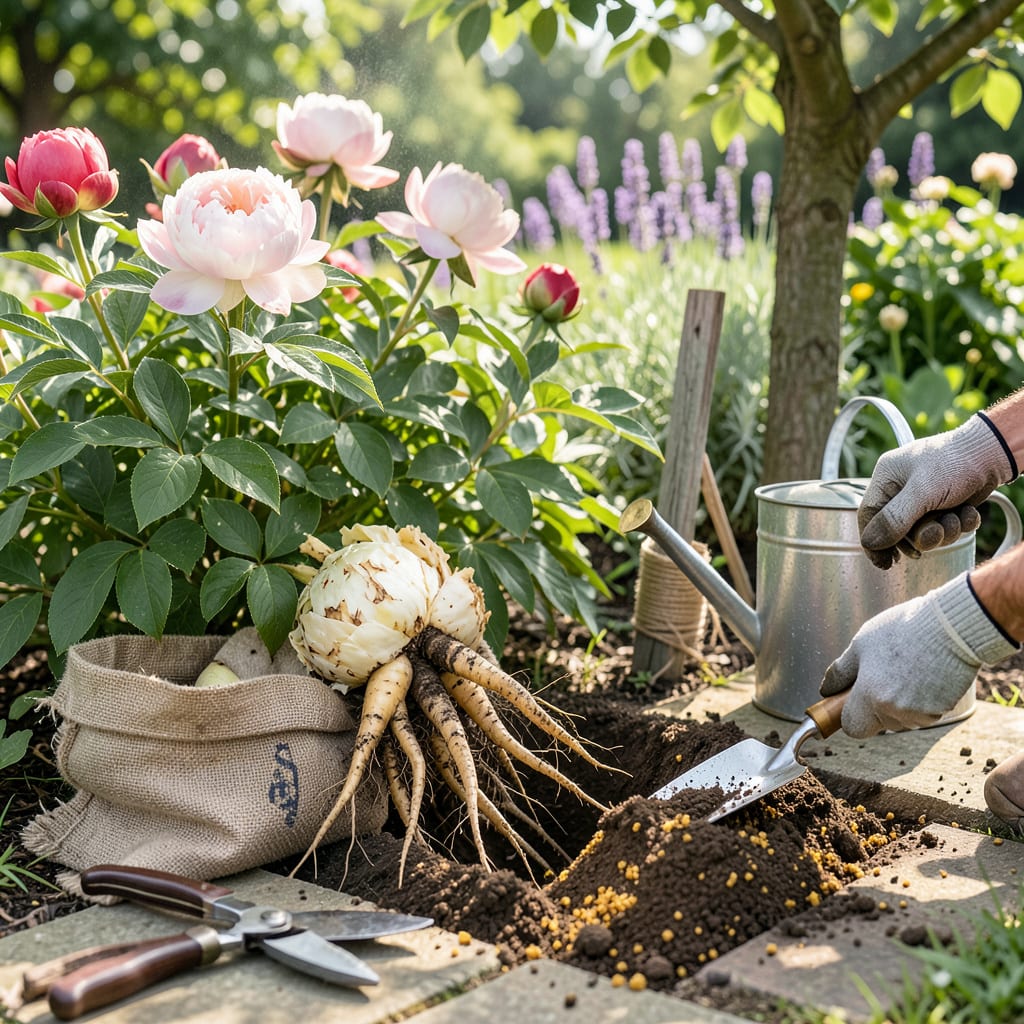
Moving peonies in summer breaks every traditional rule—but when done correctly, it works. I’ve successfully transplanted established peonies in July and August using a method that minimizes shock and protects roots from summer heat. The key is timing: early morning or late evening, when temperatures drop below 80°F, and the soil stays moist longer.
This isn’t the ideal season for transplanting, but life happens—construction, landscape changes, or an unexpected move. With proper root preparation, generous watering, and temporary shade, your peonies will recover and bloom again next spring. The secret is keeping the root ball intact and avoiding direct sun exposure for the first 48 hours post-transplant.
📚 In This Guide
Transplanting peonies in summer requires precision timing and careful handling to minimize shock and ensure vigorous regrowth.
Begin in late summer, specifically August through early September, when peonies enter dormancy but soil remains warm. This timing allows roots to establish before winter while avoiding the stress of active growth periods. Select a cool, overcast day—ideally following a light rain—to reduce transplant shock.
Water the peony deeply 24-48 hours before digging to hydrate the root system thoroughly. Mark the plant’s orientation with a stake if dividing, as improper positioning can delay spring emergence. Gather all tools beforehand: sharp spade, pruners, twine, and prepared transplant site with amended soil.
Cut back foliage to 3-4 inches above ground to reduce moisture loss. Using a clean spade, dig a trench 12-18 inches from the stem in a complete circle, gradually working inward to lift the entire root ball. Peony roots grow deep—expect to dig 12-18 inches down to preserve the crown.
Once lifted, gently shake off excess soil and rinse roots with water to assess division points. Each division must include 3-5 eyes (buds) and a substantial portion of the root system. Use sterilized pruners to make clean cuts between sections, discarding any soft or damaged portions immediately.
Dig the new hole 2 feet wide and 18 inches deep, incorporating compost into the base. Position the division so the eyes sit 1-2 inches below soil level—planting too deep prevents blooming, while shallow placement risks winter damage. Backfill with native soil mixed with compost, firming gently to eliminate air pockets.
Space multiple plants 3-4 feet apart to accommodate mature spread. Water thoroughly to settle soil, then add a 2-inch mulch layer of shredded bark to retain moisture and regulate temperature. Avoid fertilizing at this stage—new roots need to establish before processing nutrients.
Maintain consistent moisture for 4-6 weeks, watering deeply when the top 2 inches of soil feel dry. Avoid overhead irrigation to prevent fungal issues. Monitor for wilting or yellowing leaves, which may indicate insufficient water or root disturbance.
Apply a balanced fertilizer (5-10-5) in early spring when new shoots emerge, but never in fall. Expect limited blooming the first season post-transplant as plants redirect energy to root development. Full flowering typically resumes by the second year when proper techniques are followed.
Mastering the summer transplant process requires attention to critical details that protect root systems and promote rapid recovery.
Optimal Timing Precision: The August through early September window specified in Step 1 isn’t arbitrary—this period aligns with peonies’ natural dormancy initiation while soil temperatures remain conducive to root regeneration. Transplanting even two weeks earlier risks interrupting active growth, while delaying past early September may not allow sufficient root establishment before frost. I recommend using a soil thermometer to confirm temperatures remain between 60-70°F at the 6-inch depth where new roots will form.
Hydration Strategy: The 24-48 hour pre-watering protocol in Step 1 serves two critical functions: it fully saturates the root zone while allowing excess moisture to drain, preventing muddy soil that could compromise root ball integrity during excavation. For clay-heavy soils, extend this to the full 48 hours and consider adding a wetting agent to ensure even moisture penetration throughout the dense root mass.
Root Division Technique: When executing Step 2’s division process, the requirement for 3-5 eyes per section isn’t merely about propagation—it’s about maintaining hormonal balance. Fewer than 3 eyes may lack sufficient auxin production for spring emergence, while more than 5 can create competition that stunts development. Use a sharp, sterilized knife rather than pruners for cleaner cuts that heal faster, and immediately dust cut surfaces with sulfur powder to prevent fungal entry through fresh wounds.
Post-Transplant Monitoring: During the 4-6 week critical care period outlined in Step 4, establish a moisture baseline by inserting a soil probe to the 12-inch depth daily. The top 2 inches may appear dry while deeper layers remain saturated—this is why deep, infrequent watering (1-1.5 inches per week) produces better results than frequent shallow irrigation. Install temporary shade cloth if transplanting during unexpected heat waves to prevent foliage stress while roots establish.
While fall is ideal (September–October), summer transplanting is possible with extra care! Focus on early morning/evening moves, keep roots moist, and provide temporary shade. Avoid extreme heat (above 85°F) and prioritize herbaceous peonies over tree peonies, which are less forgiving.
Watch for these signs: New growth within 3–4 weeks, firm stems (not mushy), and green leaves (not crispy brown). If wilting occurs, water deeply at dawn and mulch with straw. Note: Blooms may skip next year—don’t panic! Roots need time to establish.
Deep soak (1–2 inches) every 3–4 days for the first month—never daily light sprinkles! Use a drip hose to avoid wetting foliage (prevents fungus). Add a 2-inch mulch layer to retain moisture. Pro tip: Water at sunrise to reduce evaporation and stress.
Not necessarily! Brown leaves often mean transplant shock, not death. Trim damaged foliage, ensure the crown isn’t buried too deep (max 2 inches below soil), and check for overwatering (roots should never sit in soggy soil). Recovery can take 4–6 weeks.
Avoid dividing in summer—it adds stress! If you must, only split mature clumps (5+ years) with a sharp knife, ensuring each division has 3–5 eyes. Replant immediately, water thoroughly, and expect delayed blooms. Fall division is safer for vigorous growth.
