
Beautiful Plants For Your Interior
Beautiful Plants For Your Interior
Moving a myrtle bush feels like performing surgery on a living thing—except you don’t need a medical degree, just the right timing and technique. I’ve relocated half a dozen myrtles over the years, and the ones that thrive always follow this rule: late winter or early spring, before new growth starts. That’s when roots recover fastest and stress stays minimal.
What most people get wrong? Treating myrtle like other shrubs. These plants hate soggy roots but demand consistent moisture after transplanting. You’ll need a sharp spade, pruners, and a wheelbarrow (trust me, the root ball is heavier than it looks). Do it right, and your myrtle won’t just survive—it’ll take off like it’s been in that spot for years.
📚 In This Guide
Moving established myrtle doesn’t have to be stressful—here’s how I do it with minimal shock and maximum success.
Transplant myrtle in early spring just as new growth begins, or in early fall at least six weeks before your first frost. These windows give roots time to establish before summer heat or winter cold. I avoid transplanting during flower production—it stresses the plant unnecessarily.
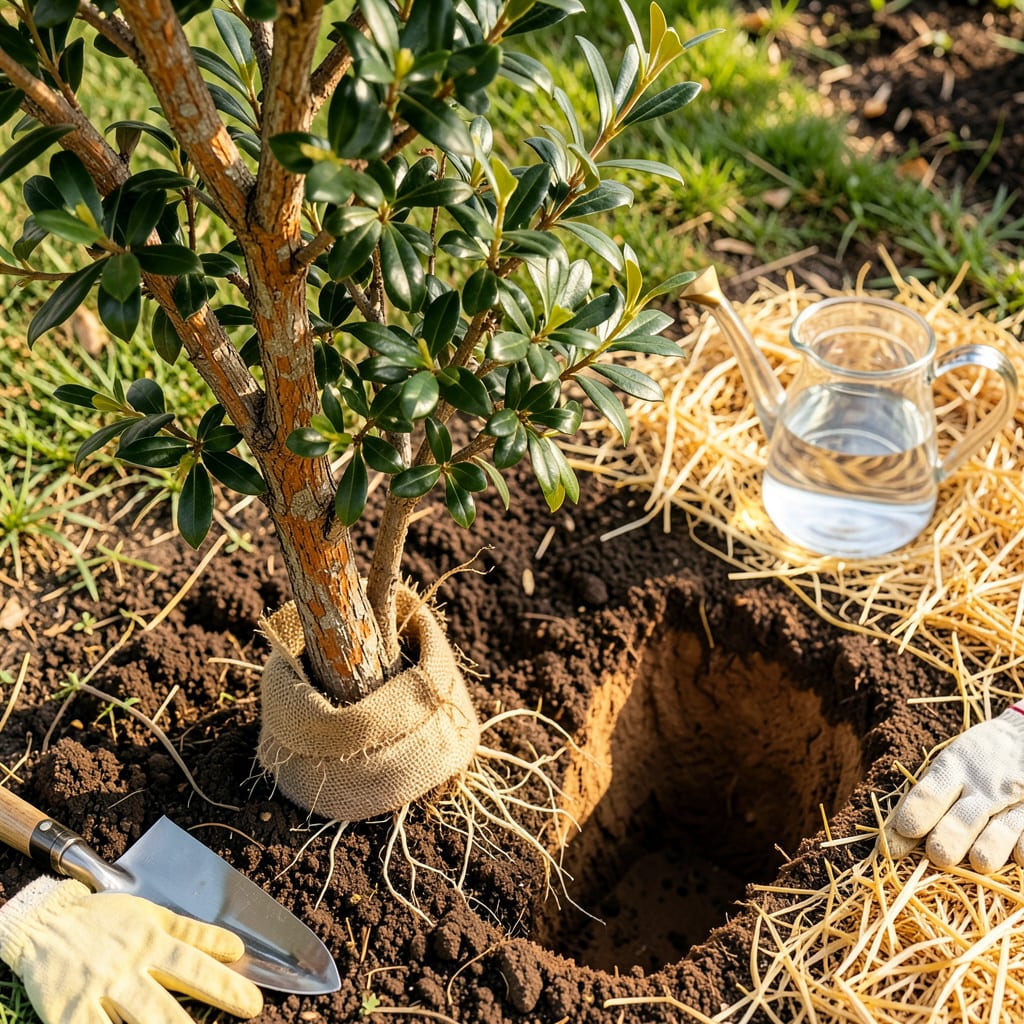
Dig the new hole twice as wide as the root ball but no deeper. The loose surrounding soil helps roots expand easily. Mix compost or aged manure into the backfill soil at a 1:3 ratio—this gives your myrtle a nutrient boost without overwhelming it. Water the new hole thoroughly and let it drain before moving the plant.
Water your myrtle deeply 24-48 hours before transplanting. This ensures the root ball stays intact and reduces stress. Use a sharp spade to dig a trench around the plant, starting about 12 inches from the trunk for mature specimens or 6 inches for younger plants.
Once you’ve circled the plant, angle your spade underneath to lift the entire root ball. For larger myrtles, I wrap the root ball in burlap to hold it together during the move—this prevents soil from crumbling away. Keep the root ball moist by misting it lightly if you need to pause between digging and replanting.
Place the myrtle in the new hole at the exact same depth it grew before—look for the soil line on the trunk as your guide. Planting too deep suffocates the stem, while too shallow exposes roots. Backfill with your amended soil, gently firming it around the roots to eliminate air pockets.
Create a water basin by mounding soil in a 3-inch-high ring around the plant’s perimeter. This directs water straight to the roots where it’s needed most. Water immediately after planting until the soil is saturated and you see moisture at the basin edges—this settles everything in place.
Water your transplanted myrtle every 2-3 days for the first two weeks, then taper to weekly deep watering. The goal is consistent moisture—not soggy, not dry. I check by digging my finger 2 inches into the soil; if it feels dry at that depth, it’s time to water.
Apply 2-3 inches of mulch around the plant, keeping it 3 inches away from the trunk to prevent rot. Shredded bark works well, but I prefer pine straw for myrtles—it allows air circulation while retaining moisture. Avoid fertilizing for 4-6 weeks after transplanting; you want roots to establish before encouraging new top growth.
Watch for wilting leaves in the first week—this is normal transplant shock. If wilting persists beyond 5-7 days, the plant needs more water. Yellowing leaves typically indicate overwatering, so adjust your schedule accordingly. I’ve found myrtles bounce back quickly when given proper care.
After 3-4 weeks, gently tug on the plant. Resistance means roots have begun establishing. At this point, you can resume normal care. The first season after transplanting, I protect myrtles from extreme heat with temporary shade cloth if temperatures exceed 90°F for extended periods.
After years of transplanting myrtle (and learning from my early mistakes), these are the key details that make all the difference between a struggling plant and one that thrives in its new home.
Timing is Everything: The 24-48 hours of deep watering before transplanting isn’t just helpful—it’s critical. I’ve found that plants watered for the full 48 hours recover faster because their root balls hold together better during the move. If you’re short on time, at least do the minimum 24 hours, but don’t skip this step entirely. The moisture acts like glue, keeping the soil intact around the roots.
Root Ball Protection: When digging mature myrtles, that 12-inch radius from the trunk might seem excessive, but trust me—myrtle roots spread wider than you’d expect. For younger plants, the 6-inch guideline is perfect. I always keep a spray bottle handy to mist the root ball if I need to set it aside during the move. Even a few minutes of exposure to air can dry out those delicate feeder roots.
Depth Matters More Than You Think: In Step 3, when you’re placing the myrtle in its new hole, take an extra minute to find that original soil line on the trunk. I’ve ruined plants by eyeballing it—just an inch too deep can suffocate the stem, while too shallow dries out roots. Use a stick or your finger to mark the exact depth before backfilling. This one detail prevents more transplant failures than anything else.
Aftercare That Actually Works: The every 2-3 days watering schedule in the first two weeks isn’t arbitrary—it mimics the consistent moisture myrtles need to regrow those tiny feeder roots that get damaged during transplanting. I use the 2-inch finger test religiously, and here’s why: surface dryness is misleading. Those first two inches of soil tell you what’s really happening at root level where it counts.
The ideal time is early spring (before new growth starts) or fall (6+ weeks before frost). Avoid summer heat or winter dormancy—these stress the plant. Mild weather helps roots establish faster.
It’s risky! Extreme heat shocks roots, even with extra water. If absolutely necessary, transplant on a cloudy day, prune 30% of foliage to reduce stress, and shade the plant for 2 weeks. Use mulch to retain moisture.
Aim for a root ball 10–12 inches wide for small myrtles (under 3 ft tall) and 18–24 inches for larger ones. Depth should match the plant’s current root zone (usually 8–12 inches). Bigger = better for reducing transplant shock!
Don’t panic! Wilting is normal for 1–2 weeks. Check soil moisture (keep it damp, not soggy), trim dead leaves, and avoid fertilizer. If wilting persists beyond 3 weeks, suspect root damage or overwatering.
Yes! Choose a pot 2–3 sizes larger than the root ball with drainage holes. Use well-draining potting mix (add 30% perlite/sand). Potted myrtles need more frequent watering and winter protection in cold climates.
