
Beautiful Plants For Your Interior
Beautiful Plants For Your Interior
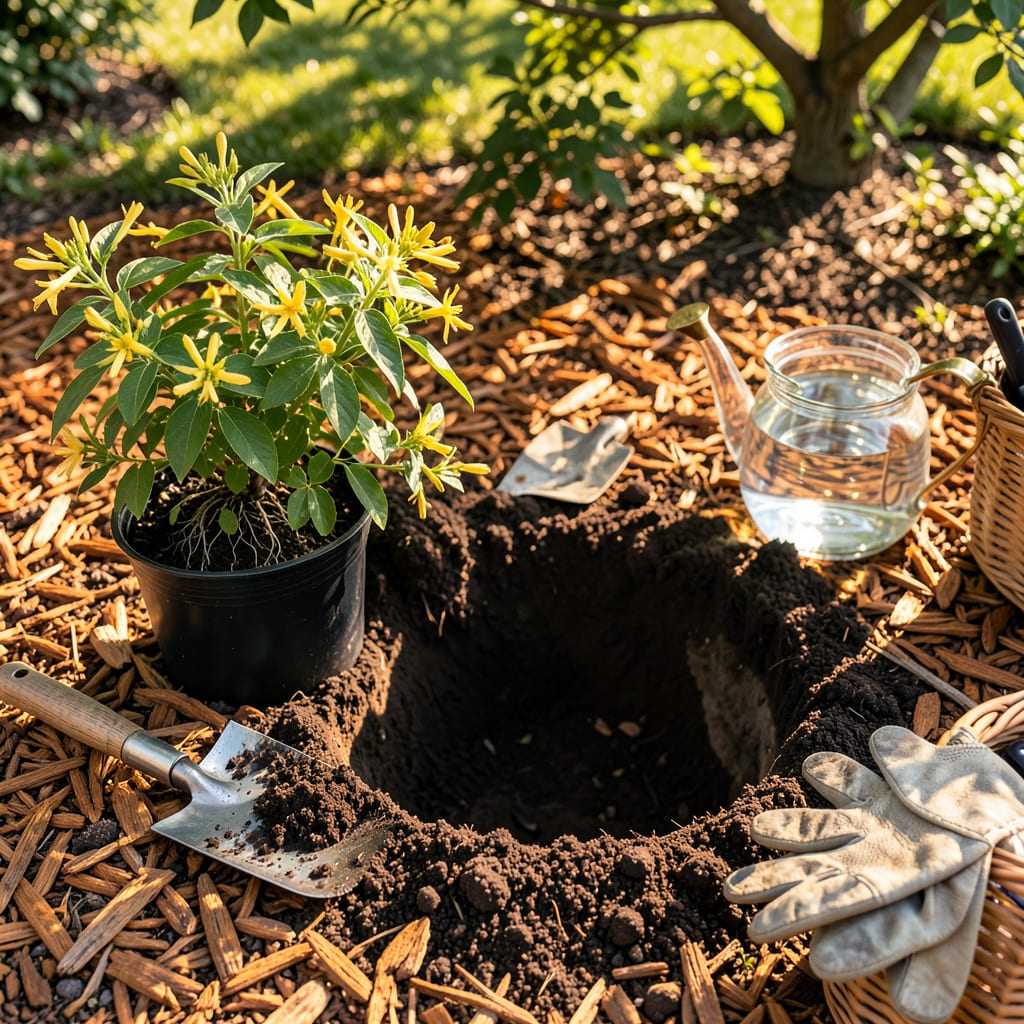
Moving honeysuckle doesn’t have to mean losing your vine to transplant shock. I’ve relocated dozens of these resilient climbers, and the secret is timing—early spring or fall when the plant is dormant but the soil is workable. This is when roots recover fastest, and you’ll see new growth within 2-3 weeks if done right.
What most gardeners get wrong is underestimating the root system. A mature honeysuckle needs a 2-foot-wide root ball to survive the move, plus immediate watering and mulch to lock in moisture. Skip the guesswork: I’ll walk you through the exact steps to dig, relocate, and revive your vine—without the wilting or stunted growth that plagues rushed transplants.
📚 In This Guide
Moving established honeysuckle doesn’t have to be stressful—follow this method for minimal shock and maximum success.
Choose a location with full sun to partial shade and well-draining soil. Honeysuckle thrives in 6+ hours of direct sunlight but tolerates afternoon shade in hot climates. Dig a hole twice as wide as the root ball and just as deep—this gives roots room to spread without sinking the plant too low.
Amend the soil with compost if your native soil is heavy clay or sand. I mix in about 25% organic matter to improve drainage and nutrient retention. Water the hole thoroughly before planting—you want the soil moist but not soggy when the roots make contact.
One week before transplanting, prune the honeysuckle back by one-third of its length. This reduces water loss through leaves and makes handling easier. Use clean, sharp pruners to make cuts just above leaf nodes at a 45-degree angle—this encourages new growth after transplanting.
Water the plant deeply 24 hours before moving to ensure the root ball stays intact. You’ll know it’s properly hydrated when the soil feels moist 3-4 inches down. Avoid watering right before digging—saturated soil makes root balls heavy and prone to breaking apart.
Use a sharp spade to dig a trench around the plant, working outward from the main stem. For established vines, aim for a root ball 12-18 inches in diameter. Slide the spade underneath to lift the entire root system—don’t pull by the stems, as this can separate roots from the crown.
Immediately wrap the root ball in burlap or place it in a tarp to prevent soil from crumbling. Move the plant to its new hole quickly—exposed roots dry out in less than 10 minutes on a sunny day. Position the vine at the same depth it grew originally; you should see the soil line on the main stem as your guide.
Fill the hole halfway with native soil, then water to settle everything and eliminate air pockets. Complete filling once the water drains, gently firming the soil with your hands. Create a 3-inch-high watering basin around the plant’s base to direct moisture to the roots during the critical first weeks.
Water deeply immediately after planting—at least 2 gallons per plant—until water pools in the basin. The soil should feel saturated 6 inches down. Apply a 2-inch layer of mulch around the base (keeping it 3 inches away from the stem) to conserve moisture and regulate soil temperature.
Check the plant daily for the first week. Wilting in the afternoon is normal, but leaves that remain limp in the morning indicate stress. Water every 2-3 days unless rain provides 1 inch of moisture weekly. Reduce frequency after 2 weeks as new growth appears.
Avoid fertilizing for 4-6 weeks—transplant shock makes plants vulnerable to fertilizer burn. Instead, watch for new shoots, which signal successful establishment. If growth stalls, check for circling roots (a sign the root ball was too small) and loosen them gently with your fingers.
Transplanting established vines can feel intimidating, but these key insights will help you avoid common pitfalls and ensure your honeysuckle thrives in its new location.
Root Ball Protection: When digging up the vine in Step 3, I can’t emphasize enough how critical it is to maintain that 12-18 inch diameter root ball. The temptation is to go smaller for easier handling, but you’ll sacrifice too many feeder roots that way. Use a sharp spade and work methodically outward from the main stem. If the root ball starts crumbling, mist it with water to help hold the soil together during the move.
Timing Secret: The 24-hour pre-watering in Step 2 makes all the difference in root ball integrity. I’ve found that watering too soon before digging (like 12 hours) doesn’t give the moisture time to penetrate deeply enough, while waiting longer than 24 hours risks the soil becoming too dry again. Test moisture levels by digging your finger 3-4 inches into the soil – it should feel consistently damp but not muddy.
Depth Precision: In Step 4, planting at the exact same depth as the original location is more important than you might think. I use this trick: lay a straight board across the hole to check that the soil line on the stem matches the surrounding ground level. Planting too deep can suffocate the crown, while planting too shallow exposes roots. That original soil line is your perfect guide.
Aftercare Vigilance: During the first week mentioned in Step 5, don’t be fooled by afternoon wilting – that’s normal as the plant adjusts. But morning limpness is your red flag. When you water those 2 gallons immediately after planting, make sure it’s slow and deep. I use a soaker hose on low flow for about 20 minutes to ensure the water reaches that critical 6-inch depth without running off.
Early spring (before new growth starts) or fall (4-6 weeks before frost) are ideal. Avoid extreme heat or freezing temps—transplanting during dormancy reduces stress and boosts survival rates. If you must move it in summer, water deeply beforehand and provide shade for a week.
It’s risky but doable! Prune the vine back by one-third to reduce water loss, transplant on a cloudy day, and water daily for 2 weeks. Mulch heavily (3–4 inches) to retain moisture. Expect some leaf drop—it’s normal stress, not failure!
Dig a hole twice as wide as the root ball but no deeper. Aim for 12–18 inches deep to accommodate long roots. Loosen the soil at the bottom to encourage downward growth. Pro tip: If roots are pot-bound, gently tease them apart before planting.
Don’t panic—wilting is common for 1–2 weeks! Check soil moisture (stick your finger 2 inches deep; it should feel damp). Prune dead stems, avoid fertilizer, and provide afternoon shade. If wilting persists beyond 3 weeks, suspect root damage or poor drainage.
If your vine is healthy, propagation (via cuttings or layering) is easier! Take 6-inch softwood cuttings in early summer, dip in rooting hormone, and plant in moist soil. Transplanting is best for mature plants or relocating established vines.
