
Beautiful Plants For Your Interior
Beautiful Plants For Your Interior
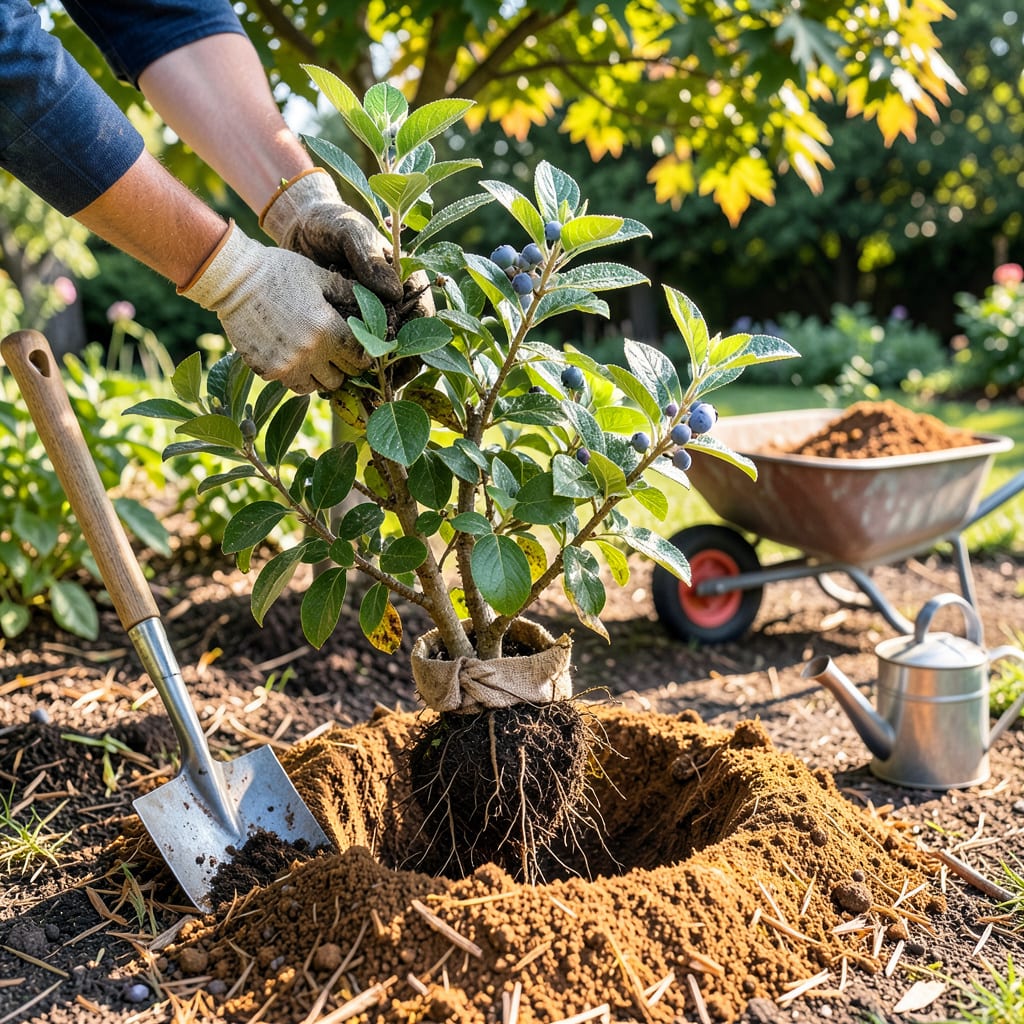
Moving blueberry bushes feels intimidating—until you realize they’re tougher than they look. I’ve relocated dozens over the years, and the ones that thrive always follow the same rules: right timing, proper soil prep, and gentle handling. The difference between a bush that sulks for a season and one that takes off immediately comes down to three critical steps most gardeners miss.
Do this in early spring or late fall when plants are dormant, and you’ll see new growth within weeks. The secret isn’t just digging a hole—it’s creating the perfect acidic home (pH 4.5-5.5) with amended soil, giving roots room to spread, and setting the plant at the exact same depth it grew before. Get these right, and your bushes will reward you with bigger harvests than ever before.
📚 In This Guide
Moving established blueberry bushes doesn’t have to be stressful—follow my method for healthy plants with minimal shock.
Transplant in early spring before new growth starts or in late fall after leaves drop. These dormant periods minimize stress on the plant. I always mark the new location first, ensuring it gets full sun (at least 6 hours daily) and has well-draining, acidic soil (pH 4.5-5.5).
Dig the new hole twice as wide as the root ball but no deeper. This loose soil helps roots spread easily. Mix in composted pine bark or peat moss to improve acidity and drainage. Test the hole by filling it with water—if it drains within an hour, you’re good. If not, amend further with perlite or coarse sand.
Water the bush deeply 24 hours before transplanting to hydrate roots and reduce shock. Use a sharp spade to dig a wide circle around the plant, starting about 12 inches from the base for mature bushes. Go deep to preserve as many roots as possible—you’ll feel resistance when you hit the root ball.
Once you’ve cut a clean circle, angle the spade underneath to lift the entire root system. For large bushes, I wrap the root ball in burlap to hold it together during the move. Keep the roots moist by misting them with water if you’re not planting immediately.
Place the bush in the new hole at the same depth it was growing before—look for the soil line on the stem. Planting too deep suffocates roots, while too shallow exposes them. Backfill with your amended soil, gently firming it around the roots to eliminate air pockets.
Create a 3-inch-high water basin around the plant’s perimeter to direct moisture to the roots. Water immediately with 2-3 gallons until the soil is saturated and the water pools slightly. This initial deep watering settles the soil and removes air gaps around the roots.
Apply a 2-3 inch layer of pine bark mulch around the base, keeping it 3 inches away from the stem to prevent rot. Mulch conserves moisture and maintains soil acidity. I avoid straw or leaves—they can raise the pH over time.
Prune back about one-third of the top growth to balance the root loss. This reduces water demand while the roots re-establish. Focus on removing older canes and any damaged branches. You’ll see new growth within 3-4 weeks if the transplant was successful.
Keep the soil consistently moist (but not soggy) for the first 4-6 weeks. Check moisture by digging 1 inch deep—it should feel damp but not waterlogged. I use a soaker hose on a timer for even watering without wetting the leaves.
Hold off on fertilizer until you see new leaf growth. Then apply a balanced acidic fertilizer (10-10-10 for acid-loving plants) at half strength. Watch for wilting in hot weather—this is normal as roots adjust. Provide temporary shade if temperatures exceed 85°F during the first week.
Transplanting blueberry bushes successfully comes down to timing and technique. Here’s what I’ve learned from years of moving these plants with minimal stress.
Timing is Everything: The instructions mention transplanting in early spring or late fall, and this timing is critical. I’ve found that early spring (just as the soil becomes workable) gives bushes the entire growing season to establish roots. If transplanting in fall, aim for at least 6 weeks before your first frost date to allow root recovery before winter dormancy.
Root Ball Protection: When digging up the bush in Step 2, don’t skimp on the 12-inch radius—this preserves the feeder roots that are crucial for water uptake. For mature bushes, I actually go 18 inches out to capture the full root system. Keep a spray bottle handy to mist exposed roots during the move; they dry out faster than you think.
Watering Wisdom: That initial 2-3 gallons of water in Step 3 isn’t just thorough—it’s essential. I use a water breaker attachment on my hose to prevent soil erosion around the newly planted bush. The water basin you create should hold moisture like a shallow bowl, directing every drop to the roots where it’s needed most.
Pruning Strategy: Cutting back one-third of the top growth might seem drastic, but it’s the key to survival. Focus on removing the oldest canes (they’re the thickest, woodiest stems) and any branches that rub against each other. This opens up the center of the bush for better air circulation while reducing the plant’s water needs during root establishment.
The ideal time is early spring (before new growth starts) or late fall (after leaves drop). Avoid transplanting during summer heat or freezing winter. Cool, moist weather helps roots establish faster with less stress.
It’s risky! Summer heat stresses plants, even with extra water. If you must move them, choose a cloudy day, prune ⅓ of the foliage, and water deeply daily for 2+ weeks. Early morning is the safest time.
Aim for a root ball 12–18 inches wide for mature bushes (3–5 years old) and 8–10 inches for younger plants. Depth should match the plant’s current root zone—avoid cutting major roots! Use a sharp spade for clean cuts.
Common issues:
Prune before moving to reduce stress: remove dead/diseased branches and trim up to ⅓ of the foliage. Avoid heavy pruning after transplanting—wait until the next dormant season for major shaping.
