
Beautiful Plants For Your Interior
Beautiful Plants For Your Interior
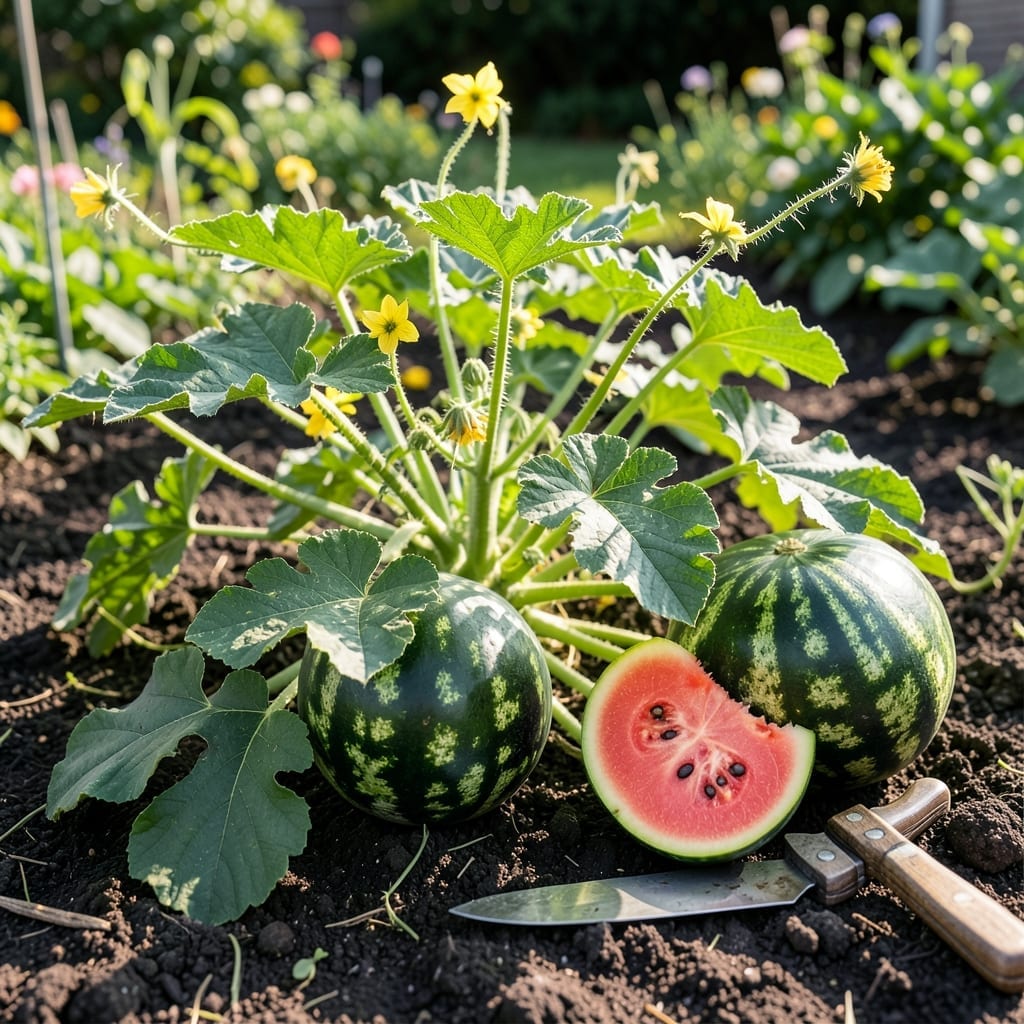
Nothing beats the sweet, juicy crunch of a perfectly ripe Sugar Baby watermelon—if you pick it too early or too late, the flavor falls flat. I’ve learned the hard way that timing is everything with this variety.
Knowing the exact signs of ripeness ensures you enjoy this garden favorite at its peak. From visual cues to simple tests, there are clear indicators that take the guesswork out of harvesting.
Let me walk you through the most reliable methods to determine when your Sugar Baby is ready to pick. You’ll never settle for less-than-perfect flavor again.

I always check the tendril closest to the stem first. When it turns brown and dries up, that’s your first sign the melon is nearing ripeness. This is the most reliable visual cue for Sugar Babies.
The ground spot where the melon touches the soil changes from white to creamy yellow as it ripens. A deep yellow means it’s ready, while white means it needs more time.
| Visual Sign | What to Look For |
|---|---|
| Tendril Color | Brown and dry |
| Ground Spot | Creamy yellow |
| Rind Appearance | Dull, not shiny |
| Stem Condition | Slightly cracked |
The rind texture is another giveaway. A ripe Sugar Baby loses its glossy sheen and takes on a matte finish. This dull appearance indicates the sugars inside have fully developed.
I also examine the stem end. When it starts to crack slightly and feels a bit rough, that’s a good sign. But don’t pull the melon by the stem—this can damage the vine.
Size matters too. A mature Sugar Baby watermelon typically weighs between 8 to 10 pounds. Anything smaller might not be fully ripe, while larger ones could be overripe.
The color uniformity counts as well. While the rind may have some striped patterns, the overall color should be deep and consistent. Pale spots often mean it needs more sun.
Don’t overlook the vine connection. A ripe melon often has a slightly sunken area where it attaches to the vine. This is normal and another sign of readiness.
I’ve found that checking these visual signs in the early morning works best. The cool temperatures make the colors and textures more pronounced and easier to evaluate accurately.
Remember, Sugar Baby watermelons don’t ripen further after picking. Waiting for these visual cues ensures you get the sweetest possible harvest every time. ☀️
The thump test is my go-to method for verifying ripeness. Tap the melon with your knuckles—a deep, hollow sound means it’s ready, while a high-pitched tone indicates it needs more time.
I also use the scratch test on the rind. Gently scratch the surface with your fingernail. If the outer layer peels back easily and reveals a greenish-white underneath, it’s ripe.
The weight comparison is another reliable trick. Pick up a few melons of similar size—the heaviest one is usually the ripest. Sugar Babies should feel dense for their size.
I find the thump test works best in quiet outdoor conditions. Practice on a few melons to compare sounds. With experience, you’ll recognize the perfect hollow tone every time.
Remember, these field tests work best when combined with the visual signs we discussed earlier. The most accurate results come from using multiple methods together.
I’ve found that performing these tests in the early morning gives the most consistent results. The cooler temperatures make the sounds and textures more distinguishable.
With practice, you’ll develop a knack for identifying the perfectly ripe Sugar Baby. These simple tests take the guesswork out of harvesting at the ideal time. 🌱