
Beautiful Plants For Your Interior
Beautiful Plants For Your Interior
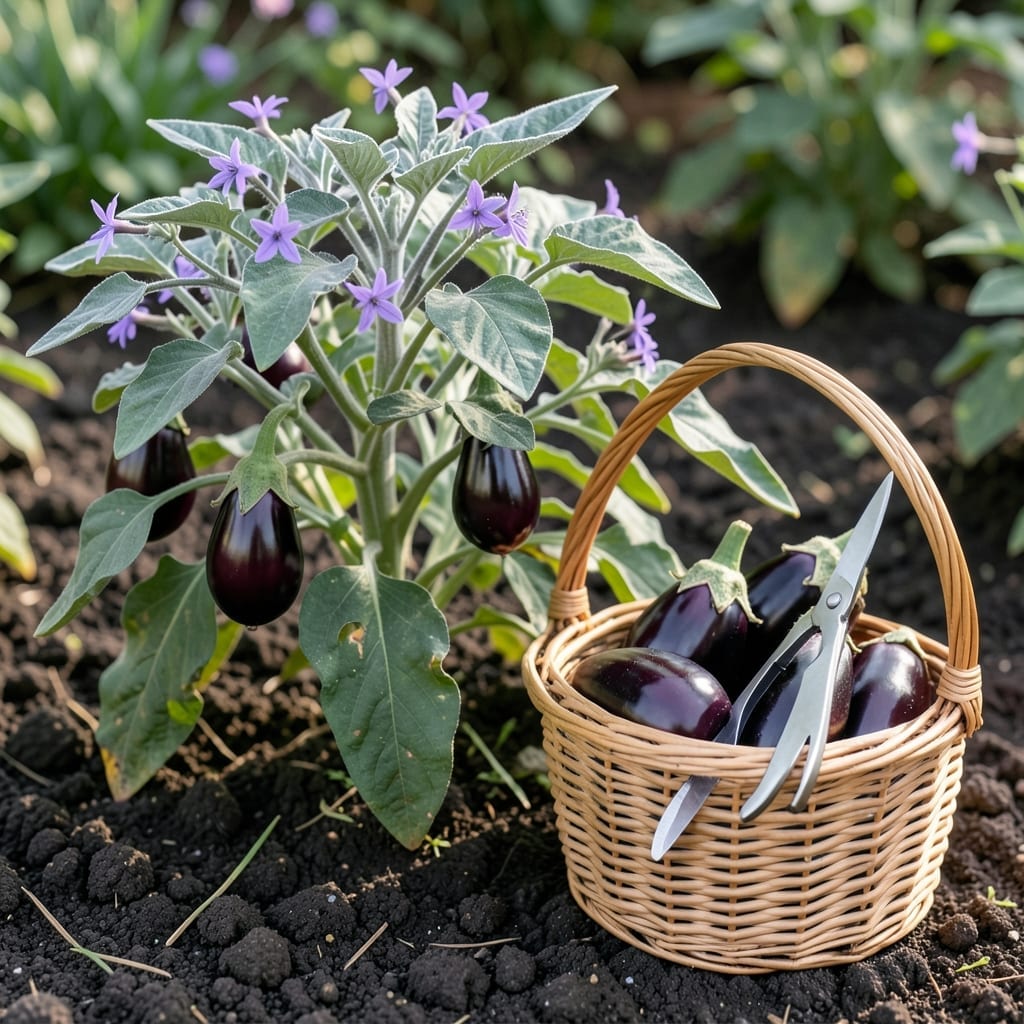
Picking eggplants at the perfect stage of ripeness ensures the best flavor and texture, but knowing the exact moment can be tricky even for seasoned gardeners.
The 🍆 Eggplant gives clear signals when it’s ready – you just need to know what to look for. From subtle color changes to the right amount of firmness, these visual and tactile cues are easy to spot once you understand them.
Discover how to confidently identify ripe Eggplants and avoid the common mistakes that lead to bitter or seedy harvests. Your garden’s bounty depends on it.

I’ve found that eggplants give clear signals when they’re ready to pick. The first thing I look for is a glossy skin that shines in the sunlight. This indicates the fruit is at its peak ripeness and full of flavor.
Another key sign is the color depth. Depending on the variety, ripe eggplants can be deep purple, black, white, or even green. The color should be rich and uniform, not dull or patchy.
| Sign | Description |
| Glossy Skin | Shiny surface indicates peak ripeness |
| Deep Color | Rich, uniform hue for the variety |
| Slight Give | Gently press—should feel slightly soft |
| Firm Stem | Green and healthy, not brown or shriveled |
| Mature Seeds | Cream-colored seeds inside when cut open |
I always do the gentle press test. A ripe eggplant should give slightly when pressed with a finger, but it shouldn’t feel mushy. If it’s rock hard, it’s not ready yet.
The stem appearance is another giveaway. A ripe eggplant will have a green, healthy stem. If the stem is brown or shriveled, the fruit may be overripe.
Size matters too. Most eggplant varieties are ready to harvest when they reach about 6-8 inches long, but this can vary. Check the seed packet for your specific variety’s ideal size.
If you cut one open, the seeds inside should be cream-colored. White seeds mean it’s not ripe yet, while dark seeds indicate it’s overripe and may be bitter.
I also pay attention to the skin texture. Ripe eggplants have smooth, taut skin. Wrinkled or sagging skin is a sign that the fruit is past its prime.
For white or green varieties, the color changes can be subtle. White eggplants may turn slightly yellowish, while green ones deepen in hue. Always refer to the variety’s specific ripeness indicators.
Finally, harvest in the morning when the fruits are most hydrated. This ensures the best texture and flavor. Use a sharp knife or pruning shears to avoid damaging the plant.
With these visual and tactile cues, you’ll never miss the perfect harvest window again. 🌱
I’ve seen many gardeners make simple errors when judging eggplant ripeness. One of the most common is waiting too long to harvest, which leads to bitter, seedy fruits.
Another frequent mistake is harvesting too early. If the eggplant is still hard and the skin is dull, it hasn’t developed its full flavor yet. Patience is key here.
⚠️ Warning: Avoid these pitfalls to ensure the best harvest. Overripe eggplants develop tough skins and bitter flavors, while underripe ones lack sweetness and texture.
Some gardeners misjudge color changes, especially with white or green varieties. Not all eggplants turn deep purple—some stay light but develop a slightly yellowish tint when ripe.
I also see people ignoring the stem. A brown or shriveled stem is a clear sign the fruit is past its prime. Always check the stem’s health before picking.
Another error is harvesting in the heat of the day. Eggplants are most hydrated in the early morning, making this the ideal time to pick for the best texture.
Finally, using dull tools can damage both the fruit and the plant. Always use a sharp knife or pruning shears to make a clean cut. This prevents unnecessary stress on the plant.
By avoiding these mistakes, you’ll consistently harvest eggplants at their peak. 🌿