
Beautiful Plants For Your Interior
Beautiful Plants For Your Interior
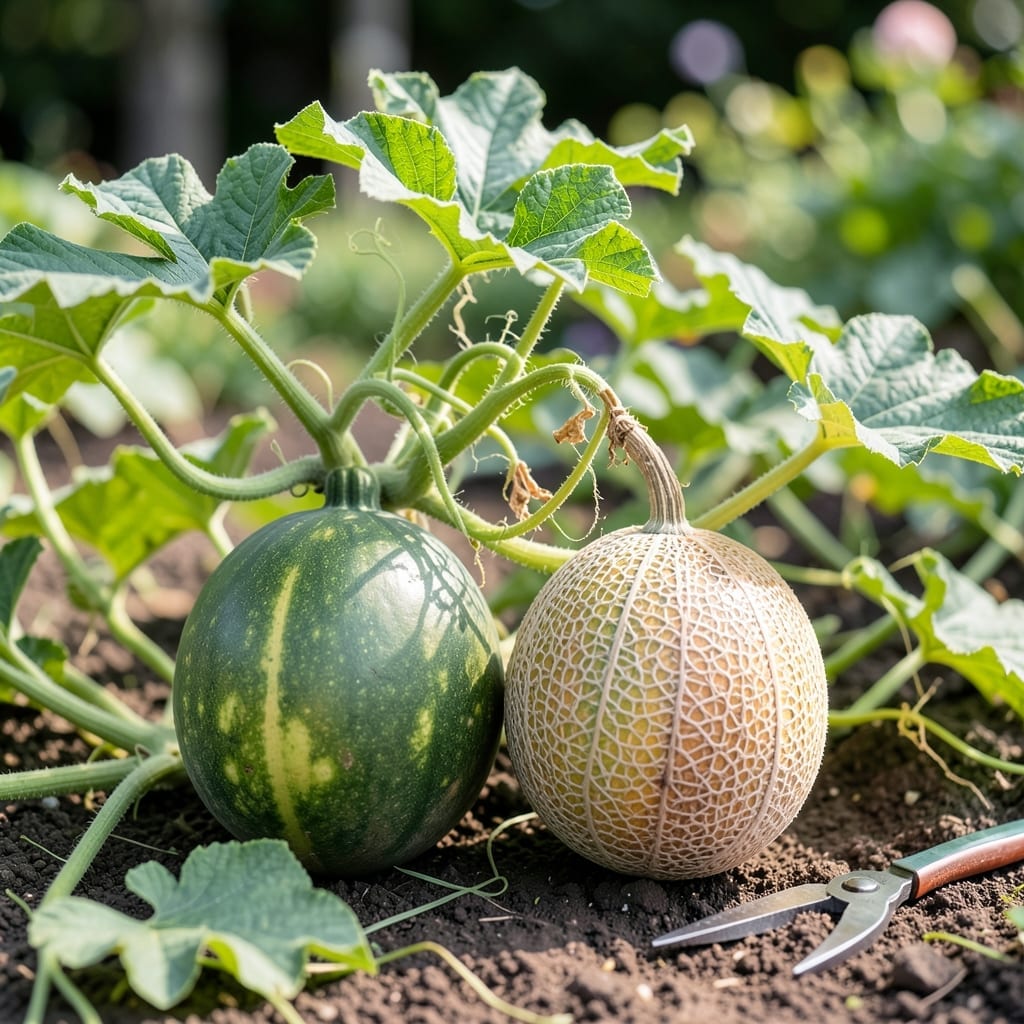
Nothing ruins a summer snack faster than cutting into an unripe cantaloupe. That first disappointing bite makes you wonder why you bothered.
With the 🍈 Cantaloupe harvest running from July to September, knowing the right moment to pick is crucial. The difference between perfect sweetness and bland disappointment comes down to a few simple signs.
I’ll show you the foolproof ways to test for ripeness so you can enjoy that juicy, flavorful melon every time. Let’s get started.


Timing your cantaloupe harvest perfectly ensures maximum sweetness and flavor. Unlike some fruits, cantaloupes don’t continue ripening after picking, so knowing the exact signs is crucial for garden success. ☀️
The first thing I check is the stem end. A ripe cantaloupe will have a stem that slips easily from the vine with gentle pressure, leaving a clean, smooth cavity.
Next, examine the rind color. An unripe cantaloupe has a green rind, but as it matures, the color beneath the netting changes to a creamy beige or tan. This is a visual cue you can spot from a distance.
The netting pattern also becomes more pronounced as the fruit ripens. A well-developed, raised netting with a rough texture indicates maturity. Smooth or shallow netting often means the melon needs more time.
I always use the sniff test. A ripe cantaloupe emits a sweet, musky aroma from the stem end. If there’s no smell or it smells grassy, it’s not ready yet. Your nose is one of your best tools here.
Gently press the blossom end (opposite the stem). A ripe cantaloupe will yield slightly under pressure, similar to pressing a ripe avocado. If it feels rock hard, it needs more time on the vine. 🌱
Finally, check the veins on the stem end. When they turn from green to brown or tan, it’s a clear sign the fruit is ready. This change happens as the melon reaches peak ripeness.
Remember that size alone isn’t a reliable indicator. A small cantaloupe can be perfectly ripe while a large one might still be unripe. Always combine multiple signs for the most accurate assessment.
For the best flavor, harvest in the early morning when the fruit is cool. This helps preserve the natural sugars and freshness. Store at room temperature for a day or two to reach peak sweetness before refrigerating. 🌿
Even experienced gardeners sometimes grab a cantaloupe too soon. I’ve learned the hard way that size alone doesn’t guarantee ripeness. A large melon can still be green inside if the other signs aren’t there. ☀️
Another common error is ignoring the stem. Many people assume that if the cantaloupe is big and heavy, it’s ready, but the stem end tells the real story. Always check for that clean separation first.
Relying only on smell can also trip you up. While the sweet aroma is a great indicator, some cantaloupe varieties have a milder scent. Always combine the sniff test with other signs like rind color and stem slip.
Picking too early in the day can affect flavor too. I’ve found that harvesting in the heat of the afternoon can lead to a less sweet melon. The cool morning hours are ideal for preserving those natural sugars. 🌱
Another mistake is not checking the netting. If the webbing on the rind is still smooth or underdeveloped, the fruit isn’t ready. A ripe cantaloupe will have a well-defined, coarse netting pattern.
Finally, don’t overlook the blossom end. Pressing it gently should give slightly, like a ripe peach. If it feels hard as a rock, leave it on the vine a little longer. With these checks, you’ll never be disappointed again. 🌿