
Beautiful Plants For Your Interior
Beautiful Plants For Your Interior
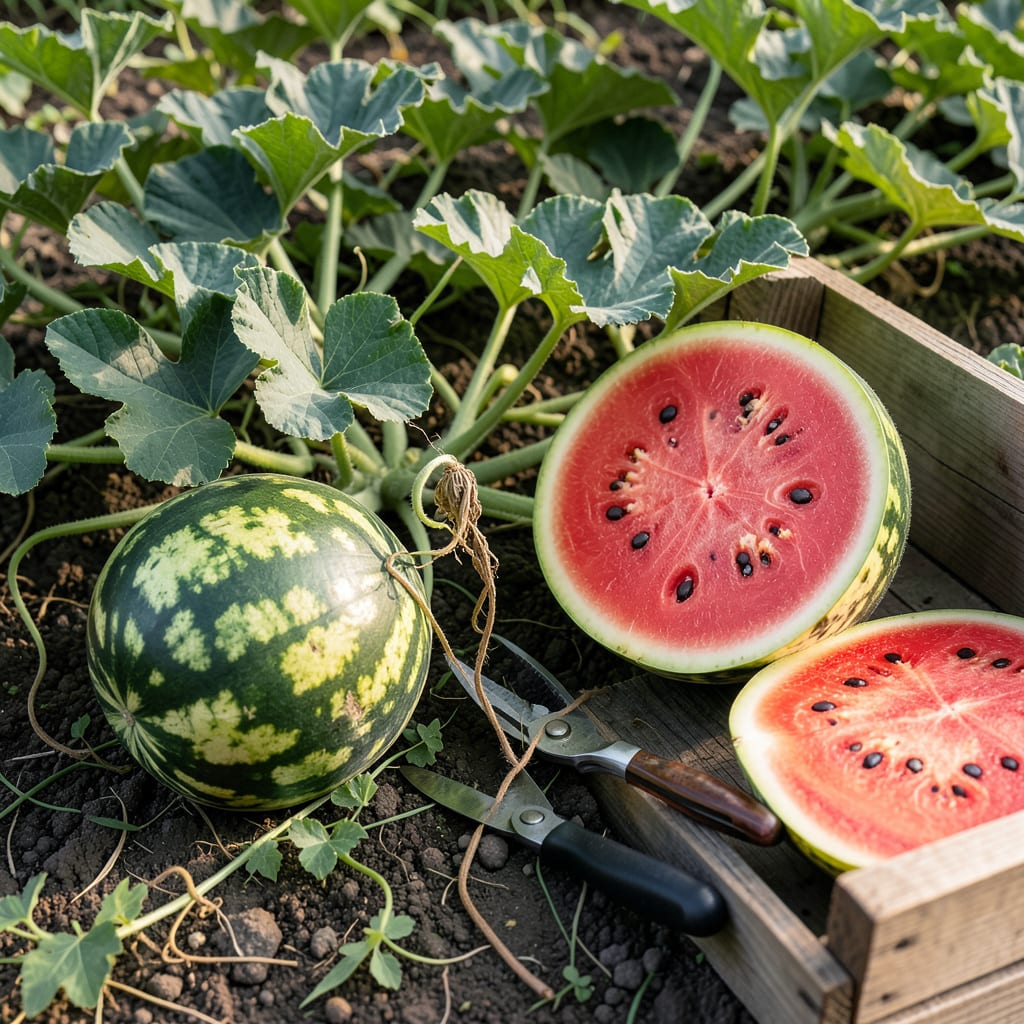
Nothing beats the taste of a homegrown 🍉 Watermelon picked at peak ripeness. But how do you know when it’s ready? Using the wrong cues can leave you with an underripe or overripe fruit.
I’ll show you the most reliable methods to check for ripeness, from the tendril test to the classic thump. These simple tricks will ensure you harvest at the perfect time.


I’ve found that tendril drying is one of the most reliable signs. The curly tendril closest to the stem turns brown and brittle when the fruit is ripe. This happens because the plant stops sending nutrients to the melon once it’s mature. 🌱
Another foolproof method is checking the ground spot. A ripe watermelon will have a creamy yellow or white spot where it rests on the soil. If it’s still green or pale, the melon needs more time on the vine.
| Ripeness Sign | What to Look For |
|---|---|
| Tendril Color | Turns brown and dry |
| Ground Spot | Creamy yellow or white |
| Rind Texture | Becomes dull and hard |
| Sound Test | Deep, hollow thump |
The rind texture also changes as the fruit matures. A ripe watermelon will have a dull, rough surface rather than a shiny one. This is because the waxy coating wears off as the melon reaches peak ripeness.
I always recommend using multiple signs together for accuracy. For example, if the tendril is brown and the ground spot is yellow, it’s a strong indicator that the melon is ready to pick. 🌿
The sound test is another classic method. Tap the melon with your knuckles—if it produces a deep, hollow sound, it’s ripe. A high-pitched or metallic sound means it’s not ready yet.
Timing matters too. Most watermelon varieties take 70 to 100 days to mature after planting. If you know your variety’s days to maturity, you can start checking for ripeness a few days before that window closes.
For example, ‘Sugar Baby’ watermelons are ready in about 80 days, while ‘Crimson Sweet’ may take up to 90 days. Keep track of your planting date to narrow down the harvest window.
I’ve learned that size isn’t everything. A large watermelon doesn’t always mean it’s ripe, and a smaller one might be perfectly mature. Focus on the visual and tactile cues instead of just the size.
Finally, check the stem connection. If the stem easily separates from the vine with a gentle tug, the melon is likely ripe. But be careful not to pull too hard—you don’t want to damage the plant or the fruit. ✂️
I’ve found the thump test to be one of the most reliable ways to check watermelon ripeness. A deep, hollow sound when you tap the melon usually means it’s ready, while a high-pitched or flat sound suggests it needs more time. This method works best on mature vines in dry conditions.
For accurate results, I recommend testing in the early morning when the fruit is cool. Use your knuckles or fingertips to tap firmly near the blossom end. The vibration helps you hear the difference between ripe and unripe melons clearly.
Many gardeners make the mistake of thumping the stem end instead of the blossom end. The blossom end gives the most accurate sound because it’s opposite where the fruit was attached to the vine. This small detail can make a big difference in your results.
I’ve noticed that smaller watermelons often produce a slightly higher-pitched sound even when ripe. Don’t let this confuse you—focus on the hollow quality rather than the pitch. With practice, you’ll start to recognize the perfect sound consistently.
Remember that the thump test works best when combined with other ripeness indicators. I always check the tendril color and ground spot first, then confirm with the thump test for the most reliable results in my garden.
Patience is key with this method. I’ve learned to trust the process and wait for that perfect hollow sound, even if it means leaving the melon on the vine for a few more days.
🌿Not all watermelons show ripeness the same way. I’ve noticed that seedless varieties often mature 5-10 days earlier than their seeded cousins. Their tendrils may dry faster, so start checking them sooner. 🌱
Heirloom watermelons like ‘Moon and Stars’ can take the full 100 days to ripen. Their ground spots turn a deeper yellow, and the rind develops a more distinct pattern when ready.
| Variety | Ripeness Signs |
|---|---|
| Seedless | Early tendril dry, subtle ground spot |
| Heirloom | Deep yellow spot, distinct rind pattern |
| Mini | Uniform dull rind, easy stem separation |
| Icebox | Lighter weight, hollow thump |
Mini watermelons are my favorite for small gardens. They’re ready when the entire rind turns dull and the stem loosens easily. Their compact size makes them perfect for container growing. 🌿
For ‘Crimson Sweet’ watermelons, I wait for the classic striped pattern to become less glossy. The thump test works exceptionally well with this variety—listen for that deep, resonant sound.
Remember that environmental factors like heat and rainfall can affect ripening times. In hotter climates, watermelons may mature 7-14 days faster than the seed packet indicates. Always use multiple signs to confirm ripeness. ✂️
The vine stops sending nutrients to the fruit once mature. A brown, dry tendril signals the plant has finished developing the melon.
No, size isn’t reliable. A large melon might still be unripe. Always check the ground spot and rind texture too.
Yes, but smaller types may have a slightly higher pitch. Focus on the hollow quality, not just the pitch.
It needs more time. A ripe watermelon has a creamy yellow or white spot. Green or pale means wait.
