
Beautiful Plants For Your Interior
Beautiful Plants For Your Interior
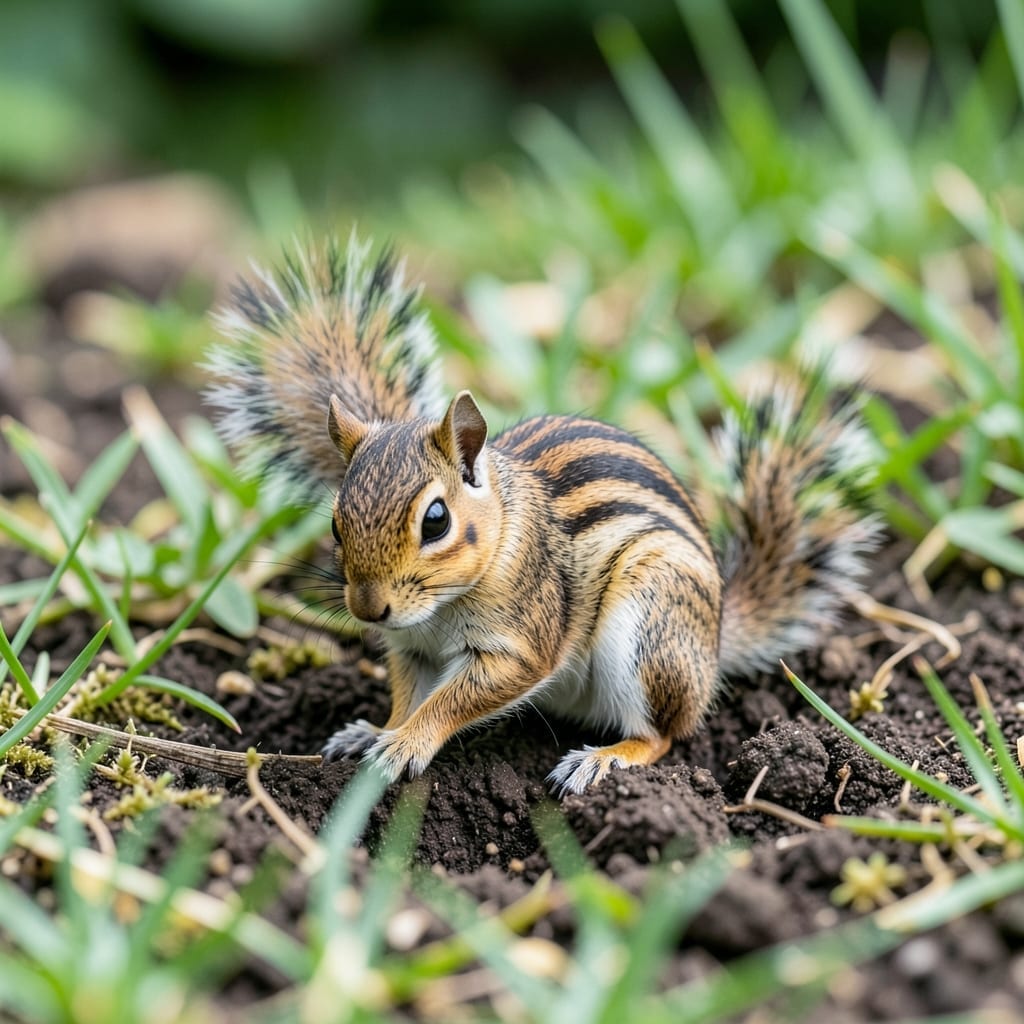
My lawn looked like Swiss cheese last spring. Chipmunks had turned my carefully tended grass into a network of small holes, each one a tiny digging project that ruined the smooth green surface.
Here’s the thing—these little critters aren’t just being pests. They’re building underground tunnels for safety and food storage, and your lawn happens to be prime real estate for their construction.
I’ve tested a dozen humane deterrents that actually work without harming the animals. The key is making your yard less appealing than their other options, using things like natural repellents and physical barriers.
The best part? You’ll see results within a week of starting, and your lawn can recover its smooth, hole-free appearance faster than you’d expect.
Understanding why chipmunks are turning your lawn into a pockmarked landscape is the first step toward reclaiming your yard. These small, energetic rodents aren’t just digging for fun—they’re driven by instinct and necessity. Here’s a breakdown of the primary reasons behind their burrowing behavior:
Chipmunks are solitary creatures that dig elaborate underground tunnels to create safe, cozy nests for shelter, storage, and raising their young. A single chipmunk can excavate a network of tunnels up to 30 feet long, with multiple chambers for sleeping, storing food, and evading predators. Your lawn’s loose, aerated soil is an ideal building material for these subterranean homes.
Unlike some hibernating animals, chipmunks enter a state of torpor (a light hibernation) and wake periodically to snack on their food caches. They dig holes to bury nuts, seeds, and berries, a behavior called scatter hoarding. A single chipmunk can stash up to 165 acorns in a day, and they’re not picky—they’ll use your lawn as their pantry if it’s convenient.
Chipmunks are omnivores, and a significant part of their diet includes insects, worms, and grubs lurking beneath the soil. If your lawn has a thriving population of these critters, chipmunks will dig shallow holes to forage for protein-rich meals. Over-fertilized or waterlogged lawns often attract more grubs, making them a chipmunk’s fast-food drive-thru.
During hot, dry spells, chipmunks dig to access moisture trapped in the soil. The cooler, damp layers beneath the surface provide relief from the heat, and digging helps them regulate their body temperature. Lawns with poor drainage or thick thatch are especially appealing for this purpose.
By addressing these root causes—whether through habitat modification, food source removal, or moisture control—you can make your lawn far less inviting to these industrious diggers.
Dealing with chipmunk holes in your lawn doesn’t have to be a losing battle. Try these humane, practical fixes to reclaim your yard—without harming the little diggers.
Chipmunks dig to create tunnels for shelter and food storage. Fill their holes with gravel or coarse sand—the rough texture discourages re-digging. For active burrows, place hardware cloth (1/4-inch mesh) over the entrance, then cover with soil and a heavy rock to block entry. Check daily for new activity.
Chipmunks dig where they eat. Eliminate their food supply by clearing fallen seeds, nuts, and fruit from your lawn. Use bird feeders with catch trays to prevent spillage, and store pet food indoors. A tidy yard is less inviting!
💡 Pro Tip: Plant chipmunk-resistant bulbs like daffodils or alliums—they’ll avoid the bitter taste.
Protect vulnerable areas with physical barriers. Bury chicken wire (1 foot deep, bent outward at the top) around gardens or flower beds. For lawns, lay wire mesh just below the surface before seeding. Chipmunks can’t dig through it!
Use non-toxic scents to encourage chipmunks to relocate. Soak cotton balls in peppermint or castor oil and place them near holes. Sprinkle cayenne pepper or predator urine granules (available at garden stores) around the perimeter. Reapply after rain.
✨ Bonus: Motion-activated sprinklers startle them with a harmless spray of water—great for larger lawns!
Prevention tip: Keep your lawn short and dry. Chipmunks prefer tall grass and moist soil for digging. Regular mowing and fixing drainage issues make your yard less appealing.
Peppermint, castor oil, and cayenne pepper are most effective. Soak cotton balls in oil or sprinkle powder near holes. Reapply after rain for best results.
Bury chicken wire or mesh at least 1 foot deep with the top bent outward. This prevents chipmunks from digging underneath.
No, they’re completely safe. The sudden water spray startles but doesn’t injure. Great for larger yards with frequent activity.
Avoid mothballs—they’re toxic to wildlife and pets. Stick to natural repellents like castor oil or predator urine granules instead.