
Beautiful Plants For Your Interior
Beautiful Plants For Your Interior
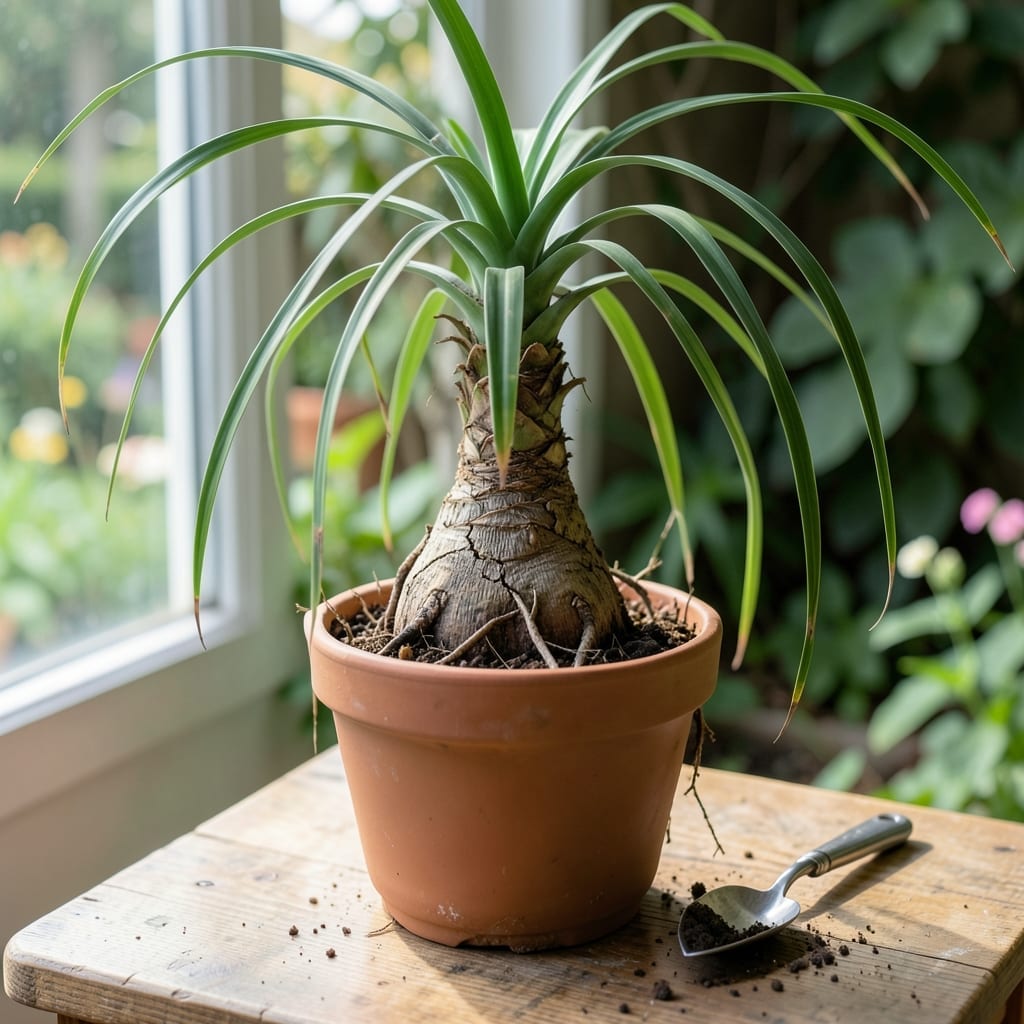
Yellowing leaves and mushy stems mean your ponytail palm is drowning. I’ve rescued mine from the brink more than once with a simple method that works every time.
The trick is acting fast before root rot spreads. You’ll need to inspect the roots, trim the damage, and give it a dry break. Most people overcomplicate this—it’s about what you stop doing as much as what you start.
Within 2-3 weeks, you’ll see new growth if you’ve caught it in time. The key is patience and resisting the urge to water again too soon.
Works for any size plant, from tiny desk specimens to towering floor plants. Here’s exactly how to bring it back to life.
Overwatering your ponytail palm often stems from well-meaning but misguided care. This succulent-like plant, native to arid regions, thrives on neglect rather than constant attention. Here’s why overwatering happens:
The most common cause is simply watering too often. Ponytail palms store water in their thick, bulbous trunks, designed to survive drought. When you water before the soil dries out, the roots suffocate in soggy conditions, leading to rot.
Even if you water sparingly, improper drainage can trap moisture. Compacted soil, lack of drainage holes, or heavy clay pots prevent excess water from escaping, creating a waterlogged root zone.
Using the wrong container (e.g., no drainage holes) or dense, moisture-retentive soil (like regular garden soil) exacerbates the problem. Ponytail palms need fast-draining mixes, such as cactus or succulent soil, to mimic their natural habitat.
Cool temperatures or low light slow down evaporation, meaning the soil stays wet longer. If you don’t adjust your watering schedule for seasonal changes, the plant’s roots can’t dry out properly.
Don’t panic if your ponytail palm is soggy and sad—there’s still hope! 🌱 Here’s how to tackle the most common overwatering issues and nurse your plant back to health.
If the leaves are turning yellow, your plant is drowning. Stop watering immediately and let the soil dry out completely. Check the moisture by sticking your finger 2 inches into the soil—if it’s damp, wait a few more days. Once dry, resume watering only when the top 1-2 inches of soil are bone-dry. Prevention tip: Use a well-draining pot and cactus/succulent soil mix to avoid waterlogging. 💡
A soft, squishy trunk means root rot has likely set in. Act fast: Gently remove the plant from its pot, trim away any black or mushy roots with sterilized scissors, and repot in fresh, dry soil. Avoid watering for at least a week to let the roots recover. Prevention tip: Ensure your pot has drainage holes—no exceptions!
Overwatering often leads to poor oxygen circulation in the soil. Move your ponytail palm to a bright, airy spot with indirect light and good ventilation. A small fan nearby can help evaporate excess moisture. Prevention tip: Avoid placing the plant in humid areas like bathrooms unless you’re diligent about soil checks. 🌬️
Stunted growth can signal stress from overwatering. Hold off on water and fertilizer until the plant shows signs of recovery (new, firm leaves). Once it’s stable, resume a light watering schedule—just enough to keep the soil from fully drying out. Prevention tip: Remember, ponytail palms store water in their trunks, so they prefer neglect over attention!
Wait until the top 2-3 inches of soil are completely dry. This may take 2-3 weeks depending on your home’s conditions. Always check with your finger first.
No, use a fast-draining cactus/succulent mix instead. Regular soil holds too much moisture and can cause the problem to return. Add perlite for extra drainage.
Softness at the base usually means advanced rot. Trim all mushy tissue with sterilized tools and repot immediately. Recovery isn’t guaranteed at this stage.
Never fertilize a stressed plant. Wait until you see new, healthy growth—usually 4-6 weeks after treatment. Fertilizer can burn damaged roots.