
Beautiful Plants For Your Interior
Beautiful Plants For Your Interior
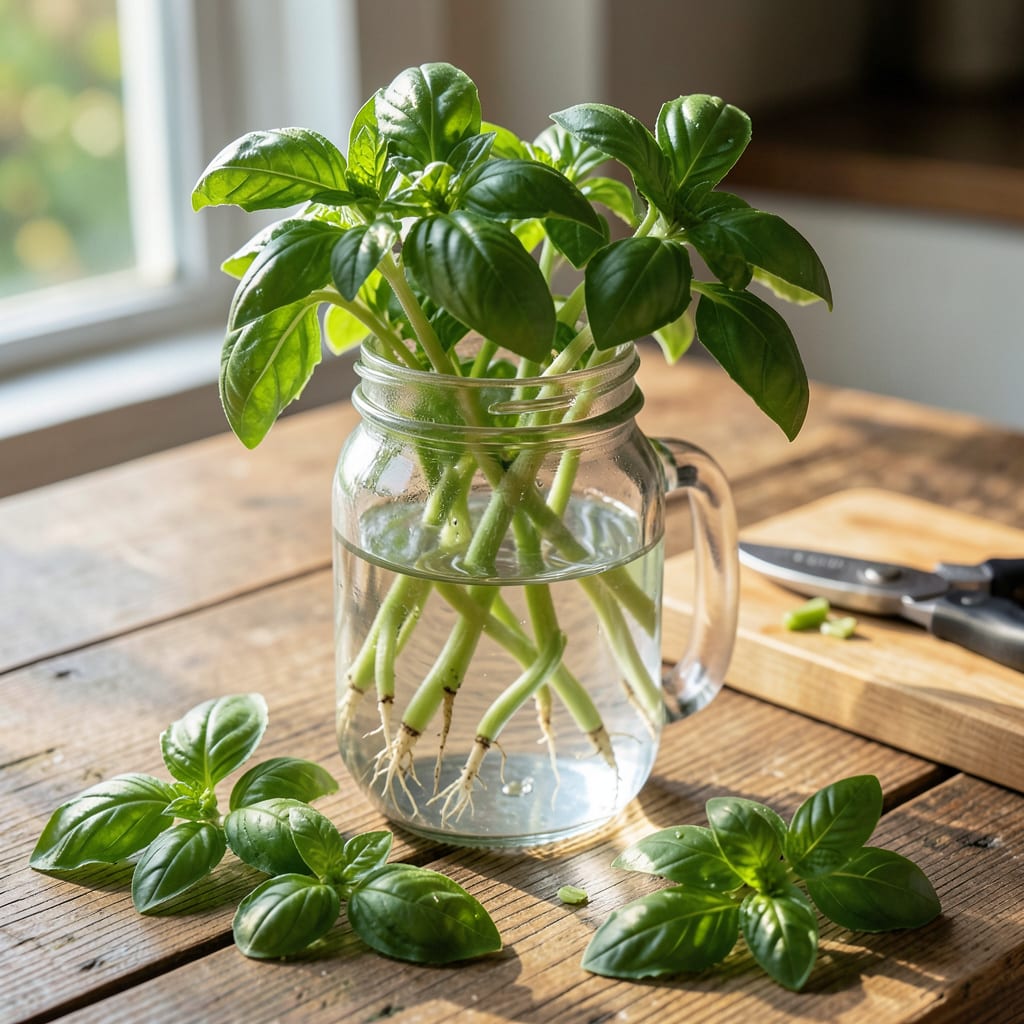
I’ve turned dozens of grocery-store basil stems into thriving plants using this water method. It’s the simplest way to multiply your favorite varieties without buying seeds or seedlings.
Within 10-14 days, you’ll see white roots forming. The key is fresh cuttings, clean water, and indirect light—no special tools required.
📚 In This Guide
This water propagation technique is nearly foolproof if you follow these precise steps.
Choose non-flowering stems from a mature basil plant, ideally 4-6 inches long with at least two sets of leaves. Flowering stems have lower rooting hormones and often fail. I always pick in the morning when the plant’s hydration is highest—you’ll feel the stems snap cleanly rather than bend.
Using clean, sharp scissors, cut just below a leaf node (the bump where leaves emerge). Remove the lower set of leaves completely, leaving 2-3 sets of leaves at the top. This reduces moisture loss and directs energy toward root production. Avoid crushing the stem—clean cuts heal faster.
Fill a clean glass or jar with room-temperature water (cold water shocks the stems). Submerge only the bottom 1-2 inches of the stem—the leaf nodes should be just above the waterline. I use filtered or distilled water because chlorine in tap water can inhibit rooting.
Place the jar in a location with bright, indirect light (a north or east-facing windowsill works well). Direct sun heats the water and encourages algae growth. You should see tiny white bumps (root initials) forming along the stem within 3-5 days.
Change the water every 2-3 days to prevent bacterial growth. If the water looks cloudy before then, replace it immediately. I add a single drop of hydrogen peroxide to the water occasionally—it oxygenates the solution and prevents rot.
Check daily for progress. Roots typically emerge from the nodes first, appearing as white threads. Once roots reach 1-2 inches long (usually in 7-14 days), the cuttings are ready for transplanting. I’ve found that sweet basil roots faster than Thai or lemon varieties.
If stems turn black or mushy at the base, they’re rotting—remove them immediately and try again with fresh cuttings. Yellowing leaves indicate too much direct light or inconsistent water levels. Adjust conditions and try a new cutting.
Prepare small pots with well-draining potting mix. Create planting holes with your finger, then gently place each rooted cutting into its hole. Firm the soil lightly around the base to eliminate air pockets. I always water immediately after transplanting to help the soil settle around the new roots.
Keep the soil consistently moist (not soggy) for the first week as the plants transition from water to soil. Place in bright, indirect light initially, gradually introducing more sun over 3-4 days. You’ll know they’ve adjusted when you see new leaf growth at the top.
These details make the difference between success and starting over with fresh cuttings.
Cutting Selection: In Step 1, always choose stems that are 4-6 inches long with visible nodes. I learned the hard way that flowering stems rarely root—they simply lack the hormones needed for growth. Morning harvesting ensures maximum hydration for better shock resistance.
Water Quality Matters: For Step 2, that room-temperature water specification isn’t arbitrary. Cold water puts stems into shock, while warm water encourages bacterial growth. I’ve had best results with filtered water, and that single drop of hydrogen peroxide every 2-3 days truly prevents rot without harming the cuttings.
Light Conditions: The bright, indirect light requirement in Step 2 is critical. Direct sunlight creates a greenhouse effect in the jar, heating the water and promoting algae. A north-facing windowsill works perfectly, as does an east-facing one that only gets morning sun.
Transplanting Timing: In Step 3, don’t rush the process. Those 1-2 inch roots typically appear after 7-14 days, and transplanting too early often results in failure. I wait until the roots are at least an inch long and show multiple white threads before moving to soil.
Yes, but water propagation is easier for beginners. Soil rooting requires consistent moisture and humidity. Start in water to monitor root growth, then transplant once roots are 1-2 inches long for best results.
Typically 2-4 weeks! Change the water every 2-3 days and keep the cuttings in bright, indirect light. Warmer temps (70-80°F) speed up the process. Patience is key—some stems root faster than others.
This usually means too much direct sunlight or old water. Move them to indirect light and refresh the water immediately. Trim any yellow leaves to redirect energy to healthy growth.
It’s best to use filtered or distilled water to avoid chlorine, which can hinder rooting. If using tap water, let it sit out for 24 hours first to allow chlorine to evaporate.
Spring or early summer is ideal, as basil thrives in warm conditions. However, you can root basil indoors year-round with proper light and warmth. Avoid cold drafts!
