
Beautiful Plants For Your Interior
Beautiful Plants For Your Interior
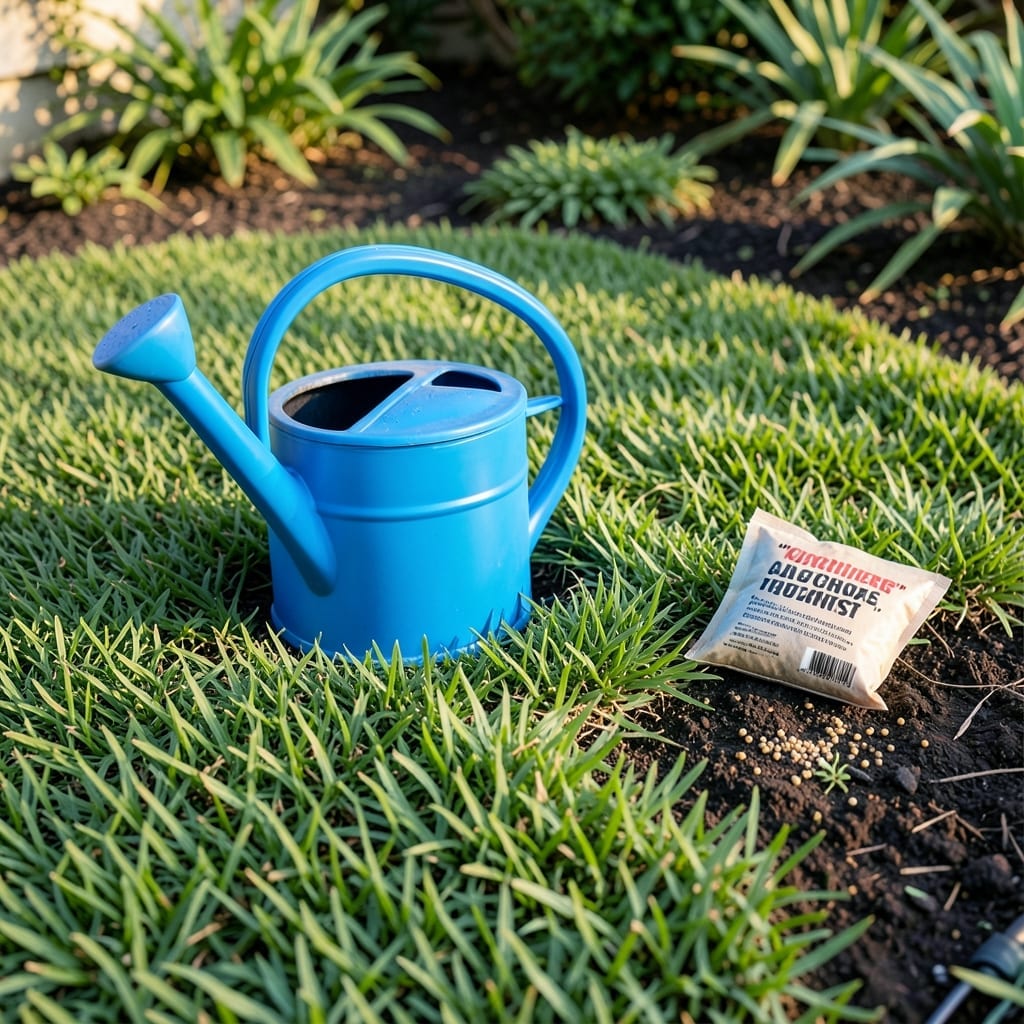
Brown patches in your St. Augustine don’t mean it’s gone for good. I’ve brought back lawns that looked hopeless with the right approach.
The key is diagnosing first—drought, chinch bugs, or fungus each need different fixes. Most people jump straight to watering, but that can make some problems worse.
With consistent care and targeted treatments, you’ll see green shoots returning within 2-3 weeks. The grass spreads quickly once it recovers.
This works for small patches or entire lawns. Let’s get your yard looking lush again.
St. Augustine grass can turn brown or thin out due to several environmental and cultural factors. Understanding the root cause is the first step to revival.
St. Augustine is sensitive to extreme heat and prolonged drought. When temperatures soar above 90°F (32°C), the grass may enter dormancy, turning yellow or brown to conserve water. Stenotaphrum secundatum, its scientific name, has shallow roots, making it vulnerable to moisture loss. Without 1–1.5 inches of water per week (including rainfall), the soil dries out, starving the grass of essential hydration.
Common culprits like brown patch (Rhizoctonia solani) or gray leaf spot (Pyricularia grisea) thrive in warm, humid conditions. Overwatering, poor drainage, or evening irrigation create ideal fungal environments. Look for circular brown patches or gray lesions on blades—these signal an active infection that weakens the turf.
Chinch bugs, grubs, and sod webworms feed on St. Augustine’s roots and stems, causing yellowing or wilting patches. Chinch bugs, in particular, inject toxins that disrupt water uptake. Check for pests by parting the grass and inspecting the soil surface or using a soap test (mix 1 tbsp dish soap in 1 gallon of water and pour over a 1 sq ft area—pests will float to the surface).
Compacted soil restricts root growth and air circulation, while nutrient deficiencies (especially nitrogen, iron, or potassium) lead to pale or stunted grass. A soil test can reveal pH imbalances (St. Augustine prefers pH 6.0–7.5) or lack of organic matter, which are critical for healthy growth.
St. Augustine grass can bounce back with the right care. Below are targeted fixes for common issues, paired with prevention tips to keep your lawn lush and resilient.
Fix: Check for fungal diseases like brown patch or chinch bugs. Apply a fungicide labeled for St. Augustine if fungus is confirmed, or treat for pests with insecticidal soap or bifenthrin. Reseed sparse areas with fresh sod or plugs, and water deeply (1–1.5 inches) 2–3 times weekly to encourage root growth.
Prevention: Avoid overwatering or watering in the evening. Mow at 3–4 inches to shade the soil and reduce stress. 💡 Pro tip: Aerate compacted soil in spring to improve drainage.
Fix: Yellow grass often signals underwatering, nutrient deficiency, or iron chlorosis. Revive it by watering deeply at dawn and applying a balanced fertilizer (16-4-8 NPK) or iron supplement for chlorosis. If the soil is waterlogged, improve drainage with sand or organic matter.
Prevention: Test soil pH (ideal: 6.0–7.5) and amend if needed. Use a slow-release fertilizer to avoid burns. 🌡️ Pro tip: Reduce foot traffic on stressed areas to prevent further damage.
Fix: For white grubs, apply imidacloprid or milky spore powder. For chinch bugs, use bifenthrin or permethrin and water thoroughly afterward. Remove thatch (over 0.5 inches) to eliminate pest hiding spots.
Prevention: Encourage natural predators like birds and beneficial nematodes. Over-seed with resistant varieties like Floratam. ✨ Pro tip: Inspect the lawn regularly for early signs of pests.
Fix: Water deeply (1 inch) every 3–4 days during dry spells, preferably in the early morning. Apply a 2-inch layer of mulch to retain moisture. Avoid fertilizing during extreme heat—wait for cooler weather.
Prevention: Choose drought-tolerant St. Augustine cultivars like Palmetto or Seville. Improve soil organic matter to boost water retention. 🎯 Pro tip: Raise mower blades to 4 inches to reduce evaporation.
Water deeply with 1–1.5 inches per week, split into 2-3 sessions. Early morning is ideal to prevent evaporation and fungal growth.
Use a balanced fertilizer like 16-4-8 NPK for general revival. For yellowing, add an iron supplement to address chlorosis.
Yes! Deep watering and removing dead thatch can stimulate regrowth. Expect to see improvement within 2-3 weeks with consistent care.
Tug on a brown patch—if roots resist, it’s likely dormant. If it pulls up easily, it may be dead and need reseeding.