
Beautiful Plants For Your Interior
Beautiful Plants For Your Interior
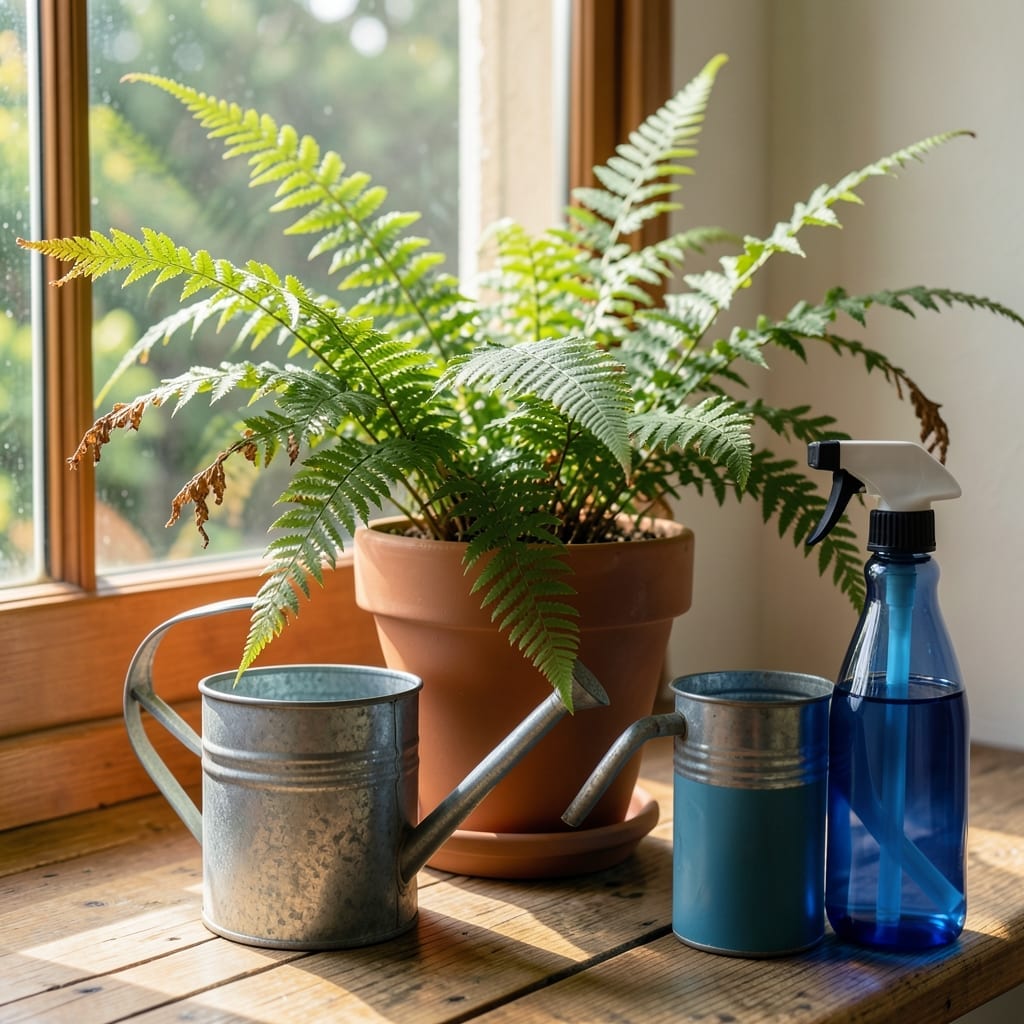
Brown fronds and crispy tips don’t mean your fern is done for. I’ve brought back plants that looked like dried arrangements with just a few adjustments to their care.
Most ferns decline from simple fixes: too little water, air that’s too dry, or light that’s either too dim or too harsh. The good news is they’re tougher than they look and bounce back fast with the right conditions.
Within 2-3 weeks, you’ll see new growth unfurling if you address the root cause. The key is consistency—steady moisture, gentle light, and a touch of humidity make all the difference.
This works for Boston, maidenhair, or any common house fern. Here’s how to nurse yours back to its lush, green self.
Ferns thrive in stable, humid environments, so when they start to brown or crisp, it’s usually a sign of stress from suboptimal conditions. Below are the most common causes, explained with actionable insights.
Ferns are native to tropical and subtropical regions, where humidity levels often exceed 50-70%. In dry indoor air (especially from heating or AC), their fronds lose moisture faster than they can absorb it, leading to brown, crispy tips. This is a survival mechanism—shedding damaged tissue to conserve water.
Overwatering suffocates roots by depleting oxygen in the soil, causing root rot and yellowing fronds. Underwatering triggers a drought response, where fronds curl and turn brittle. Ferns prefer consistently moist (not soggy) soil—think of a wrung-out sponge.
Too much direct sunlight bleaches chlorophyll, turning fronds pale or papery. Conversely, deep shade weakens growth, leading to sparse, leggy fronds. Most ferns flourish in bright, indirect light (like a north-facing window or dappled shade outdoors).
Compacted or nutrient-poor soil restricts root growth, while heavy clay or waterlogged pots cause root asphyxiation. Ferns need loamy, well-draining potting mix with organic matter (e.g., peat or compost) to retain moisture without drowning roots.
Sap-sucking pests like spider mites or mealybugs drain moisture from fronds, leaving stippled yellow spots or webbing. These pests thrive in dry conditions, compounding humidity-related stress.
Reviving a fern starts with pinpointing the issue and applying the right fix. Below are the most common problems and their straightforward solutions, along with tips to keep your fern thriving long-term.
If your fern’s soil feels dry and the fronds are crispy, it’s likely thirsty. Soak the pot in a basin of room-temperature water for 10–15 minutes, allowing the roots to absorb moisture. Drain excess water afterward to avoid soggy soil. Prevention tip 💡: Water when the top inch of soil feels dry, but don’t let it dry out completely. Ferns prefer consistently moist (not soggy) soil.
Yellowing fronds and a foul smell signal overwatering. Stop watering immediately and let the soil dry out. If root rot is suspected, remove the fern from its pot, trim any black or mushy roots, and repot in fresh, well-draining soil. Prevention tip 🎯: Use a pot with drainage holes and a soil mix that includes perlite or sand for better airflow.
Brown, scorched fronds often mean too much direct sunlight. Move your fern to a spot with bright, indirect light, like near a north- or east-facing window. If natural light is limited, a grow light can help. Prevention tip ✨: Rotate the pot occasionally to ensure even light distribution.
Leggy growth and pale fronds indicate insufficient light. Relocate the fern to a brighter area, but avoid direct sun. Supplement with artificial light if needed. Prevention tip 🌡️: Keep ferns 12–24 inches away from light sources to mimic their natural understory habitat.
Brown tips and dry fronds can result from low humidity. Mist the leaves daily or place the pot on a tray filled with pebbles and water to create a humid microclimate. A humidifier nearby also works well. Prevention tip 💧: Group ferns together to naturally raise humidity levels around them.
Water when the top 1 inch of soil feels dry. Soak thoroughly, then drain excess. Consistency matters more than frequency—aim for evenly moist soil, not soggy or bone-dry.
Yes, trim dead or crispy fronds at the base. This helps the plant focus energy on healthy growth. Use clean scissors to prevent spreading disease.
Most can! Submerge the pot in water for 10-15 minutes to rehydrate roots. New growth should appear in 2-3 weeks if the roots remain alive.
Ideal range is 50-70%. Use a humidity tray or group plants together. Avoid misting at night to prevent fungal issues.