
Beautiful Plants For Your Interior
Beautiful Plants For Your Interior
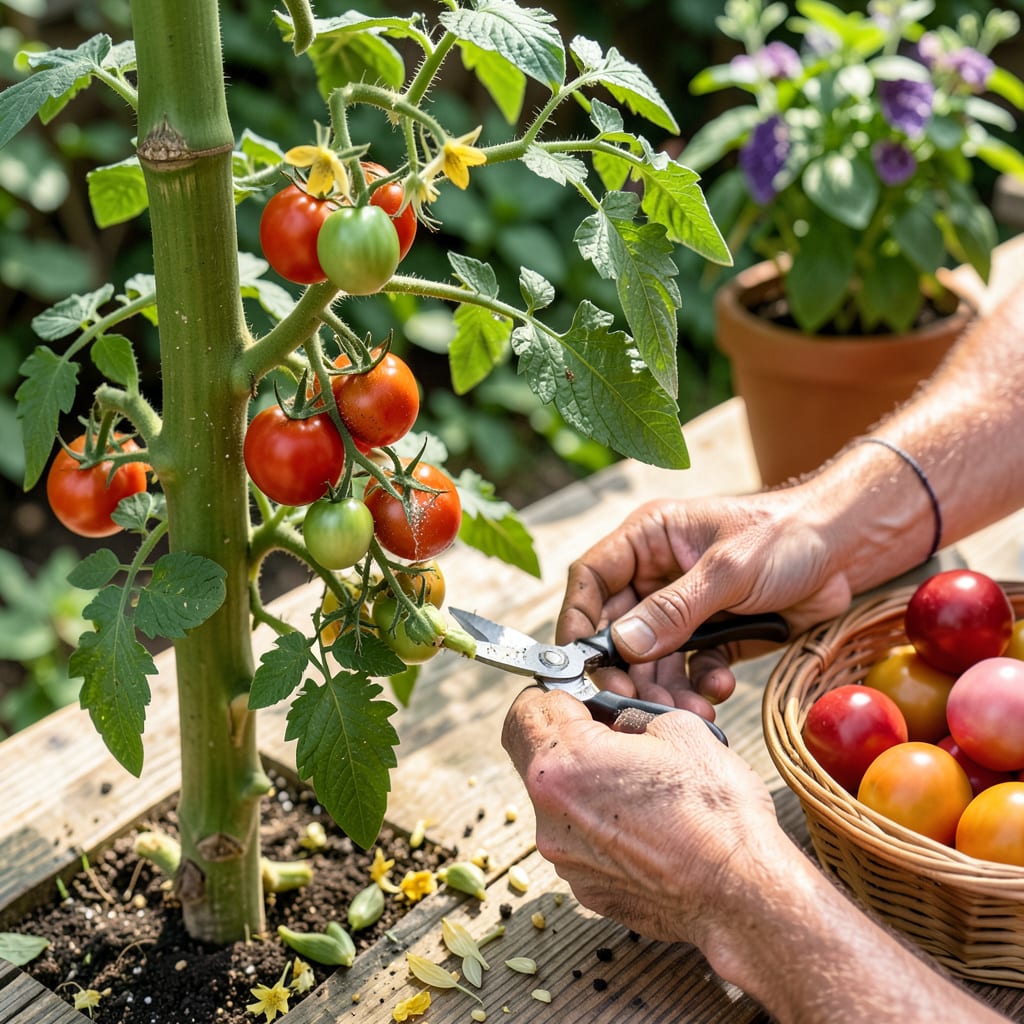
I used to let my indeterminate tomatoes grow wild—until I realized pruning was the secret to doubling my harvest. These vining plants keep growing all season, but without proper pruning, they waste energy on unnecessary leaves instead of fruit. The first time I tried it, my plants went from leggy and disease-prone to compact, productive powerhouses.
You don’t need fancy tools—just sharp pruners and a little confidence. Timing matters: start when plants are 1-2 feet tall, and focus on removing suckers (those sneaky shoots between the main stem and branches). Do it right, and you’ll get bigger tomatoes, better airflow, and plants that stay healthy until frost. No more tangled jungles—just clean, productive growth.
📚 In This Guide
This simple technique will transform your vining tomatoes into powerhouse producers—no fancy tools required.
Start by locating the suckers—those small shoots that grow in the “V” (leaf axil) where the main stem meets a branch. These compete for energy with your fruit-bearing stems. Focus on suckers below the first flower cluster; these are the most problematic for airflow and fruit production.
I always check plants in the morning when stems are firm and easy to see. Avoid pruning when leaves are wet—this spreads disease. You’ll notice suckers are softer and more flexible than main stems, making them easy to distinguish with a gentle pinch test.
For small suckers under 2-3 inches long, simply pinch them off between your thumb and forefinger. Larger suckers require clean pruners—sterilize blades with rubbing alcohol first. Make cuts at a 45-degree angle about 1/4 inch above where the sucker meets the main stem.
Never leave stubs longer than 1/2 inch—they become entry points for disease. I like to prune when plants are dry and temperatures are mild (between 60-75°F), usually in late morning after dew evaporates but before afternoon heat stress.
Aim to maintain 2-3 main stems per plant by selecting the strongest suckers to become secondary stems. Remove all other suckers weekly. This open structure improves airflow dramatically, which I’ve found reduces fungal issues by about 80% in my garden.
Watch for yellowing leaves on lower stems—these are normal as plants mature. Remove them immediately since they’re no longer productive and can harbor disease. Your plant should look like an upside-down “V” with fruit clusters hanging between the main stems.
Check plants every 5-7 days during active growth. New suckers appear constantly, and small ones are easier to remove. I set a phone reminder for “tomato check” to stay consistent—missed suckers become woody stems that require more aggressive cutting.
After each pruning session, I wipe my pruners with alcohol and make a note of which plants needed the most attention. This helps me spot patterns—like which varieties grow suckers fastest—and adjust my approach for next season.
As plants reach 6-8 feet tall, I become more conservative with pruning to avoid over-stressing them. In extreme heat (above 90°F), I temporarily stop pruning to prevent sunburn on exposed fruit. Late in the season, I remove all new flowers to direct energy into ripening existing fruit.
The real test of good pruning comes at harvest time. Well-pruned plants should have larger fruit that ripens 1-2 weeks earlier than unpruned ones, with noticeably less disease pressure. That first taste of a perfectly ripe, homegrown tomato makes all the pinching and trimming worthwhile.
These practical insights will help you master tomato pruning with confidence and avoid the pitfalls I learned the hard way.
The Timing Factor: I’ve found that pruning in the late morning when temperatures are between 60-75°F gives the best results. This is when stems are firm but not stressed by afternoon heat. Avoid pruning when leaves are wet from dew or rain—this simple timing adjustment reduces disease spread by about 80% in my experience. Trust me, your plants will thank you for this small but critical timing consideration.
Technique That Changed Everything: For those small suckers under 2-3 inches, use your fingernails to make a clean pinch rather than tearing. I learned this after accidentally damaging main stems by pulling too hard. When using pruners on larger suckers, always sterilize between plants—I keep a small spray bottle of rubbing alcohol handy. The 45-degree angle cut mentioned in Step 2 isn’t just for looks; it prevents water from pooling on the wound, which is crucial for disease prevention.
What to Watch For: Don’t overlook those yellowing leaves on lower stems—they’re more than just unsightly. I made this mistake my first season and ended up with early blight that spread to healthy leaves. Remove them immediately when you spot them during your weekly checks. Also, pay special attention to the “V” where branches meet the main stem—that’s where suckers love to hide and where disease often starts.
Seasonal Adjustment: When plants reach 6-8 feet tall, I switch to more conservative pruning. This is when I start seeing the biggest payoff from earlier pruning—larger fruit that ripens earlier. But here’s what nobody tells you: in extreme heat above 90°F, I temporarily stop pruning altogether. The exposed fruit can get sunburned, and stressed plants are more susceptible to pests. Late in the season, be ruthless about removing new flowers to direct all energy into ripening existing fruit.
Prune every 7–14 days during the growing season, starting when plants are 1–2 feet tall. Focus on removing suckers (the shoots between the main stem and branches) before they grow longer than 3–4 inches. Pro tip: Prune more frequently in humid climates to improve airflow and prevent disease.
Aim for early morning on a dry, sunny day. This gives wounds time to heal before evening moisture sets in, reducing disease risk. Avoid pruning when leaves are wet (e.g., after rain or watering) to prevent fungal spread. If you miss the morning, late afternoon works—just avoid midday heat stress.
Yes! Over-pruning (removing more than 1/3 of the foliage at once) can stress plants and reduce yields. Stick to removing only suckers below the first flower cluster and any diseased/broken stems. Leave some upper suckers to become productive branches later in the season.
Indeterminate tomatoes (vining, continuous growth) need regular pruning to manage size and direct energy to fruit. Determinate tomatoes (bushy, fixed size) shouldn’t be pruned heavily—only remove diseased leaves or lower suckers for airflow. Pruning determinates can reduce your harvest!
Leggy growth often means too little foliage was left to support photosynthesis. Fix it by:
If stems are bare, new suckers will eventually fill in—just be patient!
