
Beautiful Plants For Your Interior
Beautiful Plants For Your Interior
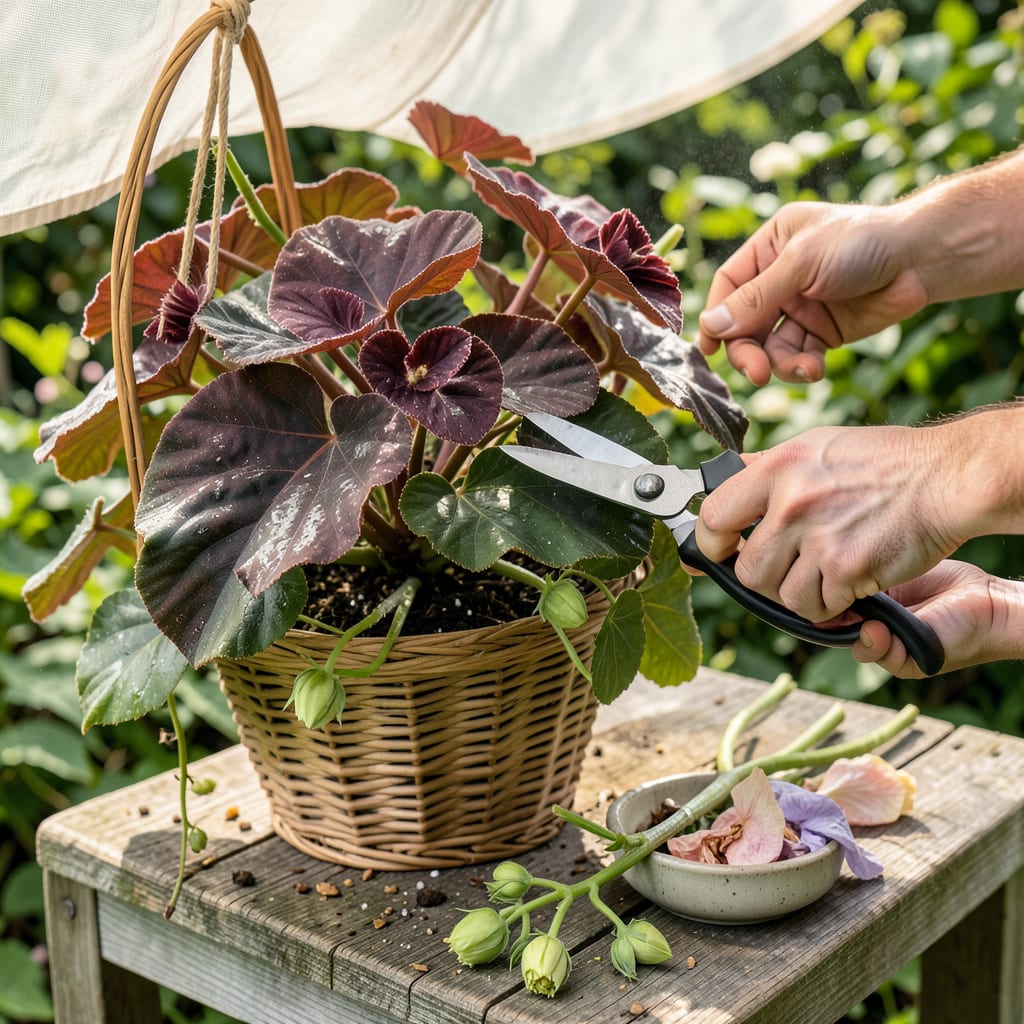
Leggy begonias with sparse blooms? A few strategic cuts can transform them into full, vibrant plants that steal the show. I learned this the hard way after watching my first begonia stretch toward the window like it was begging for help. Pruning isn’t just maintenance—it’s how you unlock bushier growth and nonstop flowers all season.
Timing and technique matter more than fancy tools. The right pruning encourages new stems to branch out, turning a sad, straggly plant into one that’s thick with leaves and buds. My begonias now bloom twice as long because I stopped being afraid of the scissors. You’ll see fresh growth in 7-10 days—and the difference by midsummer is shocking.
📚 In This Guide
This simple technique transforms leggy plants into lush, flower-covered specimens—no special tools required.
Begin by examining your begonia for stems that have grown longer than 6 inches or appear sparse with few leaves. These are your primary targets. I focus first on stems with spent blooms, as removing these dead flowers (called deadheading) prevents seed formation and redirects energy toward new growth.
Look for nodes—those small bumps where leaves emerge from the stem. You’ll make your cuts just above these points. Never prune a stem without at least 2-3 healthy leaves remaining below your cut, as this ensures the plant can still photosynthesize effectively.
Using sharp, clean pruning shears or scissors, cut each targeted stem at a 45-degree angle about 1/4 inch above a leaf node. The angled cut prevents water from pooling on the wound, which could invite disease. I always sterilize my tools with rubbing alcohol between plants to prevent pathogen transfer.
For particularly woody stems (common in cane begonias), you may need to make two cuts: the first to remove most of the length, and a second precise cut at the proper angle. This prevents stem tearing. You’ll feel a slight resistance when cutting through healthy tissue—this is normal.
Step back occasionally to assess the plant’s overall shape. Your goal is to create a balanced, rounded form by pruning the longest stems first. I aim to maintain the plant’s natural growth habit while encouraging bushiness—this means cutting back about one-third of the plant’s total height at most.
Pay special attention to the plant’s center. Removing a few interior stems improves air circulation, which is crucial for preventing powdery mildew. You’ll notice the remaining stems become more vigorous within 7-10 days as the plant responds to the pruning.
After pruning, give your begonia a thorough but gentle watering. The stress of pruning increases water needs temporarily. I use room-temperature water to avoid shocking the roots. You’ll see the first signs of new growth—small red or green bumps at the cut sites—within about 5-7 days.
Collect all the cuttings and either compost them or use the healthier stems for propagation. Begonia cuttings root easily in water or moist potting mix. Place your pruned plant in bright, indirect light for the next week to support recovery without stressing it with intense sun.
Check your begonia weekly for new growth that’s getting too long. Pinch back these young stems with your fingernails when they reach about 4-5 inches. This frequent, light pruning maintains the bushy shape you’ve created and prevents the need for drastic cuts later.
You’ll develop an eye for when your begonia needs attention—look for stems that are noticeably longer than others or leaves that are spacing out too far apart. Regular maintenance pruning every 4-6 weeks keeps your plant compact and flowering prolifically throughout the growing season.
Pruning begonias properly makes all the difference between a struggling plant and one that rewards you with lush growth. Here’s what I’ve learned from years of shaping these beautiful plants.
Precision Cutting: In Step 2, that 45-degree angle cut 1/4 inch above the node isn’t just for looks—it’s crucial for preventing stem rot. I’ve found that making the first rough cut to remove most of the length (especially on woody cane begonias) then following with a precise angled cut gives the cleanest results. The slight resistance you feel when cutting through healthy tissue is completely normal and indicates you’re doing it right.
Balanced Pruning: When shaping in Step 3, remember the one-third rule is your maximum—never remove more than this at once. I like to visualize the plant’s natural growth pattern and work to enhance rather than fight it. Pay special attention to the center where stems often cross; removing just 2-3 interior stems dramatically improves airflow and reduces powdery mildew risk. You’ll be amazed how much more vigorous the remaining stems become within that 7-10 day recovery window.
Post-Pruning Care: The recovery period after pruning (Step 4) is when many gardeners go wrong. That thorough watering with room-temperature water isn’t optional—it helps the plant recover from the stress. Place your begonia in bright, indirect light for exactly one week post-pruning; direct sun during this vulnerable period can scorch the fresh cuts. I’ve had best results with east-facing windows that provide gentle morning light.
Maintenance Routine: The weekly checks mentioned in Step 5 are what separate good pruners from great ones. When you see new growth reaching that 4-5 inch mark, don’t hesitate—pinch it back immediately. This frequent, light pruning maintains your hard-won shape and prevents the “leggy” look that requires more drastic cuts later. Mark your calendar for that 4-6 week maintenance pruning—consistency is what keeps begonias flowering prolifically all season.
Prune in early spring before new growth starts or after flowering to encourage bushier regrowth. For winter-dormant varieties, trim back in late winter. Avoid heavy pruning during peak summer heat—light deadheading is fine!
Yes! Clean, sharp scissors or micro-tip snips work for small stems. Just disinfect blades with rubbing alcohol first to prevent disease. For thicker stems, pruning shears give cleaner cuts. Avoid dull tools—they crush stems!
Leggy growth often means not enough light or inconsistent pruning. After trimming, move your plant to brighter, indirect light and pinch back new tips every 4-6 weeks. Fertilize lightly with a balanced liquid feed to boost fullness.
Tuberous types need less frequent pruning. Cut back stems to 3-4 inches after blooming or when foliage yellows. In winter, let tubers rest—stop pruning and reduce water. Store tubers dry until spring replanting.
No panic! Some begonias (like cane types) ooze clear sap—it’s normal. Dab with a damp cloth to stop flow. Avoid overwatering for 2-3 days post-prune to let wounds callus. If sap is dark/brown, check for stem rot.
