
Beautiful Plants For Your Interior
Beautiful Plants For Your Interior
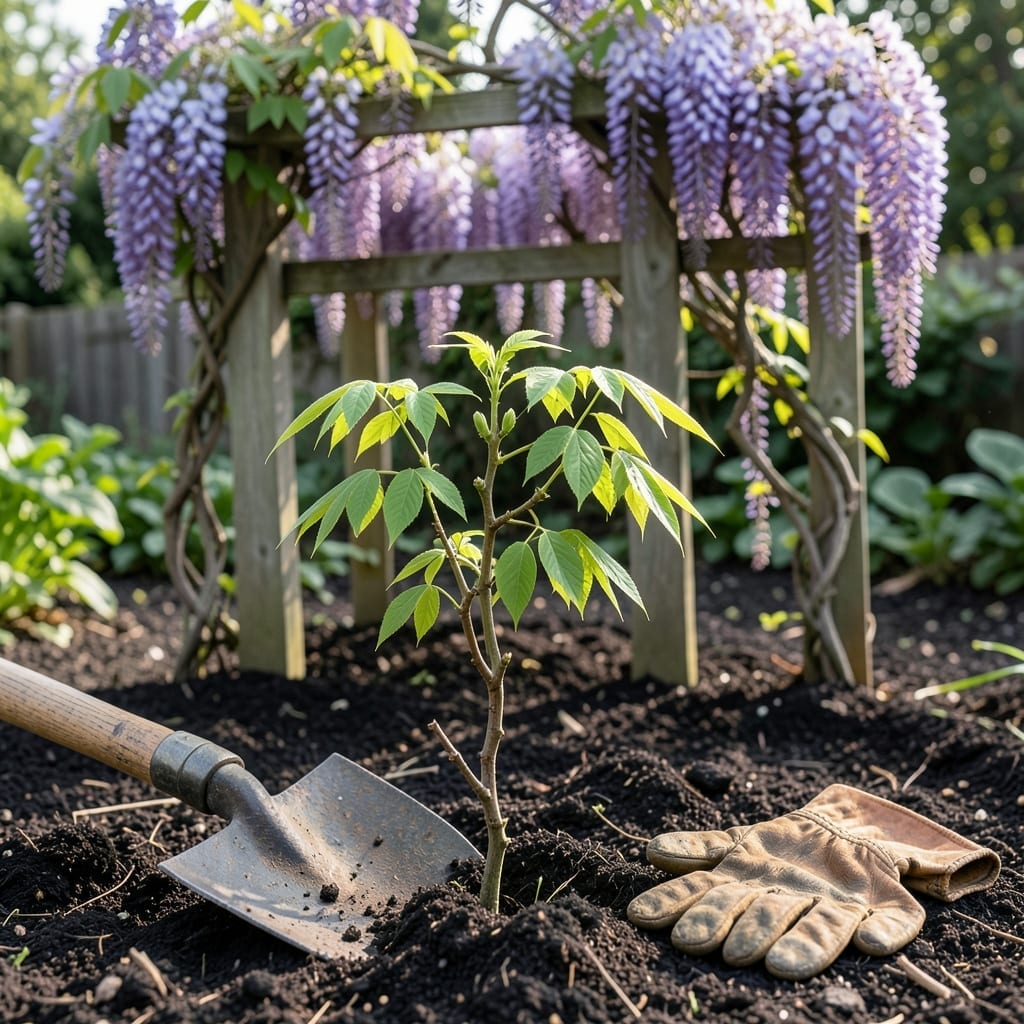
Wisteria’s cascading blooms can turn any garden into a breathtaking escape, but planting it correctly is the key to unlocking its full potential.
Many gardeners struggle with poor growth or missed blooms simply because they skipped critical early steps. The 🌿Wisteria thrives in zones 5-9, making timing and technique everything.
Discover how to set your vine up for success from day one. I’ll walk you through the essentials so you can enjoy vibrant, healthy growth for years to come.


Planting wisteria correctly sets the stage for years of stunning blooms. I always start by choosing early spring (March-May) when the soil is workable but frost has passed. This timing gives roots a head start before summer heat.
The key is soil preparation. Wisteria thrives in well-draining, fertile soil with a pH between 6.0-7.0. I recommend testing your soil and amending with compost if needed.
For spacing, give each vine 10-15 feet of space. Wisteria grows vigorously and needs room to spread. I’ve seen too many gardeners plant them too close together, leading to stunted growth and poor blooming.
Planting depth is crucial. The crown (where roots meet stem) should be 1-2 inches above soil level. Planting too deep can cause rot, while too shallow exposes roots to drying out.
I always recommend installing supports at planting time. A sturdy trellis, arbor, or pergola should be in place before the vine grows too large. Wisteria can become heavy, and retrofitting supports later can damage the plant.
After planting, water weekly for the first year, giving each plant about 1 gallon of water. This encourages deep root establishment. During dry spells, I increase this to twice weekly to prevent stress.
One common mistake I see is over-fertilizing young plants. Wisteria doesn’t need heavy feeding in its first year. In fact, too much nitrogen can promote leafy growth at the expense of flowers.
For best results, plant in full sun (6+ hours daily). While wisteria can tolerate partial shade, it blooms most profusely in bright, direct sunlight. I’ve noticed my sunniest wisteria always produces the most vibrant flowers.
Finally, be patient. Wisteria can take 2-5 years to bloom from seed, but container-grown plants may flower sooner. With proper planting and care, you’ll be rewarded with spectacular fragrant blossoms that transform your garden 🌿
Selecting the perfect spot for your wisteria is crucial for long-term success. I always look for a location with full sun exposure (6+ hours daily) and well-draining soil to prevent root rot.
The right support structure makes all the difference. Wisteria is a vigorous climber that needs a sturdy trellis, arbor, or pergola to thrive. Without proper support, it can become unruly and damage nearby structures.
| Requirement | Specification |
|---|---|
| Sunlight | 6+ hours daily |
| Soil Type | Fertile, well-draining |
| Soil pH | 6.0-7.0 |
| Support | Trellis, arbor, or pergola |
| Spacing | 10-15 feet apart |
For Japanese wisteria, I recommend a strong pergola as it can grow up to 30 feet. Chinese wisteria does well on trellises but still needs ample space to climb and spread.
Avoid planting near houses or fences unless you’re prepared for maintenance. Wisteria’s aggressive growth can damage structures over time if not properly managed with regular pruning.
Good air circulation is another key factor. Planting in a slightly elevated spot can help prevent fungal diseases and promote healthier growth. I’ve found this simple step can make a big difference.
Finally, consider the microclimate of your location. Wisteria prefers sheltered spots from strong winds, which can damage its delicate blooms. A south-facing wall can provide both warmth and protection 🌿