
Beautiful Plants For Your Interior
Beautiful Plants For Your Interior
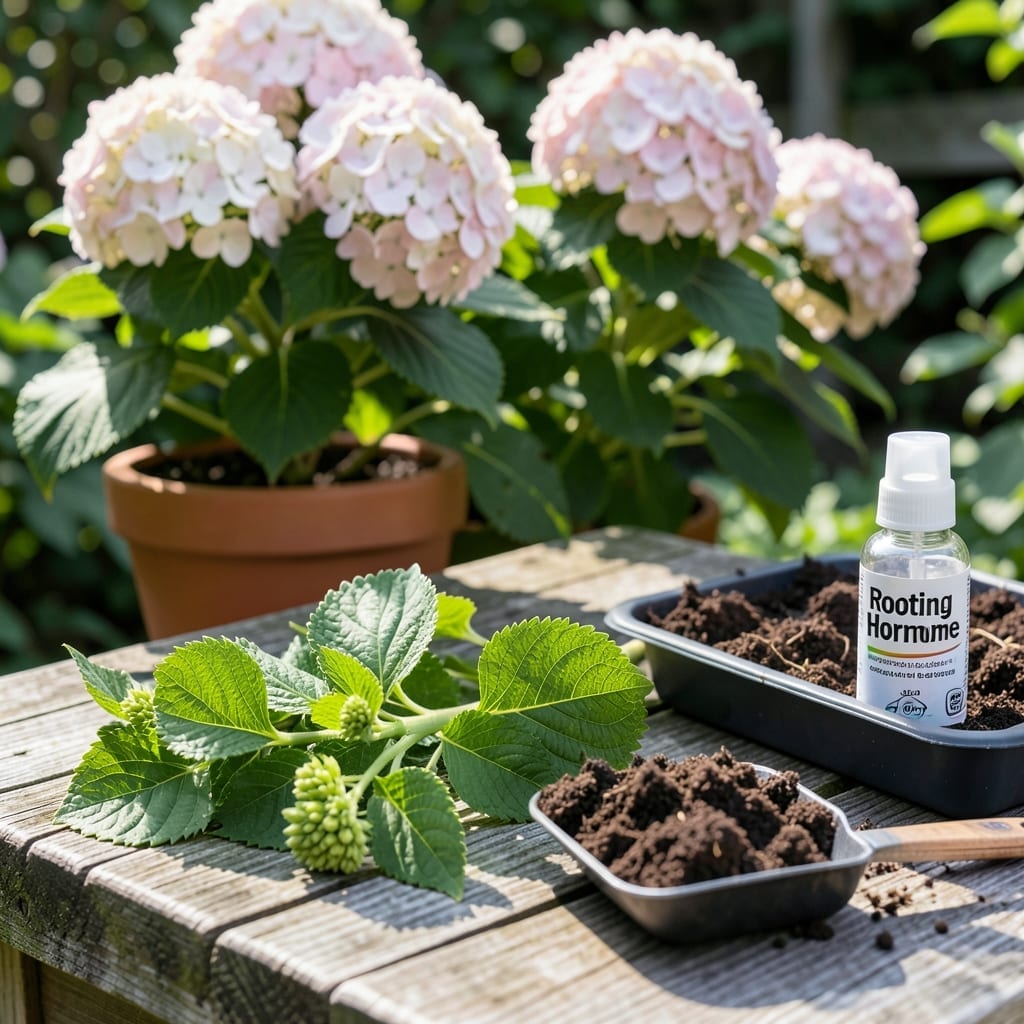
Propagating hydrangeas from cuttings is the easiest way to multiply your favorite 🌸 shrubs for free. With the right technique, you can root new plants in weeks and fill your garden with lush blooms.
I’ve tested various methods, and what I’m about to share will save you time and frustration. Whether you’re a beginner or experienced gardener, these steps work reliably in zone 6a.
Discover how to select the best cuttings, prepare them properly, and create the ideal environment for fast rooting. Let’s get started.
I love propagating hydrangeas because it’s cost-effective and rewarding. The key is timing—late spring or early summer works best when new growth is tender but firm. 🌸
You’ll need sharp pruners, a rooting hormone, and a well-draining medium. I prefer perlite mixed with peat moss for the best results. Always take cuttings in the morning for maximum moisture.
After planting, I mist my cuttings daily to maintain high humidity. A clear plastic bag secured with a rubber band works as a mini greenhouse. Just ensure it doesn’t touch the leaves.
Rooting typically takes 2-4 weeks. You’ll know it’s working when you see new growth or resistance when gently tugging the cutting. Be patient—some varieties root faster than others.
Once roots are 1-2 inches long, transplant to small pots. I use a mix of potting soil and compost for nutrients. Keep them shaded for the first week to reduce stress.
Hardening off is crucial before moving outdoors. I start by placing pots in partial shade for a few hours daily, gradually increasing exposure. This prevents transplant shock. ☀️
For the best success, avoid cuttings with flower buds. These divert energy from root growth. Also, never let the medium dry out completely—consistent moisture is key.
I’ve found that bigleaf hydrangeas root fastest, while oakleaf varieties take a bit longer. Panicle hydrangeas fall somewhere in between, but all respond well to this method.
Finally, label your cuttings with the variety name and date. This helps track progress and adjust care as needed. Happy propagating! 🌿
Not all hydrangeas root at the same pace. I’ve found bigleaf hydrangeas like ‘Endless Summer‘ are the fastest, often showing roots in 2 weeks. Their soft stems respond well to propagation. 🌸
For panicle hydrangeas such as ‘Limelight’, expect a 3-4 week rooting period. Their woody stems take a bit longer but establish strongly once they do.
| Variety | Rooting Time | Success Rate |
|---|---|---|
| Bigleaf | 2-3 weeks | High |
| Panicle | 3-4 weeks | Medium |
| Oakleaf | 4-5 weeks | Low |
Oakleaf hydrangeas are the slowest, often needing 4-5 weeks due to their thicker stems. I recommend using younger growth for better results with these.
The best time to propagate is early morning when stems are fully hydrated. I always choose non-flowering shoots as they root more reliably than flowering ones.
For faster rooting, maintain 70-80% humidity around your cuttings. A clear plastic tent over the container works perfectly for this.
I’ve noticed that greenwood cuttings root faster than semi-hardwood. If your hydrangea has new growth at the tips, those are ideal for propagation.
Remember, patience is key. Even the slowest varieties will root eventually with consistent care and the right conditions. 🌿