
Beautiful Plants For Your Interior
Beautiful Plants For Your Interior
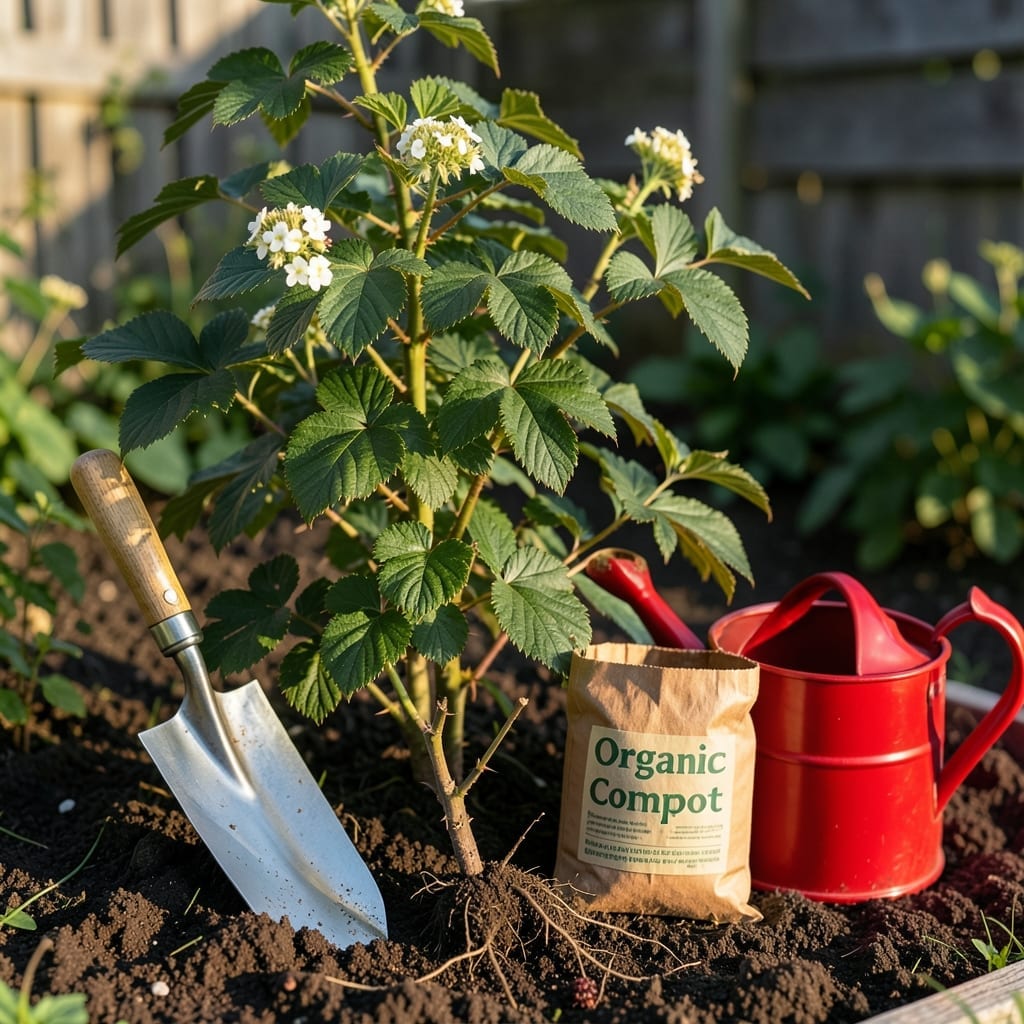
I still remember the first time I bit into a homegrown 🫐 Blackberry – the burst of sweetness was unlike anything from the store. Getting that flavor starts with how you put them in the ground.
Whether you’re working with a spacious backyard or a cozy corner, Blackberry plants reward good preparation with years of harvests. The difference between a struggling bush and a thriving one often comes down to those first critical steps.
Let me walk you through the essentials of soil, spacing, and care that will set your Blackberry patch up for success from day one. You’ll be surprised how simple it is to get it right.


Timing is everything when planting blackberries. I always aim for early spring or fall, when the soil is workable and temperatures are mild. This gives roots time to establish before extreme weather hits.
Your planting site should get full sun—at least 6-8 hours daily—and have well-draining soil. Blackberries hate soggy roots, so avoid low spots where water pools.
Before planting, I always test my soil pH. Blackberries prefer slightly acidic conditions between 5.5 and 6.5. A simple test kit from the garden center does the trick.
Digging the holes properly makes a huge difference. Make them twice as wide as the root ball but no deeper. This encourages roots to spread outward into loose, fertile soil.
Spacing is critical for air circulation and disease prevention. I give each plant 3-4 feet of space in rows that are 6-8 feet apart. This prevents overcrowding as they mature.
For trailing varieties like ‘Boysenberry’ or ‘Marionberry’, install a trellis system at planting. This supports the canes and makes harvesting easier later on.
After planting, I water deeply to settle the soil and eliminate air pockets. Then I add a 2-3 inch layer of mulch to conserve moisture and suppress weeds. Straw or wood chips work great.
In the first week, check soil moisture daily. New plants need consistent moisture but never soggy conditions. I water in the early morning to allow foliage to dry during the day.
Remember, blackberries are perennial, so this initial effort pays off for 15-20 years of harvests. The first year focuses on root establishment, so don’t expect a full crop yet.
With proper planting, you’ll be rewarded with sweet, plump berries for decades to come. 🌿
Choosing the right blackberry variety makes all the difference in your garden’s success. I’ve found that thornless types like ‘Apache’ or ‘Arapaho’ are perfect for families with kids or pets.
For those with limited space, erect varieties like ‘Illini Hardy’ grow upright and need less support. Meanwhile, trailing types such as ‘Boysenberry’ require a trellis system but produce abundant fruit.
| Variety Type | Characteristics | Best For |
|---|---|---|
| Thornless | Easy maintenance, family-friendly | Home gardens, kids |
| Erect | Self-supporting, compact | Small spaces |
| Trailing | High yield, needs support | Large gardens, trellises |
| Dwarf | Small size, container-friendly | Patios, balconies |
When selecting your planting location, remember that all blackberries need full sun—at least 6-8 hours daily. The soil should be well-draining with a pH of 5.5-6.5 for optimal growth.
For erect varieties, I recommend spacing plants 3-4 feet apart in rows that are 6-8 feet apart. This gives them room to grow without competing for nutrients.
Trailing varieties need more space—about 5-8 feet between plants—and a sturdy trellis system to support their long canes. I use a T-post and wire system that’s at least 5 feet tall.
If you’re growing in containers, choose dwarf varieties like ‘Baby Cakes’. Use a 20-gallon pot with good drainage and place it where it gets plenty of sunlight.
No matter which variety you choose, proper placement and support will ensure healthy growth and bountiful harvests for years. 🌱