
Beautiful Plants For Your Interior
Beautiful Plants For Your Interior
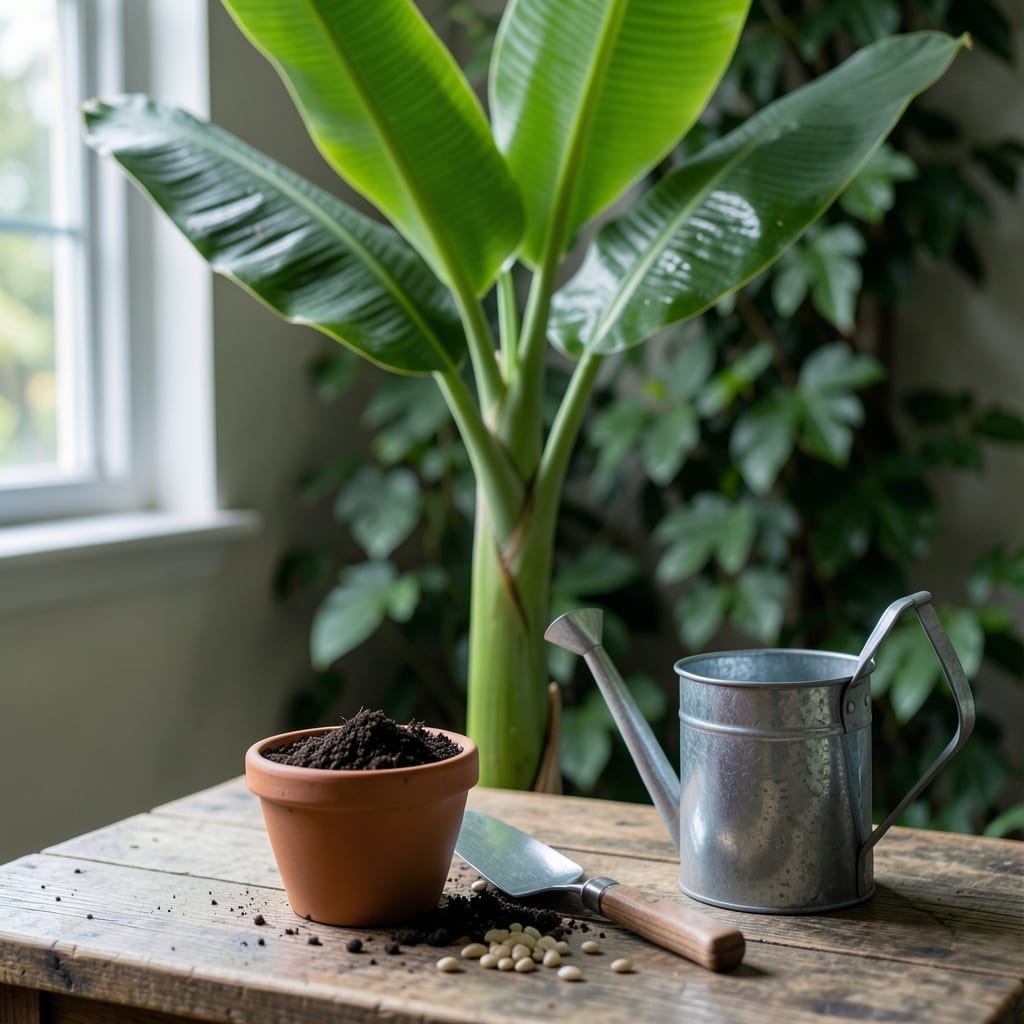
Growing bananas from seeds is a rewarding challenge that lets you cultivate rare 🍌 varieties not found in grocery stores. While it requires patience, the process can be surprisingly simple.
I’ve tested various methods to get these tropical plants started, and what works best might surprise you. The key is creating the right conditions for those tiny seeds to wake up and grow.
Discover the 3 most effective techniques to germinate Banana seeds faster than you thought possible. Let’s get those plants sprouting!
Planting banana seeds requires patience and precision, but the results are well worth it. I’ve found that starting with fresh, viable seeds is the first step to success. These seeds often have a hard outer shell, so proper preparation is key.
Before planting, I always soak the seeds in warm water for 24-48 hours. This softens the seed coat and speeds up germination. It’s a simple trick that makes a big difference in how quickly those seeds will sprout. 🌱
After soaking, I plant the seeds in a well-draining potting mix. Coconut coir or a peat-based blend works best because it retains moisture without becoming waterlogged. Banana seeds are sensitive to rot, so drainage is non-negotiable.
I place the seeds about 1/4 inch deep in the soil. Any deeper, and they may struggle to push through. Then, I lightly cover them and mist the surface to keep it damp. Consistency in moisture is critical during this stage.
The ideal temperature for germination is between 70-80°F. If your home is cooler, consider using a heat mat to maintain the right warmth. I’ve also had success placing trays near a sunny window, but avoid direct sunlight initially.
Humidity is another factor that can make or break your success. I cover the tray with plastic wrap or use a humidity dome to create a mini greenhouse. This keeps the environment moist and warm, mimicking tropical conditions.
Germination can take anywhere from 2 to 6 weeks, depending on the variety and conditions. Once I see tiny sprouts, I remove the cover and move the tray to a spot with bright, indirect light. Direct sun at this stage can scorch the delicate seedlings.
When the seedlings develop 2-3 true leaves, it’s time to transplant them into individual pots. I use a rich, well-draining soil mix and ensure each pot has drainage holes. This prevents water from pooling at the roots.
After transplanting, I keep the soil consistently moist but not soggy. Overwatering is a common mistake that can lead to root rot. A spray bottle works well for gentle watering without disturbing the soil. 🌿
Creating the ideal environment is crucial for fast banana seed germination. I’ve learned that these tropical seeds thrive in conditions that mimic their native habitat. Temperature, humidity, and light all play a significant role in how quickly your seeds will sprout.
The optimal temperature range for banana seed germination is 70-80°F. Anything below 65°F can slow down or even halt the process. If your home is cooler, a heat mat can provide the consistent warmth needed.
Humidity is another key factor. Banana seeds love moisture, so I always cover my trays with plastic wrap or use a humidity dome. This creates a mini greenhouse effect, keeping the air around the seeds warm and moist.
For light conditions, aim for bright, indirect light. Direct sunlight can be too harsh for young seeds and seedlings, potentially drying them out or causing heat stress. A south-facing window with sheer curtains works perfectly.
I’ve found that using a well-draining potting mix prevents waterlogging, which can rot the seeds. Coconut coir or a peat-based blend retains just enough moisture while allowing excess water to escape. Always ensure your containers have drainage holes.
A common mistake is overwatering. While banana seeds need consistent moisture, soggy soil can suffocate them. I use a spray bottle to mist the soil gently, keeping it damp but not drenched. This method also prevents disturbing the seeds. 🌱