
Beautiful Plants For Your Interior
Beautiful Plants For Your Interior
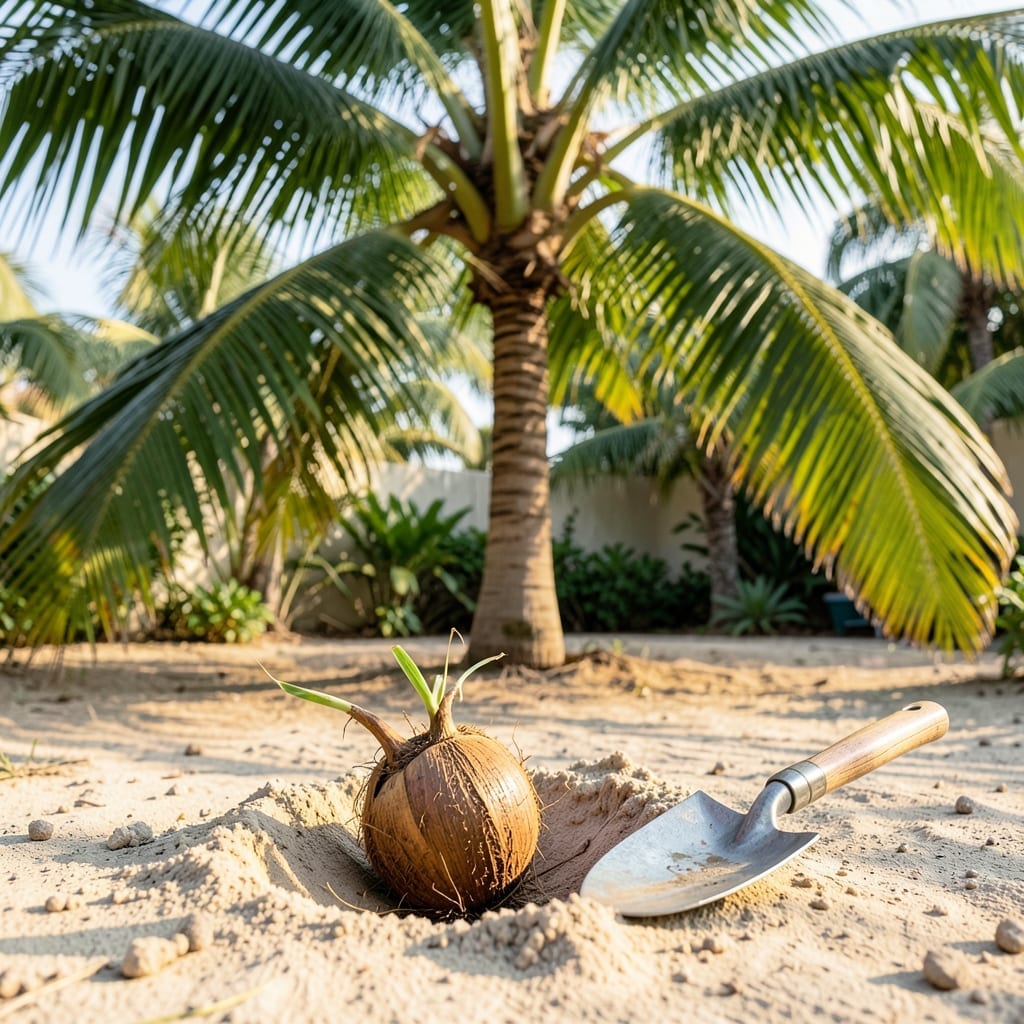
Imagine stepping into your backyard and seeing a tropical paradise come to life. With the right approach, you can grow your own 🥥 Coconut tree and enjoy that slice of heaven at home.
It’s not just about digging a hole and dropping in a nut. The process requires specific conditions and a bit of patience to get it right.
Let me guide you through the essential steps to ensure your Coconut thrives from the very first sprout.

Planting a coconut tree starts with selecting the right nut. I always recommend using a mature brown coconut with intact husk fibers for the best results. Green coconuts won’t germinate properly, so avoid those. 🌱
Before planting, soak the nut in lukewarm water for 2-3 days to soften the husk and encourage sprouting. This step is crucial for breaking dormancy and kickstarting growth.
When choosing your planting location, remember coconuts need full sun exposure and sandy soil that drains well. They thrive in USDA zones 10-12, so if you’re in a cooler climate, consider a large container for indoor growing.
The planting depth is critical. I’ve found that burying about one-third of the nut works best, with the three eyes facing upward. This positioning allows the sprout to emerge properly while keeping the base stable. ☀️
After planting, give your coconut a deep watering of about 1-2 gallons. The soil should stay consistently moist but never waterlogged. I check the moisture by sticking my finger 2 inches into the soil.
Apply a 2-3 inch layer of organic mulch around the base to retain moisture and suppress weeds. Be sure to leave a small gap around the nut itself to prevent rot. 🌿
Be patient – germination can take 1-3 months depending on conditions. I’ve had best results when keeping the soil temperature between 80-85°F. Once sprouted, your coconut will need regular watering and protection from strong winds.
During the first year, expect your coconut to grow 2-3 feet tall. It’s amazing to watch the transformation from a simple nut to a tropical palm. Just remember, consistent care during this early stage sets the foundation for a healthy tree.
If you’re planting multiple coconuts, space them at least 20-25 feet apart. These trees can grow quite large, with mature specimens reaching 50-100 feet tall in ideal conditions.
Finally, protect your young coconut from pests like rats or insects that might be attracted to the nut. A simple wire mesh barrier can work wonders until the tree establishes itself.
Coconut palms thrive in tropical climates with consistent warmth and high humidity. I’ve found they grow best in USDA zones 10-12, where temperatures rarely drop below 40°F. 🌴
These trees demand full sun exposure—at least 6-8 hours daily—and sandy, well-draining soil to prevent root rot. Avoid heavy clay soils, as they retain too much moisture.
| Requirement | Specification |
|---|---|
| Climate | Tropical, USDA 10-12 |
| Sunlight | 6-8+ hours daily |
| Soil Type | Sandy, well-draining |
| Humidity | High (70%+) |
For container growing, choose a large pot with drainage holes and use a sandy potting mix. I recommend adding perlite or coconut coir to improve drainage and aeration.
Watering is critical—keep soil consistently moist but never soggy. In hot climates, daily watering may be needed, while cooler areas might require every 2-3 days. 💧
Avoid over-fertilizing young palms. I use a balanced 8-3-9 NPK fertilizer every 2-3 months, focusing on potassium for fruiting later on.
Finally, protect young trees from strong winds and salt spray if near coastlines. A windbreak or sheltered spot can prevent damage during early growth stages. ☀️