
Beautiful Plants For Your Interior
Beautiful Plants For Your Interior
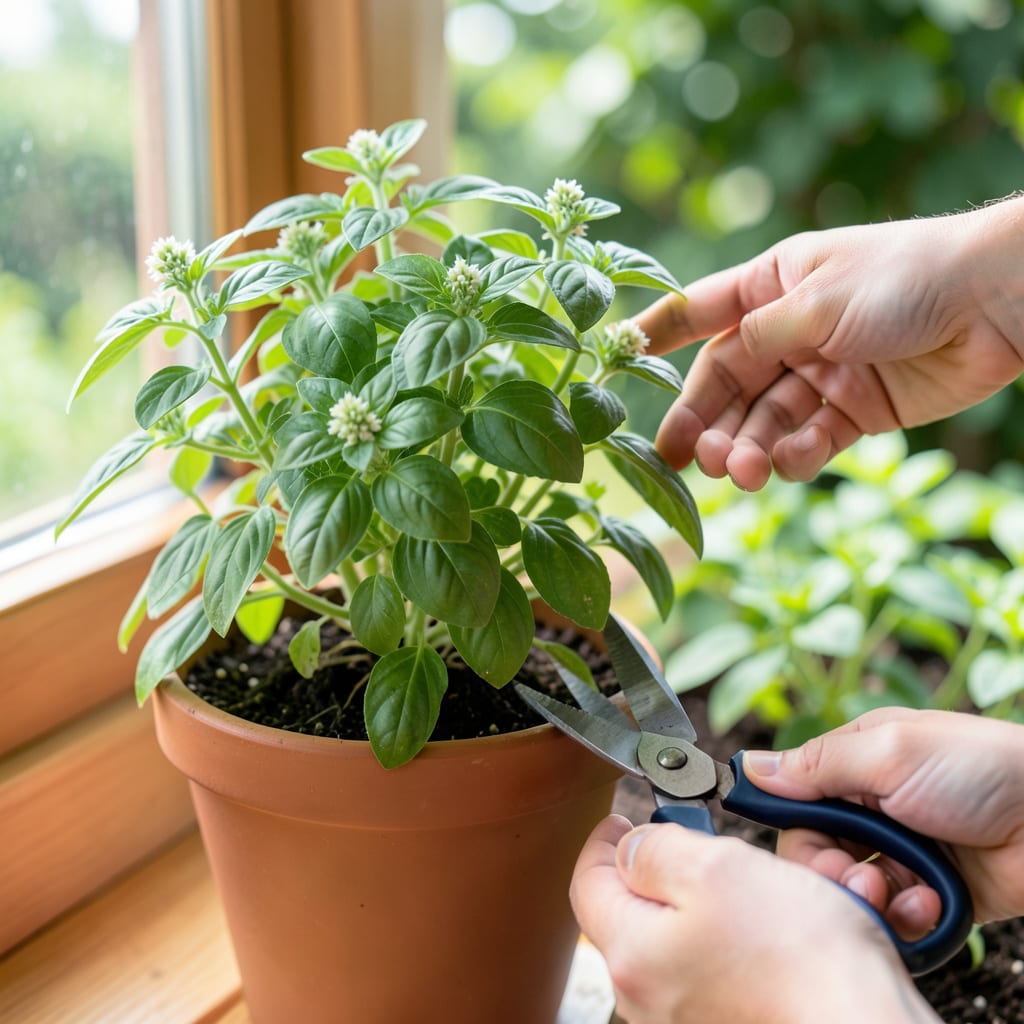
There’s nothing quite like the taste of fresh 🌿 Basil in your favorite dish. But if you pick it wrong, you might be saying goodbye to future harvests and hello to a sad, wilting plant.
I’ll show you exactly how to harvest your Basil so it keeps growing strong all season long. With these simple techniques, you’ll enjoy a steady supply of aromatic leaves.


Harvesting fresh basil correctly ensures your plant stays healthy and productive. The key is to cut stems rather than pulling leaves, which can damage the plant and slow regrowth. Always use clean, sharp tools for the best results.
Timing matters too. I recommend harvesting in the early morning when the essential oils are most concentrated. This is when your basil will be at its most fragrant and flavorful for your gardening needs.
One common mistake I see is people pulling leaves instead of cutting stems. This can damage the plant and reduce future yields. Always use clean shears to prevent disease transmission between plants.
Another important tip: never harvest more than 1/3 of the plant at once. This ensures your basil has enough foliage to continue photosynthesizing and growing strongly. I’ve found this approach keeps my plants thriving all season.
For the healthiest plants, I recommend harvesting before the flower buds appear. Once basil starts flowering, the leaves can turn bitter. Regular picking actually delays flowering and extends your harvest window.
After harvesting, give your plant a light watering to help it recover. Basil prefers consistent moisture but dislikes soggy soil. A good rule of thumb is to water when the top inch of soil feels dry to the touch.
If you notice your plant looking wilting or stressed, take a break from harvesting. This usually means it needs time to recover. With proper care, a single basil plant can produce for several months of the growing season.
Remember, the more you harvest, the bushier your basil will become. This is because cutting just above a leaf node encourages the plant to branch out from that point, creating a fuller, more productive plant.
With these techniques, you’ll enjoy a continuous supply of fresh basil all summer long. The key is consistency and proper technique with every harvest
After harvesting your basil, the right care ensures it grows back fuller and stronger. The secret lies in how you prune and maintain the plant post-harvest. I’ve seen dramatic differences in regrowth with these methods.
First, always remove any flowers or buds immediately. This prevents the plant from going to seed, which can make leaves bitter. Instead, it redirects energy to leaf production for a lush, bushy plant.
I always pinch back the top growth after harvesting to stimulate branching. This simple step makes a huge difference in creating a denser plant with more leaves to harvest later.
When fertilizing, remember that less is more with basil. Over-fertilizing can lead to weak, leggy growth and reduced flavor. Stick to a light feeding schedule for the best results.
Consistent moisture levels are crucial after harvesting. Basil thrives in well-draining soil that’s kept evenly moist. I check the soil daily and water when the top inch feels dry. ☀️
Finally, keep an eye out for pests like aphids, which love stressed plants. Regular harvesting and good care keep your basil healthy and resistant to common garden problems.
With these practices, your basil will reward you with abundant, flavorful leaves all season long. The key is consistent care and proactive pruning after each harvest. 🌿
Knowing when not to harvest is just as important as knowing how. Your basil plant gives clear signals when it needs a break from picking. Ignoring these can lead to stunted growth or even plant death.
One of the first signs is wilting leaves, which often appear droopy even after watering. This typically means the plant is stressed from over-harvesting and needs time to recover its energy reserves.
Stop picking if you see these signs of over-harvesting:
Another clear indicator is when your plant has fewer than 4-6 sets of true leaves remaining. Basil needs sufficient foliage to photosynthesize effectively and regenerate new growth. I always count the leaf sets before deciding to harvest.
If you notice flower buds developing, it’s time to pause picking. While some gardeners let basil flower for seeds, this typically signals the plant is shifting energy from leaf production to reproduction, which affects flavor.
After a heavy harvest, I give my basil at least 1-2 weeks to recover before picking again. During this time, I focus on proper watering and light fertilization to help the plant rebuild its strength. 🌱
Remember, a healthy basil plant should always have vibrant green leaves and firm stems. If your plant looks lackluster, it’s better to wait than risk further stress. With patience, it will reward you with more abundant harvests later. 🌿
Early morning is ideal when essential oils are most concentrated. This ensures the most fragrant and flavorful leaves for your recipes.
Never remove more than 1/3 of the plant in a single harvest. This maintains enough foliage for healthy regrowth and photosynthesis.
Pulling leaves can damage stems and stunt future growth. Always cut just above a leaf node with clean shears to encourage bushier development.
Stop harvesting if you see wilting, yellowing leaves, or flower buds forming. These signs mean your basil needs 1-2 weeks to recover.
