
Beautiful Plants For Your Interior
Beautiful Plants For Your Interior
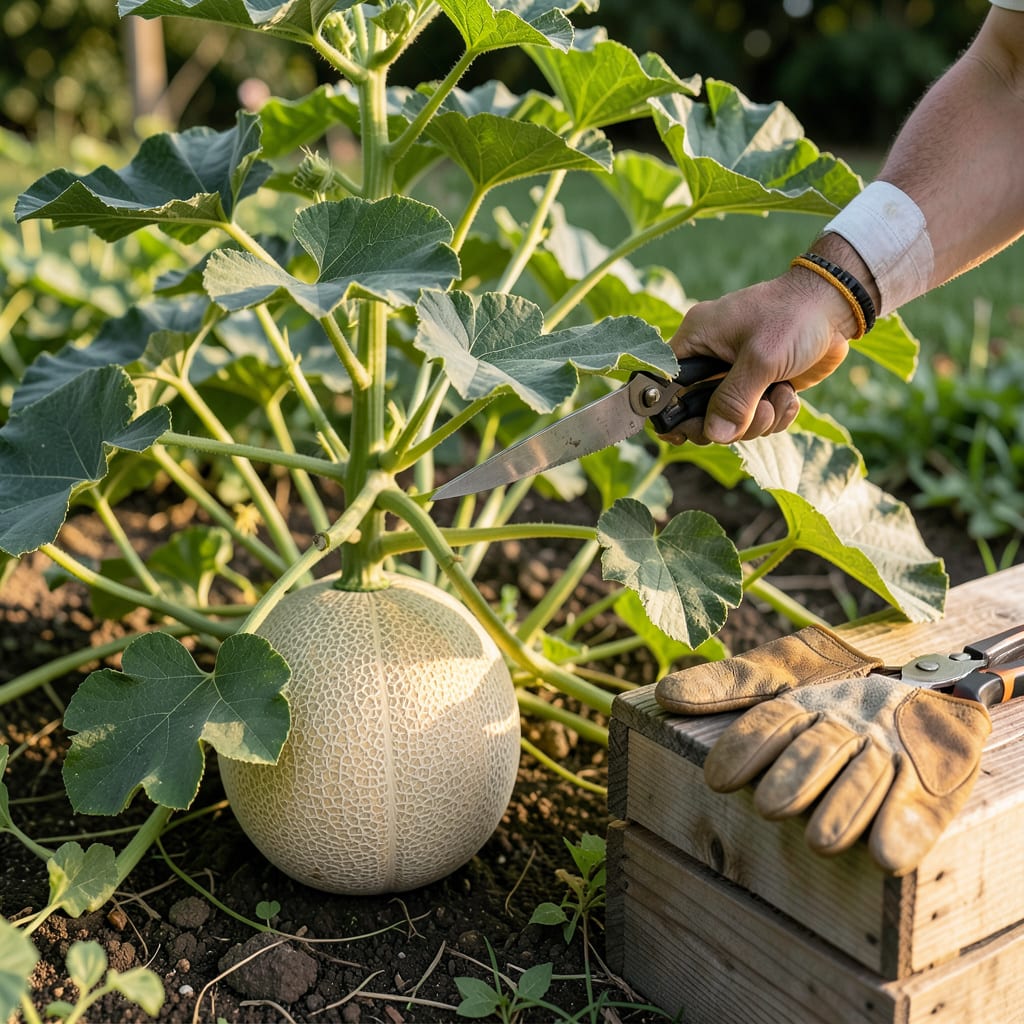
Nothing beats the sweet, juicy taste of a perfectly ripe 🍈 Cantaloupe—unless you bring home one that’s either rock-hard or mushy. I’ve been there, and it’s frustrating.
Discover the foolproof stem end and rind clues that guarantee you pick a winner every time. These simple tricks will change how you harvest your homegrown Cantaloupe.


The stem end is your most reliable indicator for a perfectly ripe cantaloupe. Unlike other methods, it never lies about the fruit’s readiness to be picked from your garden.
I always check for the full slip stage, where the stem detaches cleanly from the vine with just a gentle tug. This means the cantaloupe has reached peak ripeness and sweetness.
| Stem Condition | Ripeness Level | What It Means |
|---|---|---|
| Fully detached (full slip) | Perfectly ripe | Ready to harvest |
| Partially attached (half slip) | Nearly ripe | Harvest in 1-2 days |
| Firmly attached | Not ripe | Leave on vine |
| Green stem | Immature | Needs more time |
| Dry, brown stem | Overripe | Harvest immediately |
A partial slip means the cantaloupe is almost ready. I recommend checking it daily until it reaches full slip, which usually happens within 24-48 hours.
If the stem is still green and firmly attached, your cantaloupe needs more time on the vine. Picking it now will result in a bland, underripe fruit.
Conversely, a completely dry stem often indicates the fruit is past its prime. While it might still be edible, the texture could be mealy rather than juicy.
The stem scar (where the stem was attached) should be smooth and slightly indented on a perfectly ripe cantaloupe. This is a sure sign it detached naturally.
I’ve found that morning harvests yield the best results. The fruits are at their peak sweetness after a cool night and before the heat of the day sets in.
Remember, the stem end method works best when combined with other ripeness indicators like rind color and aroma, which we’ll explore next.
This technique takes the guesswork out of harvesting, ensuring every cantaloupe you pick from your garden is at its peak of flavor and texture 🌱
While the stem end is crucial, the rind tells its own story. I always examine the color transition from green to beige under the netting, which signals sugar development.
A perfectly ripe cantaloupe will have a creamy beige hue beneath its netting. If it’s still green or white, the fruit needs more time on the vine to develop its sweetness.
The netting pattern should be well-defined and raised. A poorly developed net often indicates the cantaloupe was picked too early or grew under stressful conditions.
Don’t overlook the blossom end (opposite the stem). Gently press it – a ripe cantaloupe will give slightly and emit a sweet, musky fragrance that’s unmistakable.
I’ve learned that even color distribution across the rind is vital. Dark spots or uneven coloring can mean uneven ripening or potential rot developing inside.
Remember, a ripe cantaloupe will feel heavy for its size due to high water content. This weight, combined with the other rind clues, confirms you’re holding a winner ready for harvest 🌿
Even experienced gardeners can make common errors when selecting cantaloupes. I’ve learned the hard way that relying solely on thumping can lead to disappointing results, as sound alone isn’t a reliable ripeness indicator.
Another frequent mistake is ignoring the weight of the fruit. A ripe cantaloupe should feel heavy for its size, indicating high water and sugar content. Lighter fruits often lack the juiciness we all love.
Don’t: Choose based on size alone
Don’t: Pick with soft spots or bruises
Don’t: Rely only on the thumping method
Do: Combine stem, rind, and aroma checks
I’ve seen many gardeners select cantaloupes with over-soft spots, thinking they’re extra ripe. These areas often indicate overripeness or rot, which can ruin the entire fruit’s flavor and texture.
Timing matters too. Picking too early in the day can mean missing the peak sweetness. I always harvest in the cool morning hours when the fruits are at their most flavorful.
Remember, the best approach combines multiple indicators. Use the stem end, rind color, and aroma together for the most reliable results. This holistic method ensures you’ll never be disappointed by your harvest 🌻
This indicates peak ripeness. The color change from green to beige under the webbing shows sugar development is complete. Trust this visual cue for the sweetest harvest
Not by itself. A hollow sound can help, but it should be combined with stem and rind checks. Thumping alone often leads to inconsistent results
That’s the most reliable aroma test. A ripe cantaloupe emits a strong, sweet fragrance at the blossom end when ready. No smell means it needs more time on the vine
Avoid this common mistake. A green stem means the fruit is immature. Wait until the stem detaches easily or turns beige for the best flavor and texture
