
Beautiful Plants For Your Interior
Beautiful Plants For Your Interior
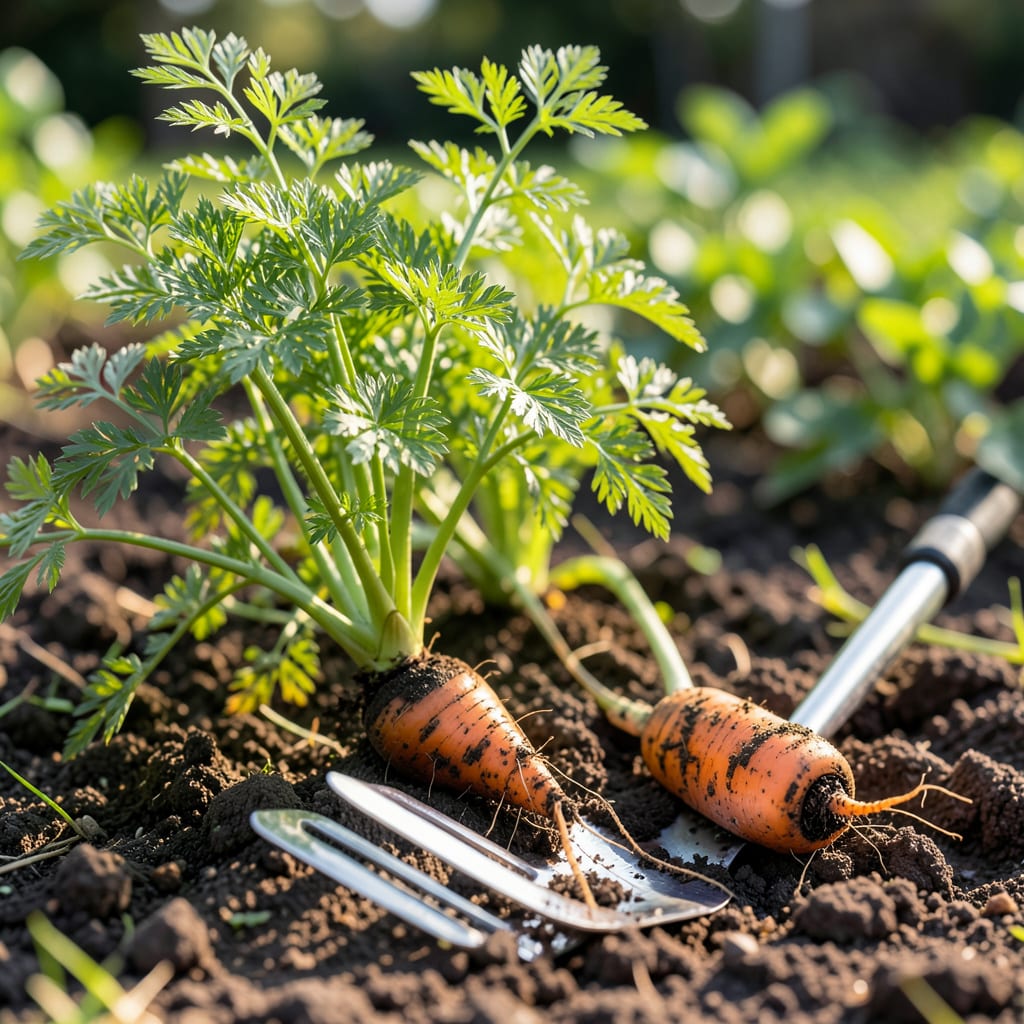
Timing is everything when it comes to pulling your 🥕 Carrot crop from the soil. Pick too early, and you’ll get thin, underdeveloped roots. Wait too long, and they turn woody and bitter.
I’ll show you the easiest ways to check for maturity without damaging your plants. With these simple signs, you’ll always harvest at peak flavor and texture.


I always watch for visual cues before pulling my carrots. The shoulder diameter is the first giveaway—most varieties are ready when they reach 0.75 to 1 inch across at the soil line.
Another clear sign is color change. When the top of the root turns a vibrant orange, it’s a strong indicator of maturity. Pale or white tops mean they need more time in the ground.
| Sign | Description |
|---|---|
| Shoulder Size | 0.75-1 inch diameter |
| Color | Bright orange at soil line |
| Foliage | Healthy green leaves |
| Days to Maturity | 60-90 days |
The foliage condition also offers clues. Healthy, green leaves suggest the plant is still actively growing. Yellowing or wilting may indicate stress, but for carrots, it can also mean they’re past their prime.
I never ignore the days to maturity guideline on seed packets. Most carrots take 60 to 90 days to mature, but this varies by variety. Nantes types are often ready in 60 days, while Danvers may need 75 to 80 days.
For a quick check, I gently brush away soil near the base to inspect the root. If it looks thick and firm, it’s likely ready. Thin, pencil-like roots mean I need to wait a bit longer.
Another method I use is the bend test. If a carrot snaps easily when bent, it’s at peak maturity. If it bends without breaking, it’s not quite ready yet.
Weather plays a role too. In cool seasons, carrots may take longer to mature, while warm weather can speed up growth. I adjust my expectations based on the conditions each year.
Don’t forget to check the soil conditions. Carrots in loose, well-draining soil often mature faster than those in heavy clay. If your soil is compacted, the roots may struggle to expand properly.
Finally, I always harvest a test carrot first. This way, I can assess the size and flavor before pulling the entire crop. If it’s sweet and crisp, the rest are likely ready too. 🌱
I use several non-destructive methods to check if my carrots are ready. The simplest is gently brushing soil away from the base to expose the top of the root.
This lets me measure the shoulder diameter and check the color without uprooting the plant. If it’s 0.75 to 1 inch wide and vibrant orange, it’s likely ready to harvest.
Another trick I swear by is the selective pull test. I carefully pull one or two carrots from different parts of the row to check their size and flavor.
If they’re sweet and crisp, the rest are probably ready. If not, I leave the others in the ground for a few more days.
For varieties with exposed shoulders, I use a ruler to measure the diameter. This is especially helpful for Nantes or Chantenay types, which have shorter, broader roots.
I also keep a planting journal to track when I sowed each batch. This helps me estimate maturity based on the days to harvest listed on the seed packet. 🌱
I’ve learned the hard way that ignoring variety timelines is a common misstep. Each carrot type has its own days to maturity, and assuming they’re all the same leads to early or late pulls.
Nantes may be ready in 60 days, while Danvers can take 80 days. Always check your seed packet for the specific range.
Pulling too early results in thin, pencil-like roots. Waiting too long leads to woody, bitter carrots that crack in the soil.
Another mistake is misjudging weather impact. Cool temperatures slow growth, while heat speeds it up. I adjust my harvest expectations based on the season’s conditions.
I’ve also seen gardeners overlook soil conditions. Heavy clay can stunt root growth, making carrots appear ready when they’re not. Always ensure your soil is loose and well-draining.
Finally, don’t skip the test pull. Harvesting one carrot first lets you check size and flavor before committing to the whole crop. This simple step prevents many harvesting errors. 🌱
Look for shoulders about 0.75 to 1 inch in diameter at the soil line. This is the easiest visual cue that your crop is ready for picking.
Yes, overdue carrots become woody and bitter. They may also crack in the soil. Harvest within 1-2 weeks of reaching maturity for best flavor and texture.
Gently brush soil away from the base to expose the root. Measure the shoulder and check for a vibrant orange color. This method avoids damaging the crop.
Cooler temperatures slow growth, while warm weather speeds it up. Variety matters too—Nantes may need 60 days, but Danvers can take 80 days.
