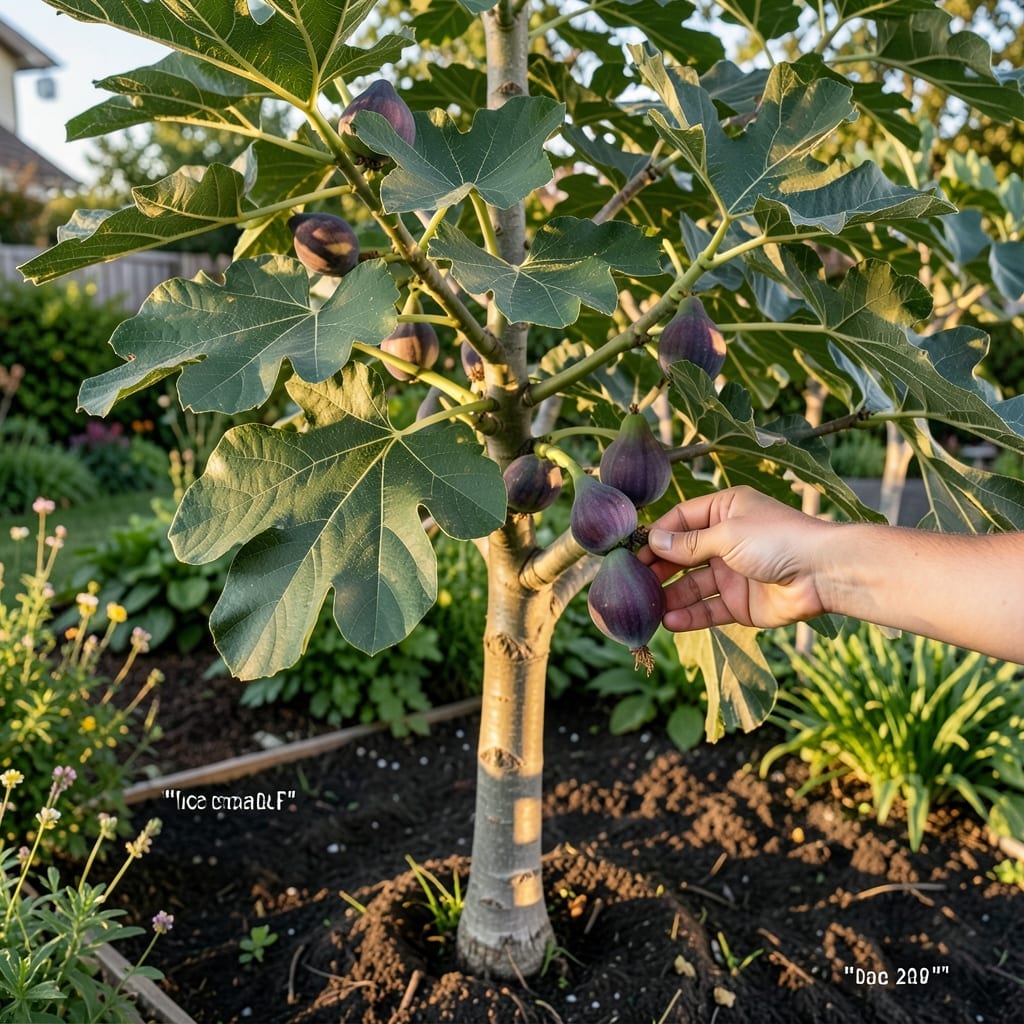
How to Know When Figs Are Ripe: Visual Cues and Touch Tests

How to Know When Figs Are Ripe: Visual Cues and Touch Tests

Picking figs at the perfect stage of ripeness is the secret to enjoying their rich, honey-like sweetness. Unlike many fruits, 🍇 Fig don’t continue ripening after harvest, so knowing the exact signs is crucial.

I’ve learned that timing is everything when it comes to these delicate fruits. With just a few simple checks, you can avoid the disappointment of biting into an underripe or overripe fig.

Discover the visual cues and touch tests that will ensure you pick your figs at their absolute peak. Let’s make this season your most successful harvest yet.

Style 16: Quick Tips – General
🌅
Morning
Pick early for best flavor & crunch
✂️
Clean Cut
Use scissors, don’t pull or twist
🔄
Check Daily
Ripeness can change overnight!

Key Visual Signs That Figs Are Ready to Pick

I always start by looking at the fig’s position on the branch. When figs are ripe, they droop downward rather than standing upright. This is one of the clearest signs that they’re ready for harvest.

The neck of the fig also softens and bends as it ripens. If the stem area feels firm and straight, your fig isn’t ready yet. Wait until it gives slightly when you touch it.

🌱 Visual Signs of Ripe Figs

Sign Description
Drooping Neck Fig hangs downward from branch
Color Deepens Rich hue (purple, brown, or green)
Soft Texture Gentle pressure leaves slight indent
Skin Cracks Small splits near stem (normal)

Another key indicator is color change. Depending on your variety, ripe figs may turn deep purple, brown, or even green. Black Mission figs turn nearly black, while Brown Turkey figs develop a rich brown hue.

I also check for small cracks near the stem. These are normal and actually indicate that the fig is at its sweetest. Don’t confuse these with large splits, which might signal overripeness.

The skin texture changes too. Ripe figs have a slightly wrinkled appearance and may feel a bit rough. This is different from the smooth skin of unripe figs.

For Celeste figs, which stay green when ripe, look for a yellowish tint at the base. With Kadota figs, the skin turns a golden color when ready.

Remember that size matters too. Most fig varieties reach about 1.5 to 2 inches in diameter when fully ripe. Smaller figs may need more time on the tree.

I’ve found that morning harvesting works best. The figs are cooler and firmer, making them easier to pick without bruising. Plus, you avoid the heat of the day.

Finally, don’t forget to check the underside of the fig. Sometimes the ripening starts there first, with the color changing before the top does.

How to Test Fig Ripeness by Touch and Smell

Beyond visual cues, I rely on touch tests to confirm ripeness. A ripe fig should yield slightly to gentle pressure, similar to a soft avocado. If it feels hard, it needs more time on the tree.

The stem end is particularly telling. When ripe, the area around the stem will be soft and pliable, not firm. This is where the fruit attaches to the branch, so it’s a key spot to check.

🌱 Touch and Smell Tests for Ripeness

  1. Gentle Squeeze: Should give slightly under light pressure
  2. Stem Check: Soft and bendable at the neck
  3. Sweet Aroma: Ripe figs emit a honey-like fragrance
  4. Weight Test: Feels heavier than it looks when ripe
  5. Skin Texture: Slightly wrinkled but not mushy

I also use the smell test. Ripe figs have a sweet, honey-like aroma that’s unmistakable. If you don’t smell anything, the fig likely isn’t ready yet. Overripe figs may have a fermented odor.

For Black Mission figs, I look for a deep purple-black color combined with a soft texture. With Brown Turkey figs, the skin turns a rich brown and develops a slightly rough texture when ripe.

The weight of the fig can be surprising. Ripe figs feel heavier than they appear due to their high sugar content. This is especially noticeable with larger varieties like Celeste figs.

I avoid picking figs when they’re wet from rain or morning dew. The moisture can mask the true texture and make it harder to assess ripeness accurately.

With practice, you’ll develop a feel for the perfect harvest time. I still check multiple figs on the same tree, as they often ripen at slightly different rates.

★★★★★4.7(2 reviews)