
Beautiful Plants For Your Interior
Beautiful Plants For Your Interior
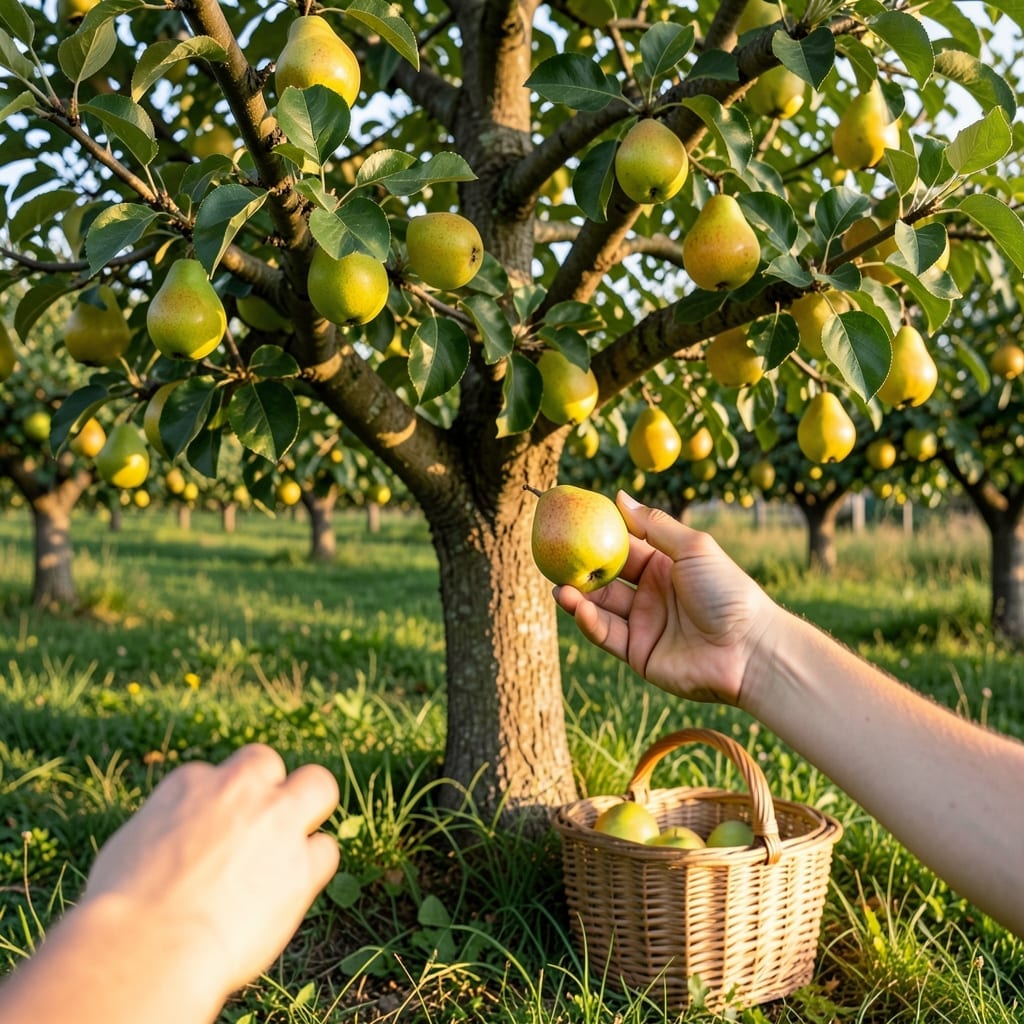
Nothing ruins the joy of biting into a fresh 🍐 Pear like the disappointment of an unripe or overripe fruit. Knowing exactly when it’s at its peak ensures the perfect balance of sweetness and texture.
I’ve learned that timing is everything with pears. They don’t ripen well on the tree, so picking them at the right stage is the key to that juicy, flavorful experience you crave.
Discover the simple visual and touch cues that will help you pick pears at their best—every single time.


I always check the color first when determining pear ripeness. Most varieties, like Bartlett pears, shift from green to yellow as they mature. This change is subtle but unmistakable once you know what to look for.
For Anjou or Bosc, the color deepens to a richer hue, often with a slight blush. The skin texture also becomes smoother and more vibrant as the fruit approaches peak ripeness.
| Pear Variety | Ripe Color | Texture Change |
|---|---|---|
| Bartlett | Yellow | Smooth |
| Anjou | Red or green | Slightly grainy |
| Bosc | Brown-russet | Firm but yielding |
The stem end is another telltale sign. A ripe pear often has a sweet aroma near the stem, which intensifies as it matures. If I smell nothing, I know it needs more time.
I also look at the skin’s sheen. Ripe pears develop a subtle glow, almost like they’ve been lightly polished. This is especially true for varieties like Comice or Seckel.
Don’t overlook the stem condition. As pears ripen, the stem often becomes easier to separate from the fruit. If it resists when I gently twist, it’s not ready yet.
For Asian pears, the rules are slightly different. These stay hard even when ripe, so I focus on the color shift from green to golden and the development of a fruity scent.
The shoulder area near the stem is a great spot to check for color changes. In many varieties, this area transitions first, giving you an early indicator of ripeness.
I’ve found that uneven color can actually be a good sign. Many heirloom pears develop splotchy coloring as they ripen, which adds to their rustic charm and flavor complexity.
Remember that size matters too. A fully grown pear that’s reached its expected size for the variety is closer to ripeness than smaller fruits on the same tree.
Finally, I always compare fruits on the same tree. Those exposed to more sunlight often ripen first, so checking multiple pears gives a more accurate picture of overall readiness.
The Check Neck Test is my go-to method for pears. I gently press near the stem end with my thumb. If it gives slightly, like a ripe avocado, it’s ready to enjoy.
This works because pears ripen from the inside out. The neck area softens first, even when the rest of the fruit feels firm. I use this for all varieties, from Bartlett to Bosc.
For Asian pears, the test is different. Since they stay firm, I look for a slight flex when I press the whole fruit, not just the neck. They’ll never get as soft as other pears.
Another method I use is the squeeze test. I gently squeeze the pear in my palm. A ripe one will have a subtle give, but won’t feel mushy. Overripe pears will feel too soft.
I also check the weight of the pear. A ripe one feels heavier for its size because the juices have developed. This is especially true for Comice pears, which are naturally juicier.
Remember that room temperature affects ripening speed. I always check pears at room temp, not straight from the fridge, as cold can mask softness. Store them at 60-70°F for best results.
Finally, I combine touch with smell. A ripe pear will have a sweet fragrance at the stem end along with the slight give. This double-check ensures I never pick an unripe fruit again.