
Beautiful Plants For Your Interior
Beautiful Plants For Your Interior
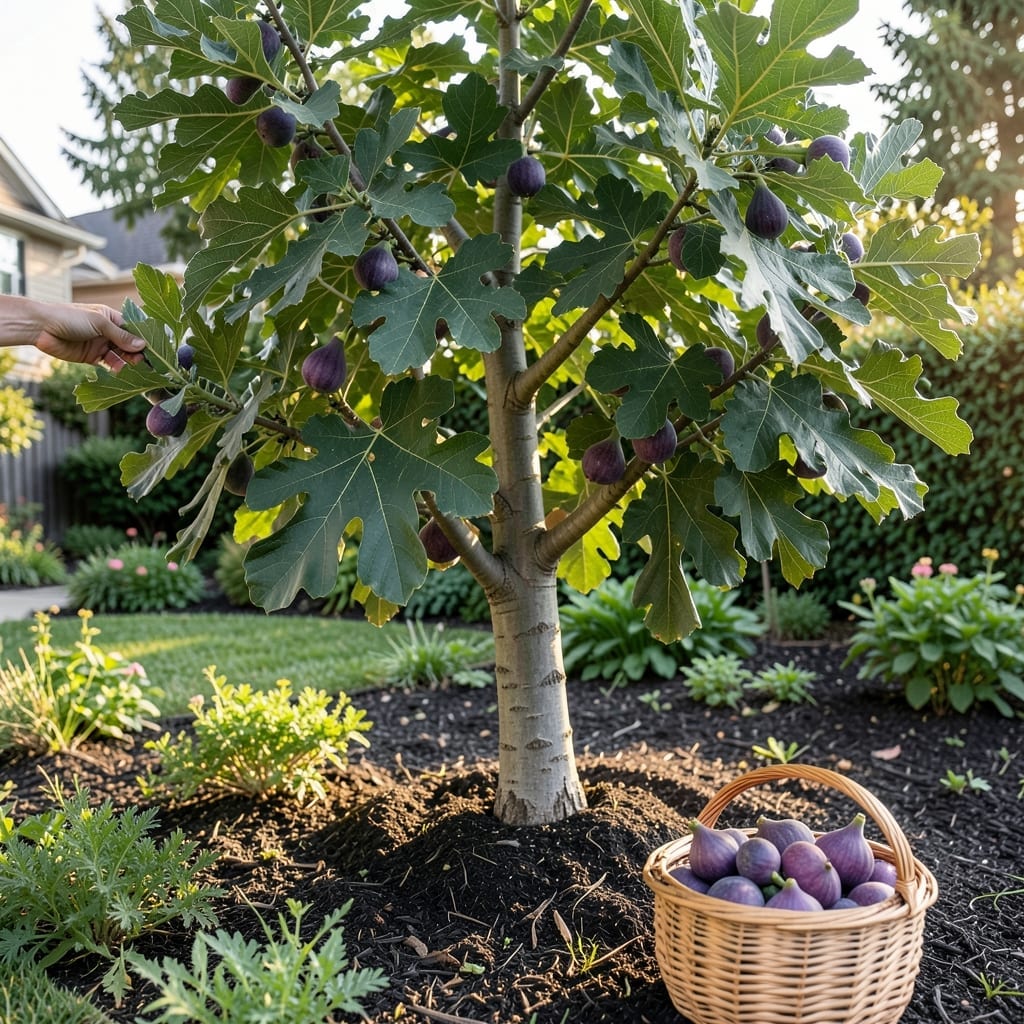
Nothing beats the sweet, honey-like flavor of a perfectly ripe 🍇 Fig picked fresh from your garden. But how do you tell when they’re ready?
Picking them too early or too late can mean the difference between a delightful treat and a disappointing bite. I’ve learned the hard way that timing is everything with Figs.
Discover the simple visual and touch tests that guarantee you’ll harvest at peak ripeness every time. Let’s make sure your next Fig is absolute perfection.
I always check for color changes first when my figs are ripening. Black Mission figs turn deep purple-black, while Brown Turkey varieties shift to a rich brown. Celeste figs change from green to a soft violet hue. 🌿
Another clear sign is when the fig’s neck droops and the fruit hangs downward. This usually happens just before they’re ready. I also look for tiny cracks near the stem, which often appear as the fruit matures. 🌱
| Fig Variety | Ripe Color | Additional Signs |
|---|---|---|
| Black Mission | Deep purple-black | Neck droops, sweet aroma |
| Brown Turkey | Rich brown | Slightly soft, cracks near stem |
| Celeste | Soft violet | Gentle give when squeezed |
Don’t confuse ripeness with overripeness. Figs that are too ripe may split open or ferment slightly. I’ve found that morning harvesting helps avoid this, as figs ripen faster in heat. 🌳
For green fig varieties, the color change is subtle. Instead, I rely on texture changes and the fruit’s position. A ripe green fig will feel slightly soft and may develop a duller appearance compared to its glossy unripe state.
I also watch for milky sap at the stem. When this sap dries and turns amber-colored, it’s a good sign the fig is ready. This is especially helpful for Adriatic figs, which stay green when ripe. ✂️
Remember that figs don’t ripen well after picking, unlike some other fruits. This makes it crucial to identify ripeness while still on the tree. I’ve learned to check daily once the first signs appear.
Weather plays a role too. In hot, dry climates, figs may ripen faster and need more frequent checking. Conversely, in cooler areas, the process slows, and I give them extra time on the branch. ☀️
The size of the fig can also indicate ripeness. Most varieties reach their full size just before ripening begins. I compare developing figs to mature ones I’ve harvested in previous seasons.
Lastly, I look for leaf changes near the fruit. Sometimes the leaves closest to ripe figs will yellow slightly as the tree directs energy to the fruit. This isn’t a foolproof sign but can be a helpful additional clue.
Beyond visual cues, I rely on touch tests to confirm ripeness. A ripe fig should feel slightly soft when gently squeezed, but not mushy. I apply just enough pressure to feel the gentle give of the flesh. 🌿
The stem end often softens first. I check this area with my fingertip—it should feel tender rather than firm. If it’s still hard, I give it another day or two on the tree.
I also use the sniff test. Ripe figs emit a sweet, honey-like aroma near the stem. If I don’t smell anything, it’s not ready. A sour or fermented smell means it’s past its prime. ✂️
One common mistake I see is harvesting too early. If the fig feels hard all over, it needs more time. I’ve learned that patience pays off—figs ripen quickly once they start.
For Adriatic figs, which stay green, I rely more on touch and smell since color isn’t a reliable indicator. These often feel heavier in hand when fully ripe.
I always harvest in the early morning when temperatures are cooler. This helps preserve the figs’ freshness and prevents them from becoming overripe too quickly after picking. ☀️