
Beautiful Plants For Your Interior
Beautiful Plants For Your Interior
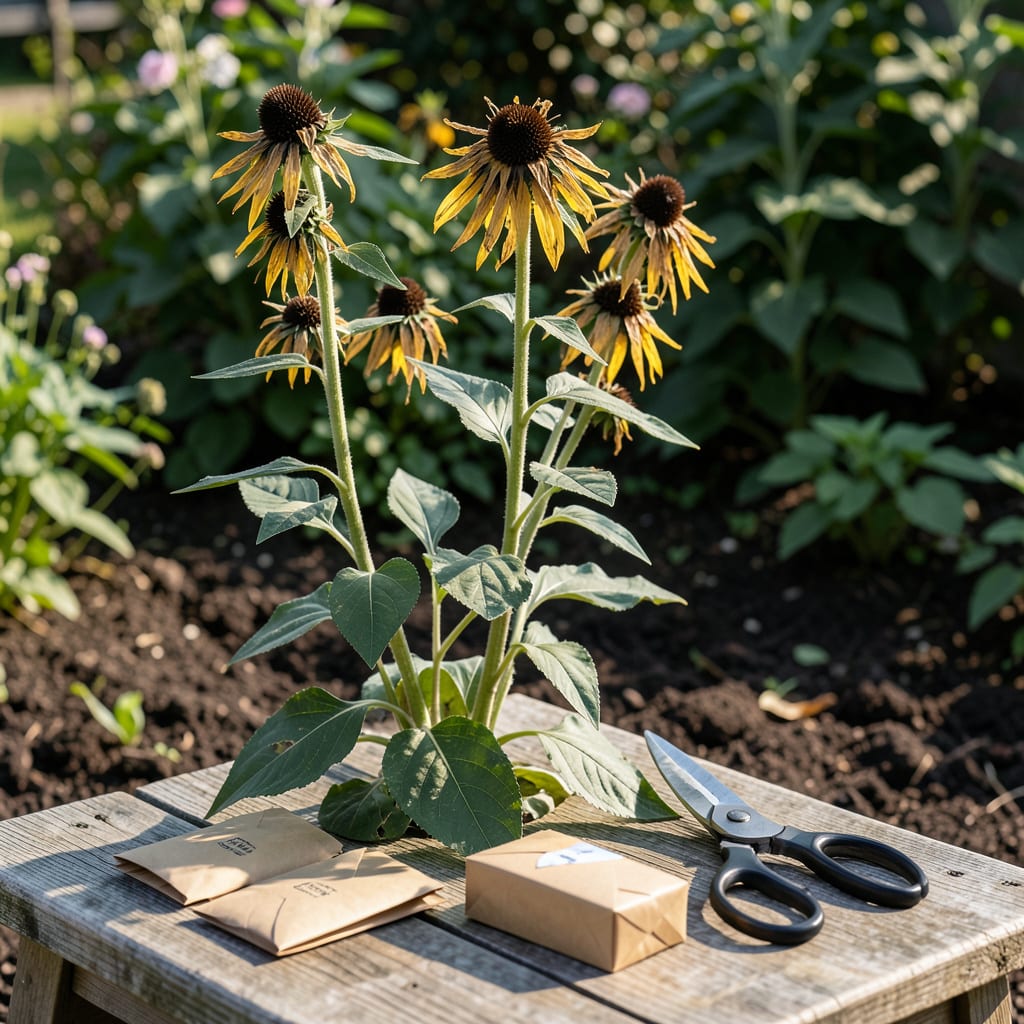
There’s something magical about saving seeds from your Rudbeckia 🌻 to grow next year’s blooms. It’s easier than you might think, and the rewards are well worth the effort.
With simple techniques and the right timing, you can collect and store seeds that will bring those golden flowers back year after year. Let me walk you through the process.


Timing is everything when collecting Rudbeckia seeds. I’ve learned that waiting for the perfect maturity stage ensures the best germination rates for next season’s garden.
The ideal window is late summer to early fall, typically August through October. You’ll want to watch for specific visual cues that tell you the seeds are ready for harvest.
| Harvest Sign | What to Look For |
|---|---|
| Petal Condition | Dried and falling off easily |
| Center Cone | Dark brown and hard |
| Seed Appearance | Black or dark gray and firm |
| Stem Condition | Dry and brittle to touch |
I always check the flower heads in the morning when they’re dry. If the center cone is still green or yellow, the seeds aren’t ready yet. Patience pays off here.
Another good test is to gently press a seed between your fingers. If it’s hard and doesn’t dent, it’s ready. Soft seeds mean you need to wait a few more days.
Weather matters too. I aim to harvest on dry, sunny days after any morning dew has evaporated. Moisture can cause seeds to mold during storage.
The harvest window typically lasts about 2-3 weeks per plant. Don’t wait too long though – birds love Rudbeckia seeds as much as gardeners do!
In my experience, the lower flower heads mature first. I start checking these before moving to the upper blooms on the plant.
If you’re unsure, try harvesting a few seeds from different flowers. You can test their viability by placing them on a damp paper towel to see if they sprout.
Remember that Rudbeckia hirta (Black-eyed Susan) and Rudbeckia laciniata (Cutleaf Coneflower) may have slightly different maturity times, so observe each variety separately.
🌻
Once your Rudbeckia seeds are ready, collecting them is straightforward. I prefer using the hand-picking method for small gardens, as it gives me full control over seed selection.
For larger patches, paper bag method works well. Simply place a bag over the flower head and secure it with a rubber band. The seeds will drop into the bag as they mature.
I always use sharp pruners to cut the flower heads, leaving a few inches of stem. This makes handling easier and prevents seed loss during collection.
The drying process is crucial. I spread the flower heads on a screen or paper towel in a single layer. Good air circulation prevents mold and ensures even drying.
After drying, I gently rub the seed heads between my fingers to release the seeds. A fine mesh strainer helps separate seeds from chaff for cleaner storage.
For storage, I use paper envelopes rather than plastic. They allow for air circulation while keeping moisture out.
🌻
Even experienced gardeners can make simple errors when collecting Rudbeckia seeds. I’ve learned the hard way that timing and technique matter just as much as enthusiasm.
One of the most common mistakes is harvesting too early. Picking seeds before they’re fully mature means they won’t germinate next season, no matter how well you store them.
⚠️ Warning: Avoid these seed-harvesting pitfalls:
Another frequent issue is improper storage. I once stored seeds in a plastic container, only to find them moldy a few weeks later. Paper envelopes in a cool, dry place work best.
I’ve also seen gardeners shake seed heads too vigorously, causing immature seeds to mix with mature ones. Gentle handling ensures you only collect the fully developed seeds.
Don’t overlook the importance of labeling your seeds. Without proper labels, it’s easy to forget which variety is which when planting season arrives.
Remember that Rudbeckia seeds need 2-3 weeks of drying time before storage. Rushing this process can lead to disappointing germination rates next spring. 🌻
Look for dark brown centers and dried petals that fall off easily. Seeds should be hard and dark gray or black when pressed.
Gently rub the dried cone between your fingers over a clean surface. Use a fine mesh strainer to separate seeds from chaff for cleaner collection.
No, plastic traps moisture and can cause mold. Always use paper envelopes in a cool, dry place to maintain seed viability for 2-3 years.
Allow 1-2 weeks of drying time in a warm, well-ventilated area. Rushing this process reduces germination rates significantly.
