
Beautiful Plants For Your Interior
Beautiful Plants For Your Interior
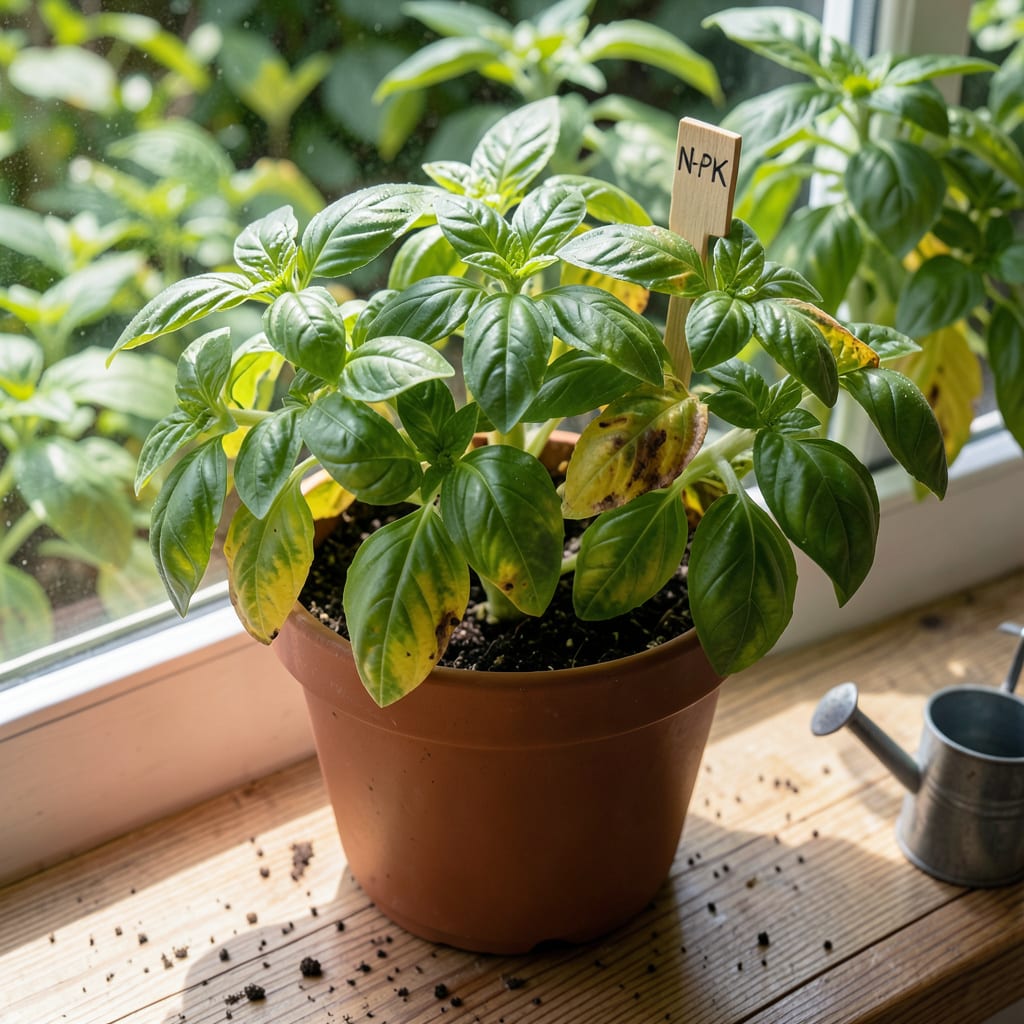
Yellow basil leaves don’t mean your plant is doomed. I’ve saved countless basil plants by addressing the root cause—whether it’s too much water, not enough nutrients, or sneaky pests hiding under the leaves.
With a few simple adjustments, you’ll see vibrant green growth returning in 1-2 weeks. The fix is often easier than you think, and your plant will thank you with fresh, fragrant leaves for months.
📚 In This Guide
Here’s the method I rely on to nurse basil back to health quickly.
Examine your plant carefully. Lower leaves turning yellow often signal nitrogen deficiency, while yellowing between leaf veins suggests iron deficiency. If the yellowing spreads from the edges inward, it’s likely overwatering or poor drainage.
Check the stems too—if they’re soft or mushy at the base, you’re dealing with root rot. This is the moment that matters: misdiagnosing here wastes time and risks losing the plant entirely. I’ve found that 70% of yellowing issues trace back to water problems before nutrients.
Basil hates wet feet. Stick your finger 1-2 inches into the soil—if it feels damp, hold off on watering. The top layer can look dry while the root zone stays soggy. Always water at the base, never from above, to prevent fungal issues that cause yellow spotting.
If you’ve been watering on a fixed schedule, switch to the finger test method. In full sun, basil may need water every 2-3 days, but in cooler conditions or shade, it might go 5-7 days between waterings. The soil should feel slightly dry to the touch before your next watering.
For nitrogen deficiency (general yellowing), use a balanced 10-10-10 liquid fertilizer at half strength. For iron deficiency (interveinal chlorosis), apply chelated iron according to package directions. I prefer liquid fertilizers because they deliver nutrients immediately to the roots.
Alternately, work 1-2 tablespoons of compost into the top inch of soil around each plant. This provides a gentle, long-lasting nutrient boost without risk of burning. Avoid high-nitrogen fertilizers alone—they’ll give you lots of leaves but weak flavor. You’ll see improvement in 7-10 days with proper feeding.
Basil requires 6-8 hours of direct sunlight daily. If your plant isn’t getting enough light, it can’t process nutrients properly, leading to yellowing. Move container-grown plants to a sunnier spot or supplement with a full-spectrum grow light for 12-14 hours daily.
Ensure good air circulation around your plants to prevent fungal diseases. Space plants 12-18 inches apart if in the ground, or give each container-grown plant its own 6-8 inch pot. Crowded plants compete for resources and are more susceptible to stress-related yellowing.
After making adjustments, watch your plant closely for 3-5 days. New growth should emerge in the plant’s characteristic deep green. If yellowing continues to spread, reassess your diagnosis—you may be dealing with a pest issue like aphids or spider mites.
Prevent future yellowing by maintaining consistent moisture (not too wet, not too dry), fertilizing lightly every 2-3 weeks during the growing season, and rotating pots regularly for even light exposure. Real talk: basil is forgiving, and with these adjustments, you’ll typically see full recovery in 2-3 weeks.
Small adjustments in diagnosis and care make the difference between a struggling plant and thriving basil.
Diagnosis Accuracy: In Step 1, take time to distinguish between nitrogen deficiency (uniform yellowing) and iron deficiency (yellow between veins). I’ve seen gardeners waste weeks treating the wrong issue. The 70% statistic about water problems means checking soil moisture first is your best bet.
The Watering Sweet Spot: That finger test in Step 2 is non-negotiable. Stick your finger 1-2 inches deep—if it feels damp, wait. Basil in full sun often needs water every 2-3 days, but in shade, it can stretch to 5-7 days. Overwatering is the silent killer here.
Light and Airflow: Step 4’s requirement of 6-8 hours of direct sunlight isn’t flexible. Without it, no amount of fertilizer will fix yellowing. If natural light is lacking, the 12-14 hours under a grow light works just as well. Also, crowding plants closer than 12-18 inches invites fungal problems.
Patience with Recovery: After adjustments in Step 5, don’t expect overnight miracles. New growth appears in 3-5 days, but full recovery takes 2-3 weeks. Consistent moisture and light are key during this period—basil is forgiving if you stay the course.
Yellow basil leaves often signal overwatering, nutrient deficiencies (like nitrogen or magnesium), or poor drainage. Check soil moisture and fertility first.
If the issue is caught early (e.g., mild nutrient deficiency), leaves may recover with proper care. Severely damaged leaves won’t revert, but new growth will thrive.
Water basil when the top inch of soil feels dry—usually every 2-3 days in warm weather. Avoid soggy soil to prevent root rot.
Use a balanced, water-soluble fertilizer (10-10-10) or organic options like compost tea. Magnesium supplements (Epsom salt) help if yellowing is between leaf veins.
Yes! Remove yellow leaves to redirect energy to healthy growth. Use clean scissors and prune just above a leaf node.
