
Beautiful Plants For Your Interior
Beautiful Plants For Your Interior
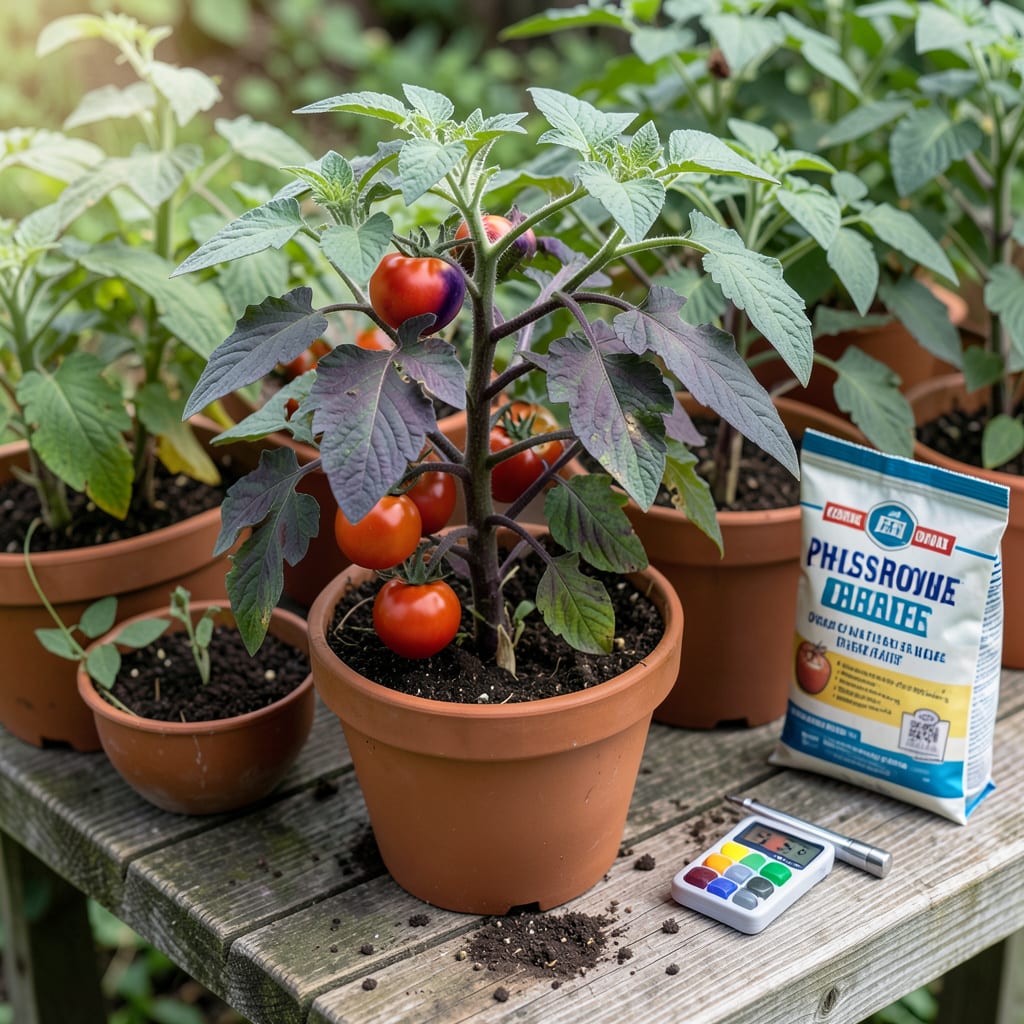
Purple tomato leaves caught me off guard last season. Turns out it’s usually a sign of phosphorus deficiency, but environmental stress or pests can mimic the same look.
I fixed mine with a balanced fertilizer and warmer soil temps. The leaves greened up within a week, and the plants rebounded fast. Here’s how to diagnose and treat it properly.
📚 In This Guide
Here’s the method I rely on to correct purple leaves and restore your plants to vibrant health.
Purple tomato leaves, especially on the undersides and stems, typically signal a phosphorus deficiency. I always check the soil temperature first—cold soil (below 55°F) locks out phosphorus even when it’s present. Use a soil thermometer at 4-6 inches deep to confirm.
Also examine the plant’s growth pattern. Phosphorus-deficient plants often have stunted roots and slow overall development. If the purple discoloration appears on older leaves first, that’s another telltale sign. Don’t confuse this with purple stems from certain heirloom varieties—that’s normal.
Conduct a soil test to confirm phosphorus levels. I prefer the 3-in-1 meter for quick readings. If phosphorus is indeed low, amend with bone meal or rock phosphate. Work 2-3 tablespoons into the soil around each plant’s base, then water deeply.
For immediate relief, apply a high-phosphorus liquid fertilizer (10-30-20 ratio) as a foliar spray. Mix according to package directions and apply in the early morning. Avoid getting fertilizer on the leaves during hot afternoon sun to prevent burning.
Phosphorus becomes more available in slightly acidic soil (pH 6.0-7.0). If your soil is alkaline, amend with elemental sulfur or peat moss. I’ve found that adding compost improves both soil structure and microbial activity, which helps plants absorb nutrients more efficiently.
Ensure proper drainage as waterlogged soil reduces phosphorus availability. If your plants are in containers, check that water flows freely from drainage holes. For in-ground plants, consider raised beds if drainage is poor.
Overwatering can leach phosphorus from the soil, so allow the top 1-2 inches of soil to dry between waterings. I water deeply but less frequently—about 1-2 inches per week depending on rainfall and temperature.
Mulch with straw or shredded leaves to maintain consistent soil moisture and temperature. This prevents the temperature swings that can lock out phosphorus. Also, avoid over-fertilizing with nitrogen, as this can create imbalances that exacerbate phosphorus deficiency.
After treatment, watch for new growth to emerge in its normal green color within 7-14 days. The existing purple leaves may not recover completely, but this indicates the plant is absorbing phosphorus properly again.
I continue monitoring soil conditions throughout the season. Regular applications of compost tea or fish emulsion every 2-3 weeks help maintain balanced nutrition. Remember that prevention is easier than correction—test soil before planting next season.
Here’s what I’ve learned through trial and error that makes all the difference.
Diagnosis Precision: In Step 1, that soil temperature check at 4-6 inches deep is non-negotiable. Cold soil below 55°F will block phosphorus uptake regardless of soil fertility. I invested in a quality soil thermometer after too many misdiagnoses with guesswork.
Amendment Application: When adding bone meal or rock phosphate in Step 2, work the 2-3 tablespoons into the top 6 inches of soil rather than just surface application. This places the phosphorus where roots can actually access it. Water deeply afterward to help the nutrients penetrate.
pH Balance Insight: The slightly acidic range of pH 6.0-7.0 mentioned in Step 3 is critical. I’ve seen gardeners waste months trying to correct deficiency in alkaline soil without addressing pH first. A simple soil test kit can save you from this frustration.
Monitoring Timeline: That 7-14 day window in Step 5 for new green growth is your best indicator of success. Don’t expect the existing purple leaves to recover completely—they’ve likely sustained permanent damage. New growth is what confirms your treatment is working.
Purple leaves often signal a phosphorus deficiency, especially in cool soil. Other causes include cold stress, overwatering, or compacted roots limiting nutrient uptake.
Add a phosphorus-rich fertilizer (like 5-10-5) or bone meal. Warm the soil with black mulch and ensure proper drainage. Avoid over-fertilizing with nitrogen, which can block phosphorus absorption.
Yes! If caught early, new growth will return to green after correcting the issue. Severely purple leaves may not recover, but the plant can still thrive with proper care.
Absolutely! Try compost tea, fish emulsion, or wood ash (sparingly) to boost phosphorus. Avoid home remedies like Epsom salt—it won’t fix phosphorus deficiency.
With the right fixes, expect new green growth in 1–2 weeks. Older purple leaves may not change, but the plant’s health will improve as nutrients balance out.
