
Beautiful Plants For Your Interior
Beautiful Plants For Your Interior
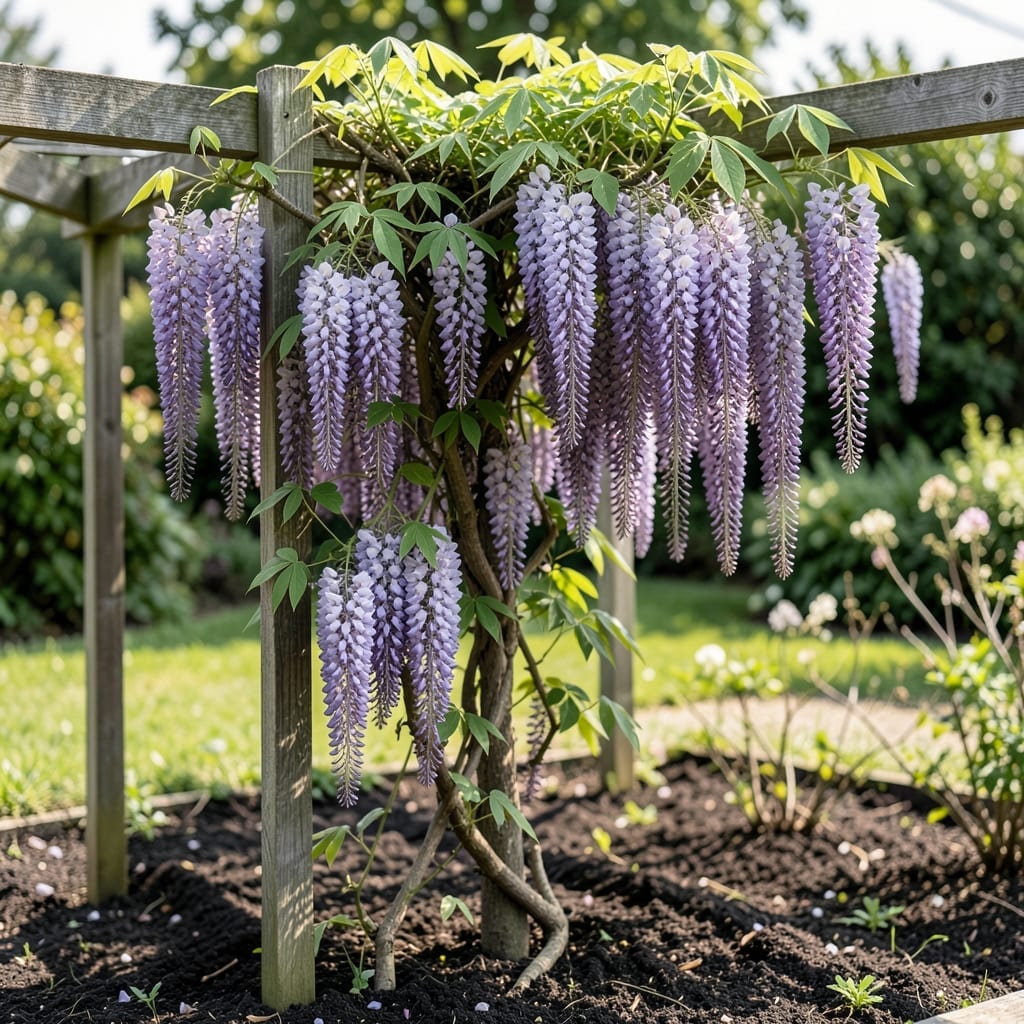
Wisteria’s cascading blooms can turn any garden into a fairytale, but their towering growth often surprises new gardeners. I remember planting my first 🌸 Wisteria and being amazed at how quickly it reached for the sky.
Understanding how tall these vines can climb is key to proper planting and support planning. Without the right structure, they can quickly overwhelm a space or damage nearby fences.
In 5-9 zones, these vigorous growers can stretch 15-30 ft under ideal conditions. That’s taller than many two-story homes, making them a dramatic but manageable addition to landscapes.
Let me share what I’ve learned about their growth habits and how to guide them effectively in your garden. The results are well worth the effort.


As a gardener, I can tell you that wisteria vines often exceed expectations with their impressive height. Most varieties reach 15 to 30 feet at maturity, though some can climb even higher with proper support. The exact height depends on the species and growing conditions.
For example, Chinese wisteria can soar up to 30 feet, while Japanese wisteria typically tops out around 20 feet. American wisteria stays slightly smaller, usually maxing at 15 to 20 feet. These numbers assume ideal conditions and sturdy structures.
| Variety | Mature Height |
|---|---|
| Chinese Wisteria | 20-30 ft |
| Japanese Wisteria | 15-20 ft |
| American Wisteria | 10-15 ft |
| Dwarf Varieties | 8-10 ft |
In my experience, growth rate is just as important as final height. Wisteria can grow 10 to 15 feet in just a few years under optimal conditions. The first year often sees 3 to 5 feet of growth, with acceleration in subsequent seasons.
Climate plays a significant role in how tall your wisteria will get. In warmer zones (7-9), these vines tend to grow more vigorously than in cooler areas (5-6). Full sun and consistent moisture also encourage maximum height potential.
The support structure you provide directly impacts height. A sturdy trellis or arbor allows wisteria to reach its full potential, while lack of support can limit growth. I recommend installing structures that can handle at least 25 feet of vertical growth.
Soil quality shouldn’t be overlooked. Wisteria thrives in well-draining, fertile soil. Poor soil conditions can stunt growth, resulting in shorter vines. Amending your soil before planting can make a noticeable difference in height.
Pruning affects height too. While regular pruning helps control size, it can also limit how tall your wisteria grows. If you want maximum height, I suggest minimal pruning during the early growth years.
For those with limited space, dwarf varieties like ‘Prodigy’ or ‘Amethyst Falls’ stay more compact. These typically reach 8 to 10 feet, making them perfect for smaller gardens or container growing.
Remember that wisteria’s height isn’t just vertical. These vines can spread 15 to 20 feet horizontally as well. Proper spacing between plants is crucial to prevent overcrowding and ensure healthy growth.
In my garden, I’ve found that consistent care during the first few years establishes a strong foundation for height. Once established, wisteria becomes remarkably resilient and can reach impressive heights with minimal additional effort.
🌿Managing Wisteria height in confined spaces is entirely possible with the right approach. I’ve found that regular pruning is essential to keep these vigorous vines in check, especially in small gardens or urban settings.
For those with limited space, dwarf varieties like Wisteria floribunda ‘Rosea’ stay compact at 8-10 ft. Even standard types can be maintained at 10-15 ft with consistent care.
I recommend summer pruning too, which helps control new growth and encourages more flower production. Cutting back long shoots by one-third keeps the plant tidy and manageable.
Another effective method is training wisteria along a horizontal wire system. This not only limits height but also creates a stunning living wall effect in your garden.
For those in USDA zones 5-9, remember that consistent care is key. Wisteria thrives with full sun and well-draining soil, so ensure these conditions for healthy, controlled growth.
Finally, don’t forget that container growing can also limit size. While not ideal for long-term growth, it’s a great way to enjoy wisteria on patios or balconies with easier height management. ✂️