
Beautiful Plants For Your Interior
Beautiful Plants For Your Interior
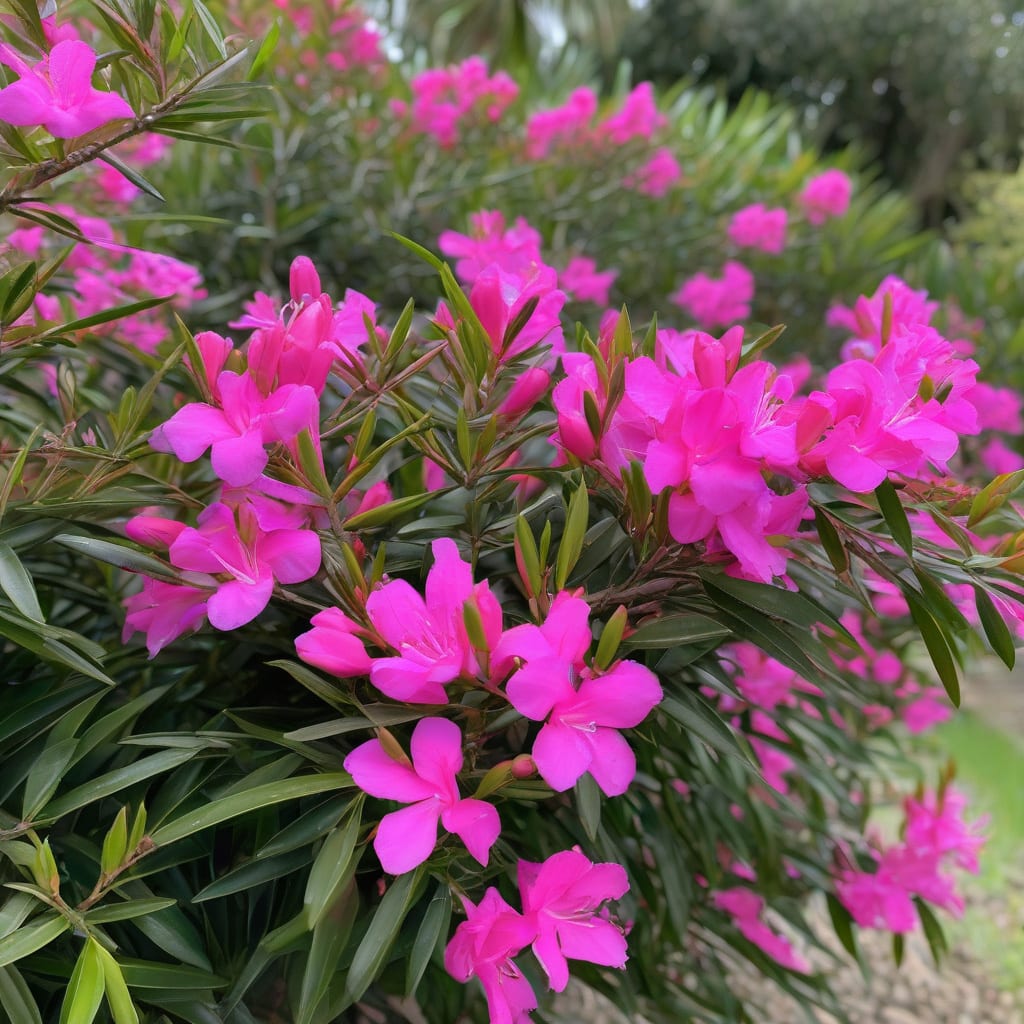
Oleanders 🌺 are stunning evergreen shrubs that can transform any garden with their vibrant flowers and elegant foliage. Understanding their growth potential is crucial for proper placement in your garden.
In USDA zone 8b, oleanders can grow quite tall, typically reaching heights of 6-20 feet. I’ll guide you through the factors that affect their height and how to maintain your desired shape.

3-6 ft

6-10 ft

10-15 ft

6-20 ft
Oleanders are versatile plants that can grow to varying heights depending on several factors. Understanding these factors is crucial for gardeners who want to manage the height of their oleanders effectively. The height of an oleander can be influenced by its variety, growing conditions, and maintenance practices 🌺.
When considering how tall oleanders can grow, it’s essential to look at the specific variety. Different oleander varieties have distinct growth habits, ranging from compact dwarf types to vigorous standard varieties. The growing conditions, including climate, soil quality, and watering practices, also play a significant role in determining the height of oleanders.
Understanding these factors helps gardeners make informed decisions about planting and maintaining oleanders. By selecting the right variety and providing appropriate care, gardeners can influence the height and overall health of their oleanders 🌿.
The combination of these factors can significantly impact the final height of oleanders. For instance, a dwarf variety grown in optimal conditions with regular pruning can maintain a compact height, while a standard variety in ideal conditions might grow much taller 🌱.
It’s also worth noting that oleanders are generally fast-growing plants, especially during their first few years. This rapid growth means that factors like watering and fertilization can have a pronounced effect on their height 🌼.
By carefully managing these factors, gardeners can achieve the desired height for their oleanders, whether they’re looking for a compact shrub or a taller specimen 🌺.
Regular monitoring and adjustment of care practices are key to maintaining oleanders at the desired height. This includes being mindful of the plant’s response to its environment and making necessary adjustments to care routines 🌿.
In summary, the height of oleanders is influenced by a combination of variety, environmental conditions, and maintenance practices. Understanding and managing these factors allows gardeners to control the height of their oleanders effectively 🌺.
Oleanders can grow to varying heights depending on their variety and growing conditions. Understanding the typical growth ranges for different oleander types helps gardeners plan their landscapes effectively 🌺.
The height of oleanders can range significantly based on whether they are dwarf or standard varieties. Knowing these growth ranges is essential for proper garden planning and maintenance 🌱.
The typical height range for oleanders varies significantly between varieties. Dwarf varieties typically grow between 6-8 feet tall, while standard varieties can reach heights of 10-15 feet or more 🌿.
In ideal conditions, some oleander varieties can grow even taller, with maximum heights reaching up to 20 feet. Factors such as climate, soil quality, and maintenance practices play a crucial role in determining the final height of oleanders 🌼.
Gardeners should consider these growth ranges when planning their landscapes. Choosing the right oleander variety based on desired height and growing conditions is essential for achieving the desired landscape effect 🌺.
Understanding the growth potential of oleanders helps in making informed decisions about their placement in the garden. Proper planning ensures that oleanders have enough space to grow and thrive 🌱.
By selecting the appropriate oleander variety and providing optimal care, gardeners can enjoy these beautiful shrubs at their desired height 🌼.
Oleanders require regular pruning to maintain their desired height and shape. Pruning not only controls the height but also promotes healthy growth and encourages blooming 🌺.
The best time to prune oleanders is during their dormant season, typically in late winter or early spring. This allows for the removal of dead or damaged branches and shapes the plant for the upcoming growing season 🌱.
Start by removing any dead, diseased, or damaged branches to prevent the spread of disease and encourage healthy growth.
Cut back overgrown branches to maintain the desired height and shape. Make cuts just above a leaf node to encourage new growth.
Thin out the center of the oleander to improve air circulation and allow light to penetrate, promoting healthy growth and blooming.
Regular pruning helps maintain the oleander’s desired height and promotes a bushier, more vibrant plant 🌿.
By following these pruning techniques, gardeners can effectively manage the height of their oleanders and enjoy their beautiful flowers and foliage 🌼.
Proper pruning techniques are essential for maintaining the health and appearance of oleanders. Regular maintenance ensures that oleanders continue to thrive and add beauty to the garden 🌺.
Pruning is a critical aspect of oleander care, allowing gardeners to control the plant’s height and promote healthy growth 🌱.
