
Beautiful Plants For Your Interior
Beautiful Plants For Your Interior
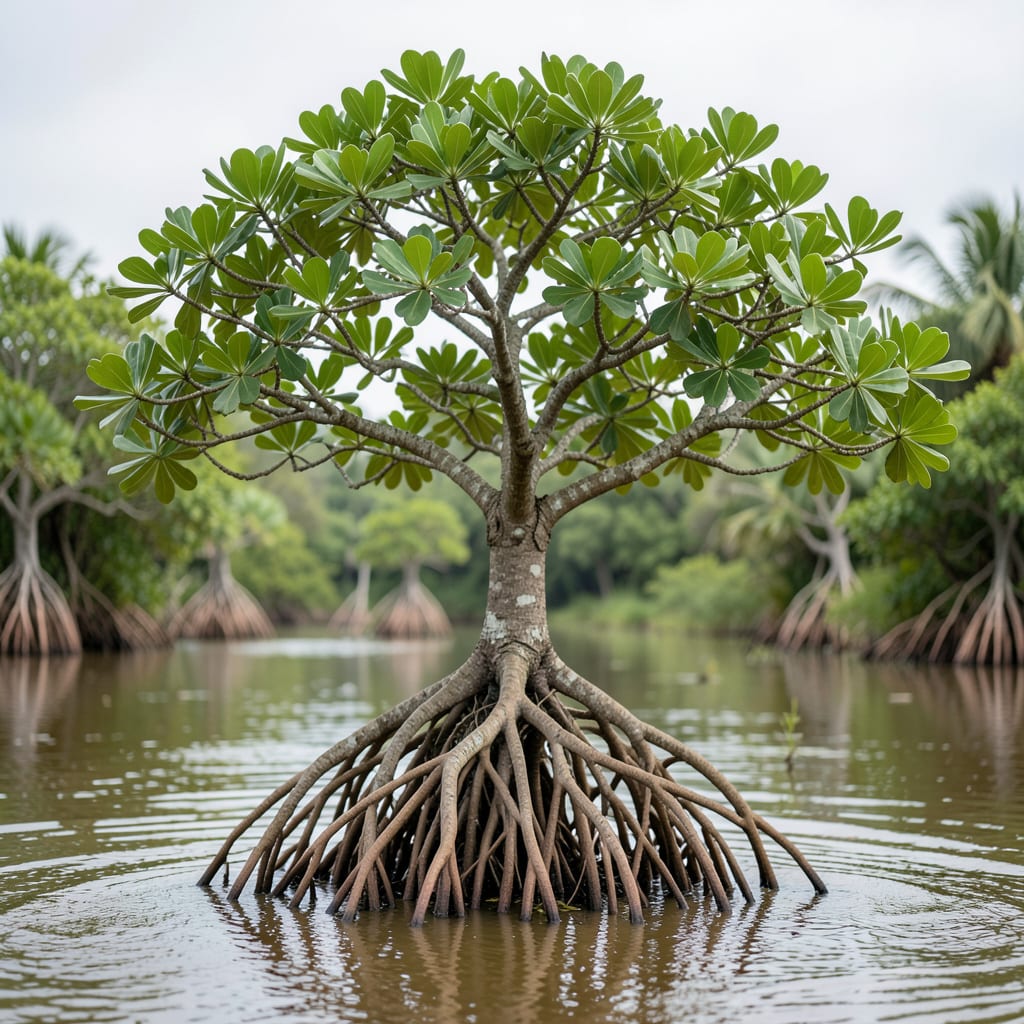
Mangrove trees 🌳 are known for their remarkable ability to thrive in challenging coastal environments. Their growth patterns are fascinating and complex, with heights varying greatly depending on the species and conditions.
In USDA Zone 6, these trees can grow to impressive heights, sometimes reaching as high as 100 feet. Let’s explore the factors that influence their growth and maximum heights.


Mangrove trees are known for their remarkable adaptability to challenging coastal environments, and their height growth is influenced by several key factors. The species of mangrove plays a significant role, as different species have varying growth potentials. For example, some species like Rhizophora mangle (Red Mangrove) can grow taller than others like Avicennia germinans (Black Mangrove).
Environmental conditions such as salinity levels, water availability, and nutrient availability also impact mangrove height growth. Mangroves growing in areas with optimal conditions tend to grow taller and faster than those in less favorable environments. 🌳
The geographical location of mangrove forests also affects their height. Mangroves in areas with higher rainfall and more stable water tables tend to grow taller than those in drier or more hydrologically variable regions. This is because consistent moisture levels support continuous growth throughout the year.
Human activities and natural disturbances can also influence mangrove height. For instance, coastal protection measures, pollution levels, and frequency of storms can all impact the growth and maximum height of mangrove trees.
Understanding these factors is crucial for managing and conserving mangrove ecosystems effectively. By recognizing the importance of species selection, environmental conditions, and geographical factors, we can better support the growth and resilience of these vital coastal ecosystems.
Mangrove trees continue to fascinate with their ability to thrive in challenging environments, and their height growth is just one aspect of their remarkable biology. 🌳
By considering the various factors that influence mangrove height growth, we can gain a deeper appreciation for these incredible trees and work towards their conservation and sustainable management.
Further research into the specific needs and growth patterns of different mangrove species will be essential for developing effective conservation strategies.
As we continue to learn more about mangrove trees and their growth habits, we can better appreciate their importance in coastal ecosystems and the many benefits they provide.
In conclusion, the height growth of mangrove trees is influenced by a complex interplay of factors, including species, environmental conditions, and geographical location. By understanding these factors, we can better support the conservation and management of mangrove ecosystems.
Mangrove trees exhibit a wide range of heights depending on their species and environmental conditions. The maximum height of mangroves can vary significantly, with some species growing taller than others. 🌳
Different mangrove species have unique growth characteristics that influence their maximum heights. For instance, the Red Mangrove (Rhizophora mangle) is known for its impressive height, sometimes reaching up to 80 feet in optimal conditions.
The height variations among mangrove species are influenced by factors such as genetics, environmental conditions, and geographical location. Understanding these variations is essential for effective conservation and management of mangrove ecosystems.
By comparing the height ranges of different mangrove species, we can better appreciate the diversity within these ecosystems and develop targeted strategies for their preservation.
Further research into the growth patterns and maximum heights of various mangrove species will continue to enhance our understanding of these remarkable trees.
In conclusion, the maximum heights of mangrove trees vary significantly across different species, with some reaching impressive heights in optimal conditions.
Measuring the height of mangrove trees can be a challenging task due to their complex root systems and often dense, coastal environments. Accurate measurement is crucial for understanding their growth patterns and ecological significance.
Several methods are employed to measure mangrove tree heights, each with its own advantages and limitations. Clinometer measurements are commonly used, involving the measurement of the angle between the observer’s eye level and the top of the tree. This method requires careful calibration and consideration of the observer’s position relative to the tree.
When measuring mangrove heights, it’s essential to consider factors like tide levels, tree lean, and surrounding vegetation to ensure accurate measurements.
Laser rangefinders offer another precise method for measuring mangrove tree heights. These devices emit a laser beam that reflects off the top of the tree, providing a direct measurement of the distance and, consequently, the tree height.
Photogrammetry is also used, particularly in research settings, where overlapping photographs are analyzed to create detailed 3D models of the mangrove forest, allowing for accurate height measurements.
Despite these methods, challenges persist, such as dense canopies obscuring visibility and the complex terrain of mangrove forests. Researchers often combine multiple measurement techniques to overcome these challenges and achieve more accurate results.
Understanding the height of mangrove trees is vital for assessing their ecological role and monitoring changes in mangrove ecosystems over time. By employing a combination of measurement techniques and considering the unique challenges of mangrove environments, researchers can gather valuable data on these important coastal ecosystems 🌳.
The accuracy of mangrove height measurements has significant implications for both ecological research and conservation efforts. As measurement techniques continue to evolve, our understanding of mangrove ecosystems will become more precise, supporting better management and protection of these vital habitats.
Mangrove trees can grow to varying heights depending on the species and environmental conditions. Typically, they range from 10-100 feet tall, with some species like the Red Mangrove reaching up to 80 feet in optimal conditions. The height variations are influenced by factors such as genetics, environmental conditions, and geographical location .
Environmental conditions such as salinity levels, water availability, and nutrient availability significantly impact mangrove height growth. Mangroves growing in areas with optimal conditions tend to grow taller and faster than those in less favorable environments. For example, mangroves in areas with higher rainfall and more stable water tables tend to grow taller .
Different mangrove species have unique growth characteristics that influence their maximum heights. For instance, the Red Mangrove (Rhizophora mangle) can reach up to 80 feet, while the Black Mangrove (Avicennia germinans) typically reaches a maximum height of 40 feet. Understanding these variations is essential for effective conservation and management of mangrove ecosystems .
Researchers use various methods to measure mangrove tree heights, including clinometer measurements, laser rangefinders, and photogrammetry. These methods help overcome challenges such as dense canopies and complex terrain, providing accurate measurements crucial for understanding mangrove growth patterns and ecological significance .
