
Beautiful Plants For Your Interior
Beautiful Plants For Your Interior
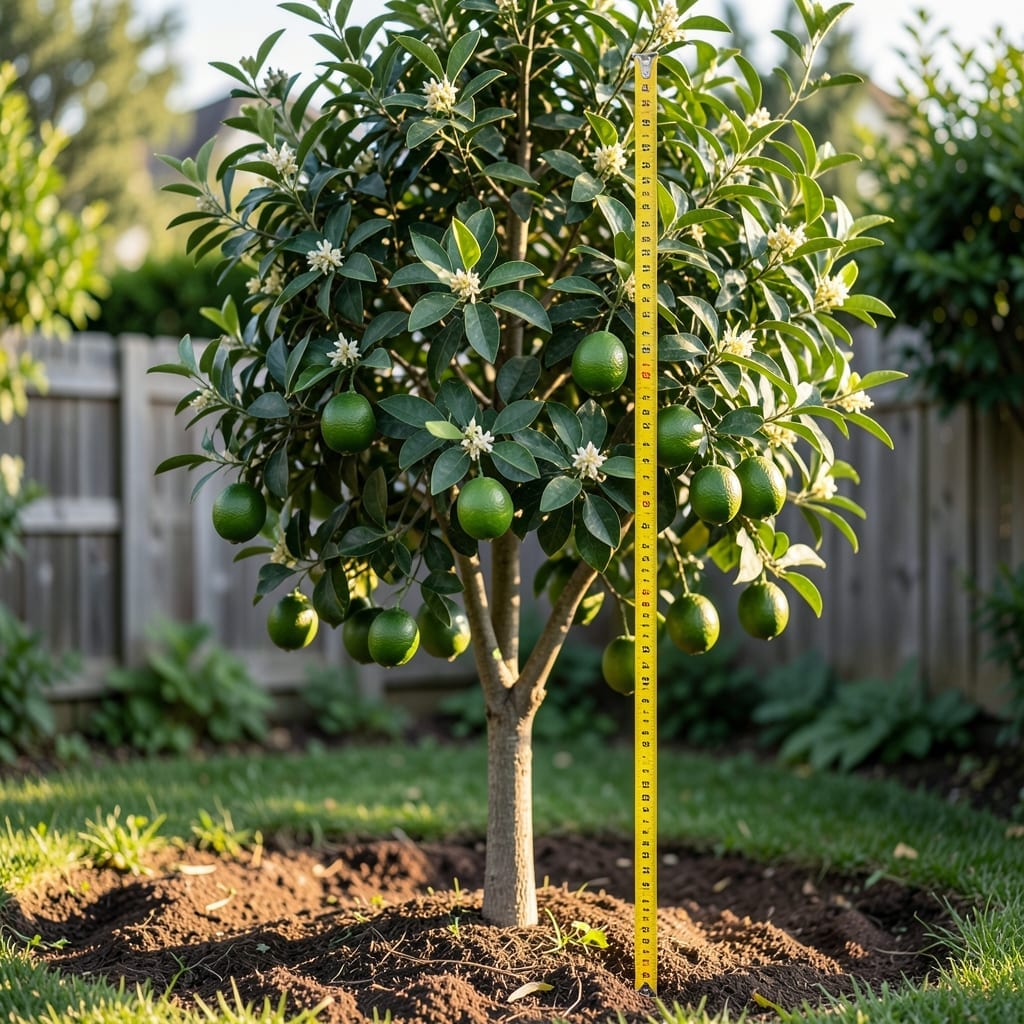
Picture this: a thriving Lime Tree 🍋 in your backyard, bursting with fruit. But before you plant, there’s one question you need answered—how much space will it really need?
Many gardeners underestimate just how tall these tropical beauties can grow. Without proper planning, you might end up with a tree that outgrows its spot faster than you think.
I’ve seen firsthand how different varieties and growing conditions can dramatically change a lime tree’s height. Some stay compact, while others reach surprising stature.
Discover what to expect from your lime tree and how to manage its size for a perfect fit in your garden. Let’s dig in.


If you’re planning to grow lime trees, knowing their mature size helps with garden layout. Standard varieties can reach surprising heights, while dwarf types stay compact for patios and containers.
Most standard lime trees grow between 10 to 20 feet tall, but this varies significantly by type. Climate and care also influence their final size, making variety selection crucial.
| Variety | Mature Height | Best For |
|---|---|---|
| Key Lime | 10-15 ft | Ground planting |
| Persian Lime | 12-20 ft | Orchards |
| Makrut Lime | 10-15 ft | Tropical gardens |
| Dwarf Lime | 6-10 ft | Containers |
The Key Lime tree typically maxes out at 15 feet, perfect for smaller spaces. Its compact size makes it ideal for backyard gardens where space is limited.
Persian Limes tend to be the tallest, often reaching 20 feet in ideal conditions. These trees thrive in warmer climates and need more room to spread their branches.
Makrut Limes usually stay between 10-15 feet, similar to Key Limes. Their unique leaf shape and aromatic fruit make them popular for culinary gardens.
For patio growing, dwarf lime varieties are your best bet. These stay under 10 feet and can even be grown in large pots on balconies or decks.
Dwarf types like ‘Ponderosa’ or ‘Eureka’ offer full-sized fruit on smaller trees. They’re perfect for gardeners with limited space who still want fresh limes.
Remember that rootstock selection can affect final height. Some rootstocks are specifically chosen to limit size, which is great for container growing.
I always recommend checking the specific variety’s mature size before planting. This ensures you can provide the right amount of space for healthy growth.
With proper pruning, you can maintain most lime trees at a manageable height. Regular trimming helps control size while promoting better fruit production.
If you’re wondering how tall lime trees get, know that genetics play the biggest role. Standard varieties like Persian lime typically reach 10-20 feet, while dwarf types stay compact at 6-10 feet. 🌳
The climate in your area also makes a difference. In warmer zones like USDA 9-11, lime trees grow taller faster. Cooler climates may stunt growth or require container planting for protection. ☀️
Soil conditions matter more than many realize. Well-draining soil prevents root rot, while fertile loam encourages robust growth. I always recommend amending clay soils before planting. 🌱
Watering deeply but infrequently trains roots to grow downward. Drought-stressed trees often stay smaller. In my experience, consistent moisture without waterlogging yields the best results.
Pruning isn’t just for shape—it’s a height control tool. I use heading cuts to limit upward growth and thinning cuts to improve air circulation. Regular pruning keeps trees at manageable sizes. ✂️
Finally, remember that container-grown limes naturally stay smaller. Even standard varieties can be kept at 8-10 feet with proper pot sizing and root pruning. This makes them perfect for patios and small gardens.