
Beautiful Plants For Your Interior
Beautiful Plants For Your Interior
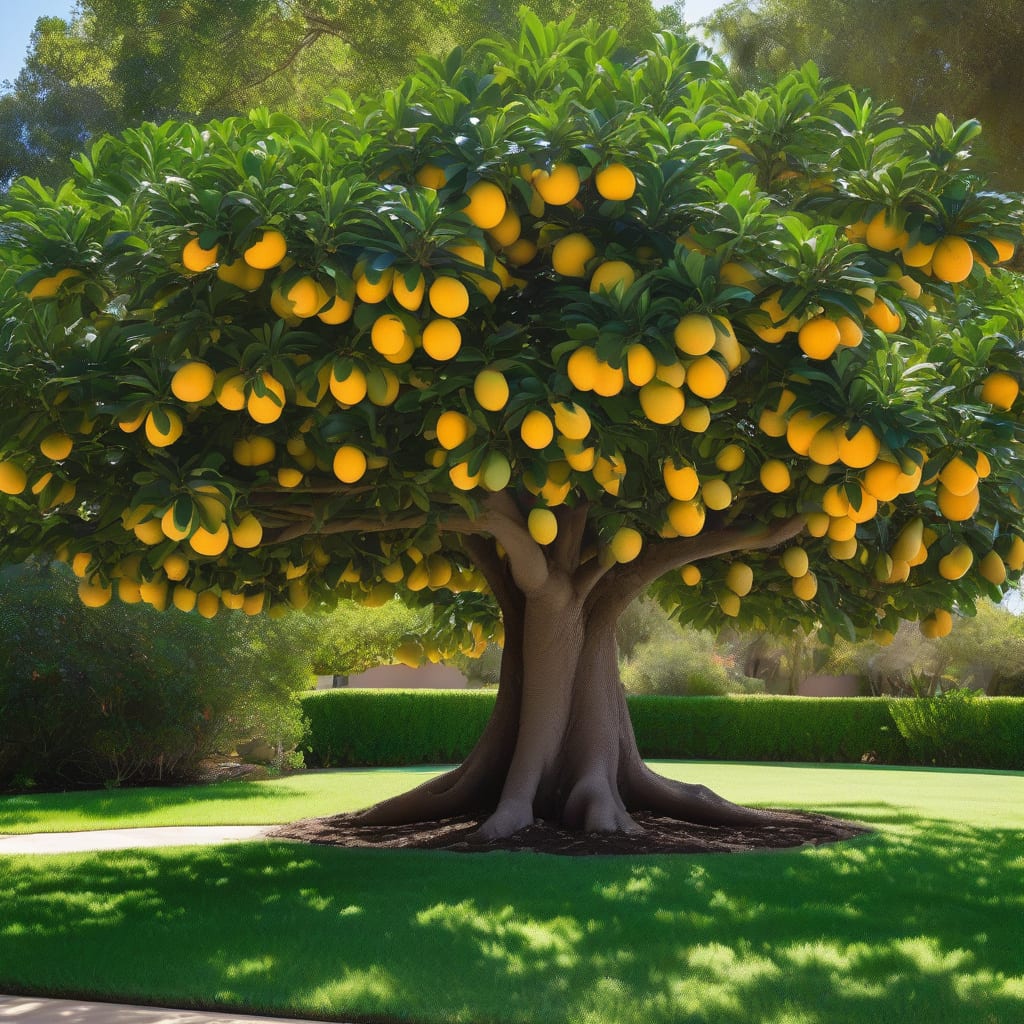
When growing a Grapefruit Tree 🍊, understanding its potential height is crucial for proper garden planning. In ideal conditions, these trees can reach heights of 20-25 feet, but factors like rootstock and pruning can significantly influence their growth.
Whether you’re working with a dwarf variety that tops out at 8-12 feet or a standard tree, knowing what to expect helps you create the right growing conditions. Let’s explore the factors that affect Grapefruit Tree height and how to manage them effectively.


Grapefruit tree height is influenced by multiple factors that gardeners need to consider for optimal growth. The rootstock plays a crucial role as dwarf or semi-dwarf rootstocks can significantly limit tree height. For instance, dwarf varieties typically grow between 8-12 feet while standard trees can reach 20-25 feet 🌳.
Other critical factors include climate conditions, with optimal growth occurring in USDA zones 9b-11. Soil quality also affects tree height, with well-draining soil being essential for healthy root development. Let’s examine these factors in detail through our summary table.
The rootstock significantly influences grapefruit tree height by determining the tree’s overall vigor and growth pattern. Dwarf rootstocks restrict tree height while standard rootstocks allow for maximum growth potential. For example, dwarf varieties typically remain between 8-12 feet whereas standard trees can reach heights of 20-25 feet 🌳.
Climate conditions also play a crucial role in grapefruit tree height. Trees grown in USDA zones 9b-11 experience optimal growth due to the warm temperatures and adequate sunlight. Full sun exposure is essential for maximum height potential and fruit production. In cooler climates, tree growth is naturally restricted, resulting in shorter overall height 🌞.
Soil quality affects grapefruit tree height through nutrient availability and drainage. Well-draining soil with a pH between 6.0-7.0 creates ideal conditions for root development, supporting healthy tree growth. Poor soil conditions can limit root expansion, potentially reducing overall tree height 🌱.
Pruning practices are essential for managing grapefruit tree height. Regular pruning not only maintains desired tree size but also promotes better fruit production. By selectively removing branches, gardeners can control the tree’s shape and encourage more productive growth patterns ✂️.
Understanding these factors helps gardeners make informed decisions about planting and caring for their grapefruit trees. By selecting appropriate rootstock and maintaining optimal growing conditions, gardeners can achieve their desired tree height while ensuring healthy fruit production 📈.
Effective management of grapefruit tree height is crucial for maintaining both the tree’s health and productivity. Proper pruning techniques play a vital role in controlling tree size while promoting fruit production. Regular pruning helps maintain the desired height, encourages better fruiting, and improves overall tree structure 🌳.
When managing grapefruit tree height, it’s essential to understand the different pruning techniques available. Heading cuts involve cutting back the main branches to reduce overall tree height and stimulate new growth. This technique is particularly useful for maintaining a compact tree shape while encouraging fruiting 🔄.
Thinning cuts are another important pruning method that involves selectively removing entire branches to improve air circulation and sunlight penetration within the tree canopy. This technique helps reduce disease risk and promotes more even fruit development throughout the tree 🌟.
Evaluate the tree’s current height and structure to determine the best pruning approach
Eliminate dead, diseased, or damaged branches to improve overall tree health
Use heading and thinning cuts to achieve the desired tree height and shape
The timing of pruning is also critical for effective height management. Pruning during late winter or early spring, before new growth begins, allows the tree to heal quickly and directs its energy toward producing new fruiting branches ✂️.
By combining proper pruning techniques with regular maintenance, gardeners can effectively manage their grapefruit tree’s height while maximizing fruit production and maintaining overall tree health 📈.
Understanding the growth expectations of different grapefruit tree varieties is essential for garden planning. The height potential varies significantly between dwarf, semi-dwarf, and standard types, each offering unique advantages for different growing conditions 🌳.
The dwarf variety typically grows between 8-12 feet tall, making it ideal for small gardens or container growing. This compact size allows for easier maintenance and harvesting while still providing excellent fruit production 🌟.
Semi-dwarf trees offer a middle ground, reaching heights of 12-18 feet. They are suitable for medium-sized gardens where there’s more space to accommodate their growth. These trees balance between manageable size and productive capacity 📈.
Standard grapefruit trees grow the tallest, reaching heights of 20-25 feet. They are best suited for large gardens or orchards where their full growth potential can be realized. These trees provide maximum fruit production but require more space and maintenance 🌳.
By understanding these variety-specific growth expectations, gardeners can make informed decisions about which type of grapefruit tree best suits their available space and gardening needs 🌿.
