
Beautiful Plants For Your Interior
Beautiful Plants For Your Interior
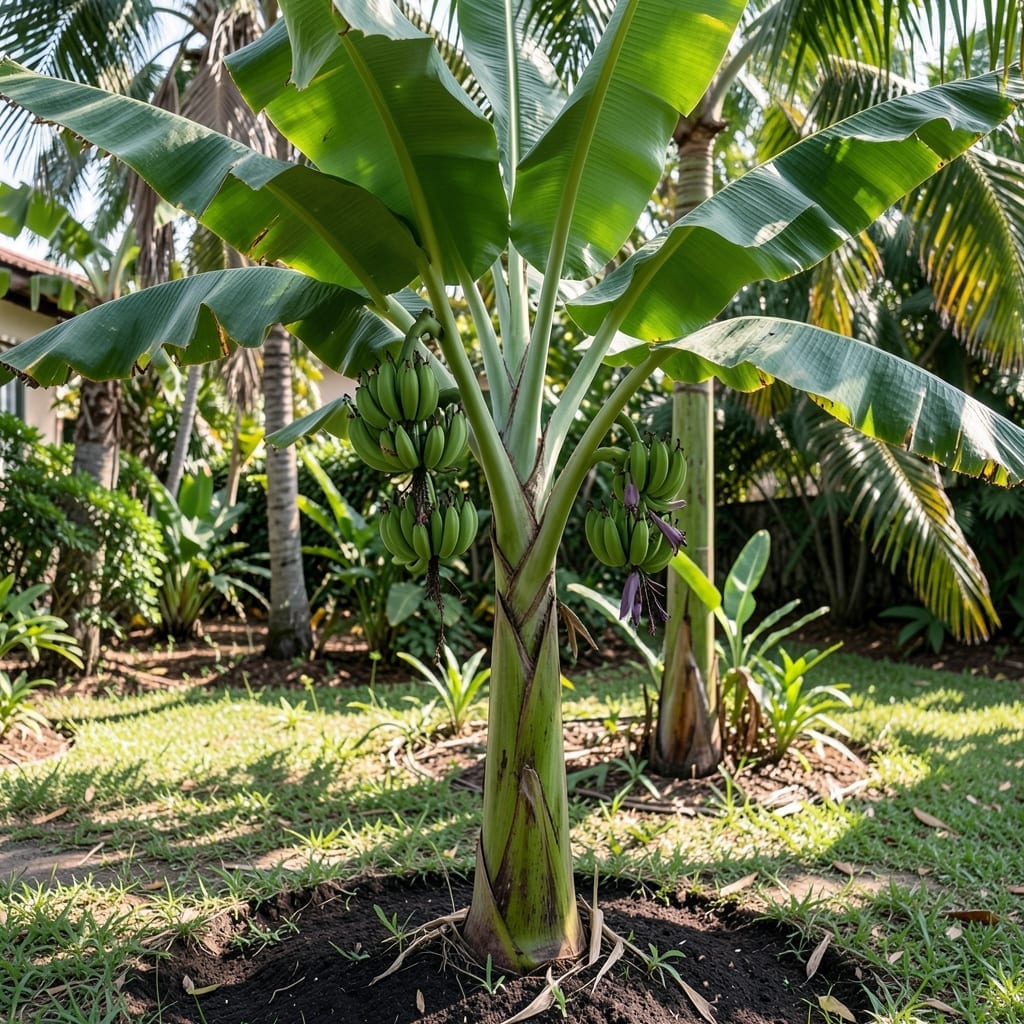
Banana trees can transform your garden, but their size often surprises new growers. The 🍌 Banana Tree ranges from compact 8-12 ft dwarf varieties to towering 30 ft giants, depending on the type and conditions.
Choosing the right variety for your space is crucial. In zones 9b-11, these tropical plants thrive with proper care, but their height can overwhelm small yards without planning.
Discover how to match a Banana Tree’s growth potential with your garden’s limits. I’ll share the key factors that determine their height and how to manage it effectively.


Banana trees display a remarkable height range that surprises many gardeners. From compact dwarf types to sky-high tropical giants, the variation is enormous. I’ve seen Dwarf Cavendish stay under 10 feet in containers.
The standard Cavendish banana, most common in home gardens, typically reaches 15-20 feet at maturity. Meanwhile, Plantain varieties can push 20-25 feet in ideal conditions. This diversity allows gardeners to select based on available space.
In my experience, Dwarf Cavendish is perfect for patio containers in zone 9b. It stays manageable at 8-12 feet while still producing delicious fruit. The Grand Nain variety is my top pick for in-ground planting in warmer climates.
For those with limited space, semi-dwarf varieties like Lady Finger reach just 12-15 feet. These work well in large pots or small garden beds. I recommend providing wind protection for taller varieties to prevent damage.
The Ice Cream Banana offers a middle ground at 15-20 feet. Its cold tolerance makes it popular in zone 9b, though it needs winter protection during rare frosts. The blue java banana can reach similar heights with proper care.
At the larger end, Plantain trees demand space, often growing 20-25 feet tall. These thrive in USDA zones 10-11 where they can reach full height. In zone 9b, they may stay slightly smaller but still require significant room.
Remember that height varies by climate and care. In cooler zones, even standard varieties may stay 5-10 feet shorter than their tropical maximum. Container growing also naturally limits size, making it ideal for smaller properties.
I’ve found that consistent watering and rich soil help maximize growth potential. However, wind exposure can stunt development, so consider protected locations for the tallest varieties. 🌿
Climate plays a huge role in determining how tall your banana trees will grow. In tropical zones like 10-11, they often reach their maximum height of 20-30 feet with ideal warmth and humidity.
In subtropical zone 9b, the same varieties may stay 5-10 feet shorter due to cooler temperatures. I’ve noticed that consistent heat and high humidity accelerate growth significantly. 🌱
Climate, soil, and water availability directly impact banana tree height. Tropical conditions yield tallest growth, while cooler areas produce shorter, more compact plants.
Soil quality also makes a difference. Rich, well-draining soil with plenty of organic matter supports faster growth. I recommend amending heavy clay with compost for better results.
Water availability is crucial, especially during dry periods. Banana trees need consistent moisture to reach their full height potential. In my garden, drip irrigation works best for even watering.
Planting method affects size too. In-ground trees typically grow taller than container-grown ones. For Dwarf Cavendish in pots, expect 8-12 feet, while the same variety in ground may reach 15 feet.
Wind exposure can limit height. Strong winds may break leaves or stunt growth, so I suggest planting near a windbreak or fence. This is especially important for taller varieties like Plantains.
Remember that fertilization impacts growth rate. A balanced 8-10-10 fertilizer applied monthly during growing season helps maximize height. Just be careful not to over-fertilize, as this can lead to weak growth that’s more susceptible to damage. 🌿