
Beautiful Plants For Your Interior
Beautiful Plants For Your Interior
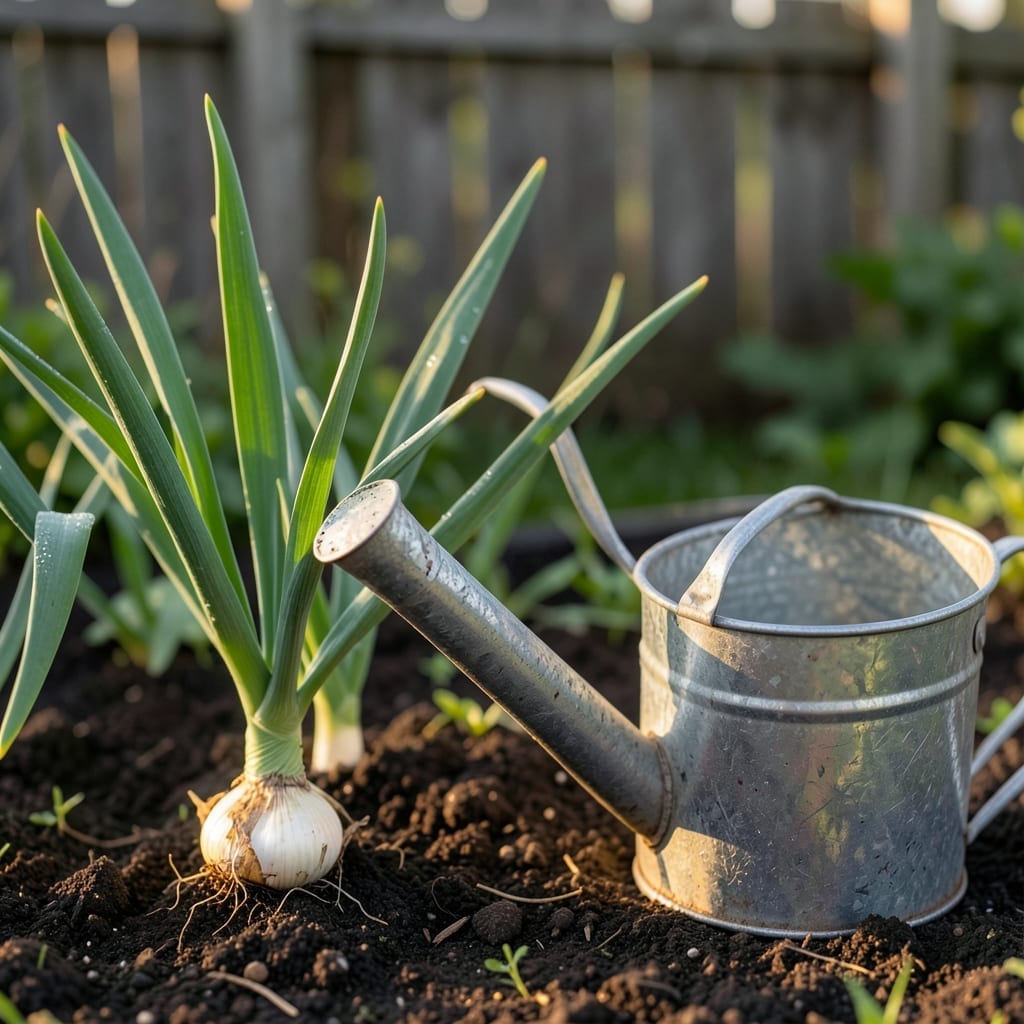
Watering garlic correctly is the key to growing large, flavorful bulbs—but get it wrong, and you risk rot, small cloves, or a failed harvest. The 🧄 plant’s needs change dramatically through its growth cycle.
What most gardeners don’t realize is that overwatering in fall can be just as damaging as drought in spring. I’ve seen both scenarios play out in my own garden in Zone 6a.
Discover how to adjust your approach from planting in October through harvest in July. Your bulbs will thank you with better size and flavor.
Getting your garlic watering schedule right means understanding that this plant is a seasonal shape-shifter. What works in fall won’t work in spring, and summer demands yet another approach.
I’ve learned through trial and error that garlic’s water needs change dramatically as it grows. The key is matching your watering frequency to each distinct phase. 🌱
| Growth Stage | Watering Frequency | Key Notes |
|---|---|---|
| Planting (Fall) | Every 10-14 days | Water after planting, then lightly until freeze |
| Early Spring | Weekly | Increase as shoots emerge and temps rise |
| Bulb Formation | Every 5-7 days | Critical for clove development, keep soil moist |
| Pre-Harvest | Taper off | Stop 2 weeks before harvest to dry bulbs |
In fall planting, I water my garlic once after planting and then only if we have an unusually dry spell. The goal is to help roots establish before winter dormancy.
When spring arrives, I switch to weekly watering as the shoots emerge. This is when the plant starts building its leaf structure, and consistent moisture is crucial.
The most critical watering period begins in late spring when bulbs start forming. I water every 5-7 days, making sure the soil stays evenly moist but never soggy.
As we approach harvest time in early summer, I begin tapering off water. I completely stop watering 2 weeks before harvest to allow the bulbs to dry properly.
Remember that clay soil holds moisture longer than sandy soil, so adjust your schedule accordingly. I always check soil moisture before watering.
In hotter climates, you might need to water more frequently. In my Zone 6a garden, I find that morning watering works best to prevent evaporation. ☀️
The size of your bulbs will tell you if you’re getting it right. Small bulbs often indicate underwatering during bulb formation, while rotten bulbs usually mean too much water.
Finally, always water at the base of the plant to keep the foliage dry and prevent disease. This simple practice has saved many of my crops from fungal issues. 💧
Even experienced gardeners can ruin garlic with poor watering habits. I’ve made these mistakes myself, and the results were always disappointing—rotten bulbs or tiny cloves that weren’t worth the effort. 🌱
What surprises most people is how sensitive garlic is to watering errors. Too much water at the wrong time can be just as bad as too little.
⚠️ Warning: These 5 mistakes can destroy your garlic crop before it even gets started.
I learned the hard way that overwatering in fall is a recipe for disaster. The bulbs can rot in cold, soggy soil before they even get a chance to grow. Now I water lightly after planting and then let nature take its course.
Underwatering in spring is another common pitfall. When the shoots emerge, they need consistent moisture to develop strong leaves and eventually large bulbs. I aim for weekly watering during this phase.
One of the biggest mistakes is watering too late in the season. I stop watering 2 weeks before harvest to let the bulbs dry out properly. This prevents mold and ensures better storage life.
Always water at the base of the plant to keep the foliage dry. Wet leaves are an open invitation to fungal diseases. I use a soaker hose for this reason, and it’s made a huge difference in my garden. 💧