
Beautiful Plants For Your Interior
Beautiful Plants For Your Interior
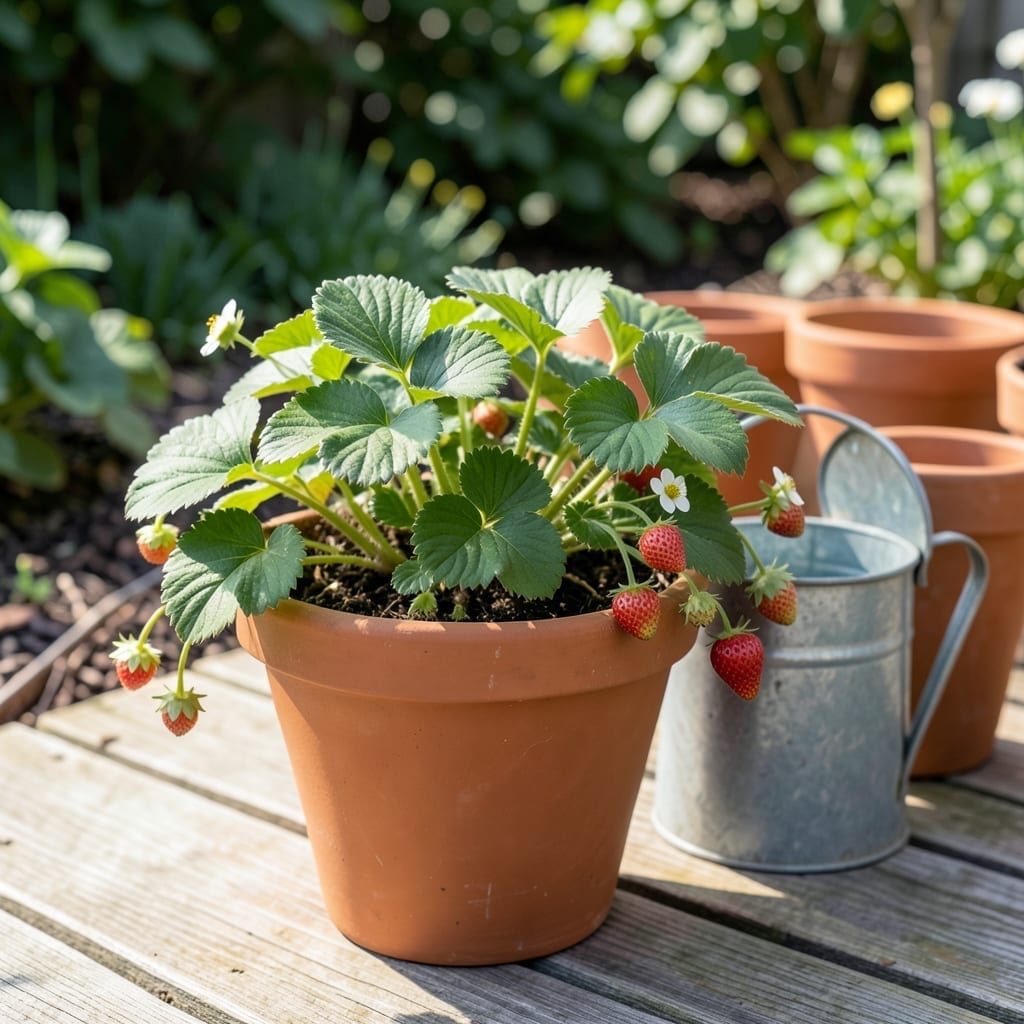
Strawberries in pots can transform your balcony into a sweet, fruity oasis, but their watering needs often puzzle even seasoned gardeners. The 🍓 Strawberry thrives with the right balance—too little water and you’ll get dry, lackluster berries; too much, and rot sets in.
What if I told you there’s a simple way to nail the perfect schedule? Understanding the rhythm of your potted Strawberry plants is the key to juicy, plump harvests.
From seasonal shifts to soil checks, I’ll walk you through how to keep your containers perfectly hydrated. No more guesswork, just consistent results.
Discover the straightforward method that works for zones 4-9, and watch your strawberries flourish like never before.
Mastering the watering schedule for potted strawberries is crucial because pots dry out faster than garden soil. I’ve found that seasonal changes dramatically affect how often you should water. 🌱
In my experience, spring and fall require moderate watering, while summer heat demands more frequent attention. Always check the top inch of soil before watering again. 🌿
| Season | Watering Frequency | Notes |
|---|---|---|
| Spring | Every 4-5 days | Cool temps slow evaporation |
| Summer | Every 2-3 days | Hot weather dries soil quickly |
| Fall | Every 5-7 days | Cooler temps reduce needs |
| Winter | Every 10-14 days | Dormant plants need less |
During summer months, I water my strawberry pots every 2-3 days if temperatures climb above 80°F. The small root systems of strawberries can’t handle prolonged dry spells. ✂️
In spring and fall, I stretch the interval to 4-7 days, depending on rainfall. Always water in the early morning to reduce evaporation and prevent fungal issues. 💧
For winter care, I reduce watering to every 10-14 days. The plants are dormant, and excess moisture can lead to root rot. Check soil moisture with your finger before adding water. ☀️
Climate adjustments are key. In humid areas, you might water less often, while arid climates require more frequent watering. I use a moisture meter for precision. 🌡️
Remember that container size matters too. Smaller pots dry out faster and may need daily watering in peak summer. I recommend 12-inch pots for better moisture retention. 🪴
Always ensure your pots have drainage holes to prevent waterlogging. I’ve lost plants to root rot from poor drainage, so this is non-negotiable for healthy strawberries. 🌻
Finally, observe your plants. Drooping leaves in the afternoon often signal thirst, while yellowing leaves can indicate overwatering. Adjust your schedule based on these visual cues. 🌷
Potted strawberry plants communicate their watering needs through visible signs. I’ve learned that drooping leaves often signal under-watering, while yellowing foliage can indicate over-watering or poor drainage.
Another red flag is mold growth on the soil surface or fruit rot, which means the potting mix stays too wet. Conversely, dry, cracked soil pulling away from the container edges screams for a drink.
I always check the soil moisture by sticking my finger 1-2 inches deep. If it feels dry, it’s time to water. In summer heat, I sometimes water twice daily—morning and evening—to prevent stress.
For self-watering pots, I monitor the reservoir level weekly. Even these can drown roots if left unchecked. A moisture meter is a great tool for precision if you’re unsure.
Morning watering is ideal—it gives foliage time to dry, reducing disease risk. I avoid wetting leaves directly, as this can lead to fungal issues like powdery mildew.
Finally, adjust for container size. Small pots dry out faster, while large ones retain moisture longer. I’ve found terracotta pots need more frequent watering than plastic due to porous walls 🪴