
Beautiful Plants For Your Interior
Beautiful Plants For Your Interior
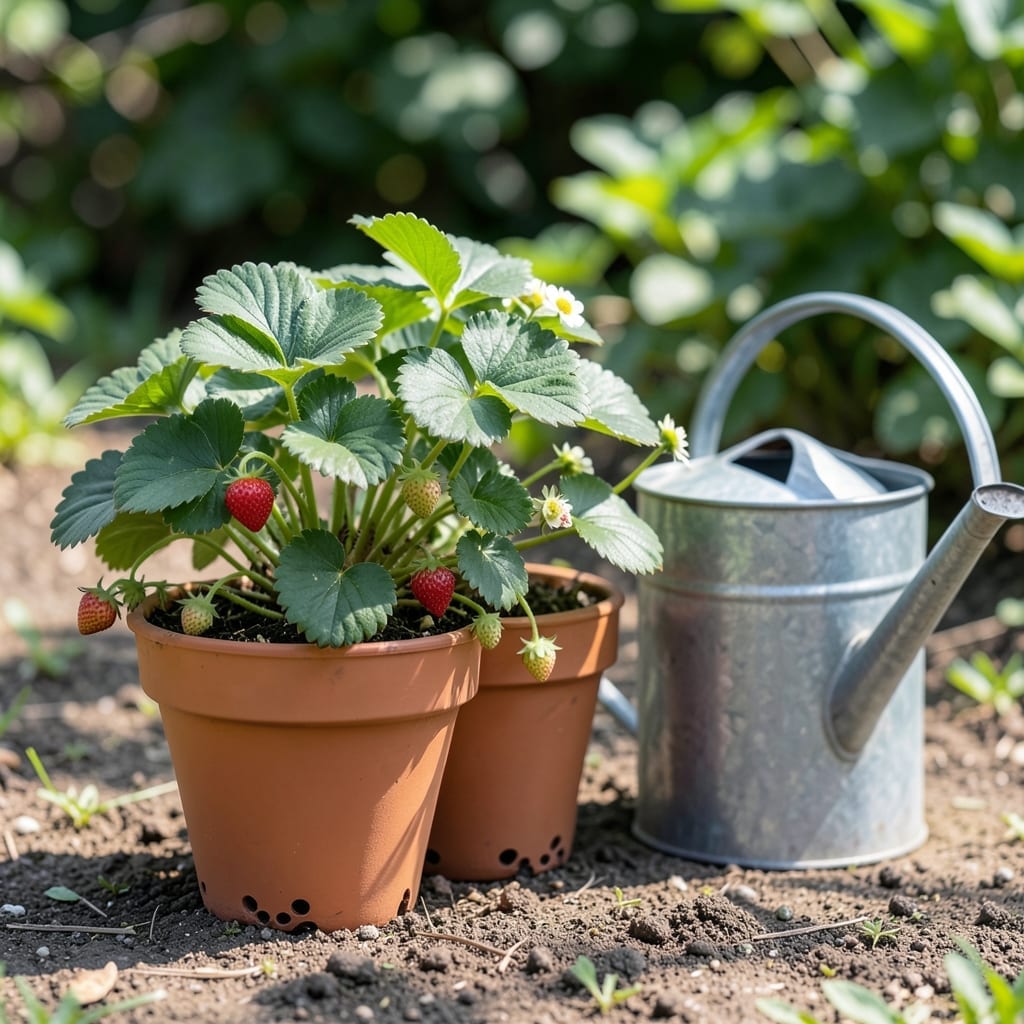
Watering strawberries in pots the right way can mean the difference between a meager harvest and a bounty of sweet, juicy 🍓 berries. Get the timing wrong, and you risk rot, mold, or stunted plants.
I’ve seen too many gardeners struggle with wilting leaves or waterlogged soil simply because they followed generic advice. The truth is, container-grown Strawberry plants have unique needs that change with the seasons.
Discover the simple yet effective schedule that keeps your potted Strawberry plants thriving. Let’s make this your most productive growing season yet.
Getting the watering schedule right for potted strawberries is crucial. These plants are sensitive to both overwatering and drought stress, so timing matters.
I’ve found that seasonal changes dramatically affect how often you should water. In hot summer, pots dry out faster, while winter dormancy means less frequent watering. 🌱
| Season | Watering Frequency | Key Notes |
|---|---|---|
| Spring | Every 5-7 days | Increase as temperatures rise |
| Summer | Every 2-3 days | Check soil daily in heatwaves |
| Fall | Every 7-10 days | Reduce as growth slows |
| Winter | Every 10-14 days | Only water if soil is dry |
In spring, as your strawberries start growing, aim to water every 5-7 days. The soil should stay moist but never soggy.
When summer heat hits, switch to every 2-3 days. Potted plants dry out much faster in direct sun, so check the top inch of soil daily.
As fall approaches, ease back to every 7-10 days. Cooler temps and shorter days mean less evaporation, so overwatering becomes a risk.
During winter dormancy, water sparingly—every 10-14 days or only when the soil feels dry. Too much moisture can rot the roots.
Remember, pot size matters too. Smaller containers dry out quicker and may need daily checks in peak summer. Always water in the morning to prevent fungal issues.
If you’re unsure, use the finger test: stick your finger 1-2 inches into the soil. If it’s dry, it’s time to water. If it’s moist, wait another day. 🌿
Finally, mulching helps retain moisture. Use straw or bark around your plants to reduce evaporation and keep roots cool.
Your potted strawberries will tell you when they’re thirsty or drowning. I check my plants daily for these visual cues to adjust my watering routine.
Wilting leaves in the afternoon often mean underwatering, while yellowing leaves can signal too much water. Don’t ignore these early warnings. 🌱
For underwatered plants, give a deep watering until it drains from the bottom of the pot. This ensures the entire root ball gets moisture.
If you suspect overwatering, stop watering immediately and check the roots. Healthy roots are white and firm, while rotting roots are brown and mushy.
Another sign is leaf color. Dark green, leathery leaves often mean too much water, while dull, bluish-green leaves suggest thirst.
Container choice affects signs too. Terracotta pots dry faster and show water stress sooner. Plastic pots retain moisture longer, so watch for overwatering signs. 🌿
Finally, morning is best for checking. Plants show water stress most clearly after a dry night. Adjust your schedule based on these daily observations.