
Beautiful Plants For Your Interior
Beautiful Plants For Your Interior
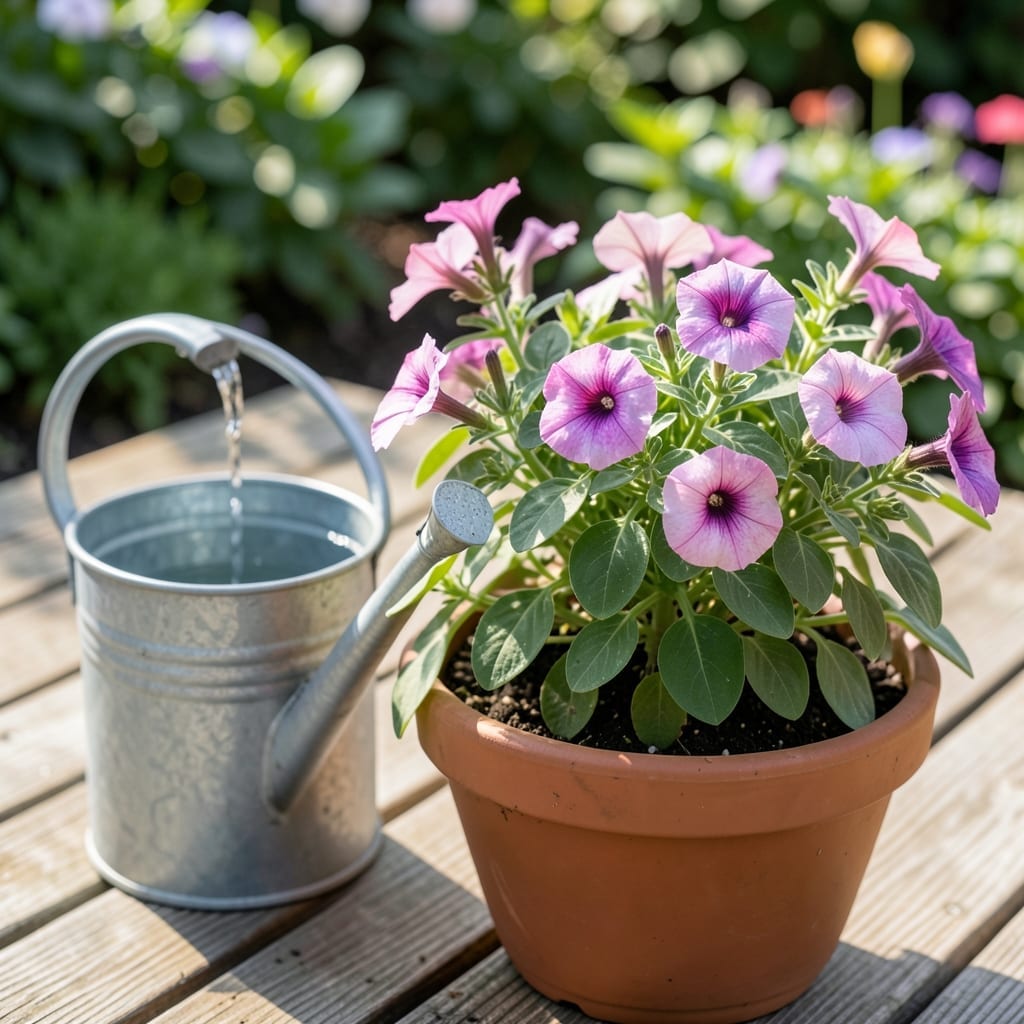
Petunias in pots can wilt dramatically within hours if underwatered—or rot just as quickly if overwatered. It’s a delicate balance that frustrates even experienced gardeners.
I’ve seen too many vibrant 🌸 Petunia displays turn lackluster because of inconsistent watering. The good news? With a few simple adjustments, you can keep your container Petunias thriving all season long.
Mastering the right schedule means understanding your climate, pot type, and the plant’s needs. It’s not about sticking to a rigid timeline—it’s about responding to what your Petunias are telling you.
Discover how to read the signs and create a watering routine that keeps your blooms bold and beautiful, without the guesswork.
If you’ve ever watched your potted petunias go from lush to limp in a single afternoon, you know how critical watering is. These vibrant annuals thrive on consistent moisture, but too much love can drown them just as fast.
Unlike their in-ground cousins, container petunias dry out quickly because their roots can’t reach deeper soil. I’ve found the finger test works best—stick your finger 1 inch deep into the soil. If it’s dry, it’s time to water.
| Factor | Watering Frequency | Notes |
| Climate | Hot & Dry | Daily, sometimes twice |
| Pot Size | Small (6″) | Every 1-2 days |
| Pot Size | Large (12″+) | Every 2-3 days |
| Season | Summer | Daily in extreme heat |
| Season | Spring/Fall | Every 2-3 days |
| Soil | Well-draining | Prevents root rot |
In hot climates or during heat waves, I water my petunias twice a day—early morning and late afternoon. The key is to water deeply until it runs out the drainage holes, ensuring the entire root ball gets moisture.
For small pots under 6 inches, you might need to water every 24 hours, especially if they’re in full sun. Larger containers hold moisture longer, so every 2-3 days often suffices in moderate weather.
Watch for wilting leaves or dry soil pulling away from the pot edges—these are classic signs your petunias are thirsty. Conversely, yellowing leaves or mushy stems scream overwatering.
I always recommend morning watering to allow foliage to dry before evening, reducing fungal disease risks. Avoid getting water on the leaves if possible, as this can lead to powdery mildew.
The type of pot matters too. Terracotta breathes but dries fast, while plastic retains moisture longer. I adjust my schedule based on the material—terracotta often needs daily water in summer.
Remember, petunias in hanging baskets are especially vulnerable to drying out. Their elevated position exposes them to more wind and sun, so check them daily and water thoroughly when the topsoil feels dry.
Finally, mulching the soil surface with organic matter helps retain moisture. I use straw or bark chips to keep my petunias happy between waterings. With these tips, your potted petunias will bloom profusely all season long 🌸
Getting your potted petunias the right amount of water isn’t just about frequency—it’s about technique and timing. I’ve learned that even with the best schedule, small mistakes can sabotage your blooms.
One of my top rules is to water early in the morning. This gives the plants time to absorb moisture before the heat of the day and reduces evaporation loss. It also helps prevent fungal diseases that thrive in damp evening conditions.
I always avoid wetting the leaves when watering. Petunias are prone to powdery mildew, and damp foliage creates the perfect environment for spores to take hold. A watering can with a long spout helps direct water right to the soil.
For gardeners in arid regions, consider adding hydrogel crystals to your potting mix. These absorb and release water gradually, helping to maintain consistent moisture between waterings. It’s a game-changer for hanging baskets that dry out quickly.
Another trick I swear by is the saucer method. Place a tray under your pots and fill it with water, allowing the plants to wick up moisture as needed. This works especially well for terracotta pots, which tend to dry out faster than plastic.
Finally, observe your plants daily. Petunias will often tell you what they need—drooping flowers in the afternoon might just need a drink, while consistent wilting could indicate it’s time to adjust your watering routine. With these tips, your potted petunias will stay lush and vibrant 🌸