
Beautiful Plants For Your Interior
Beautiful Plants For Your Interior
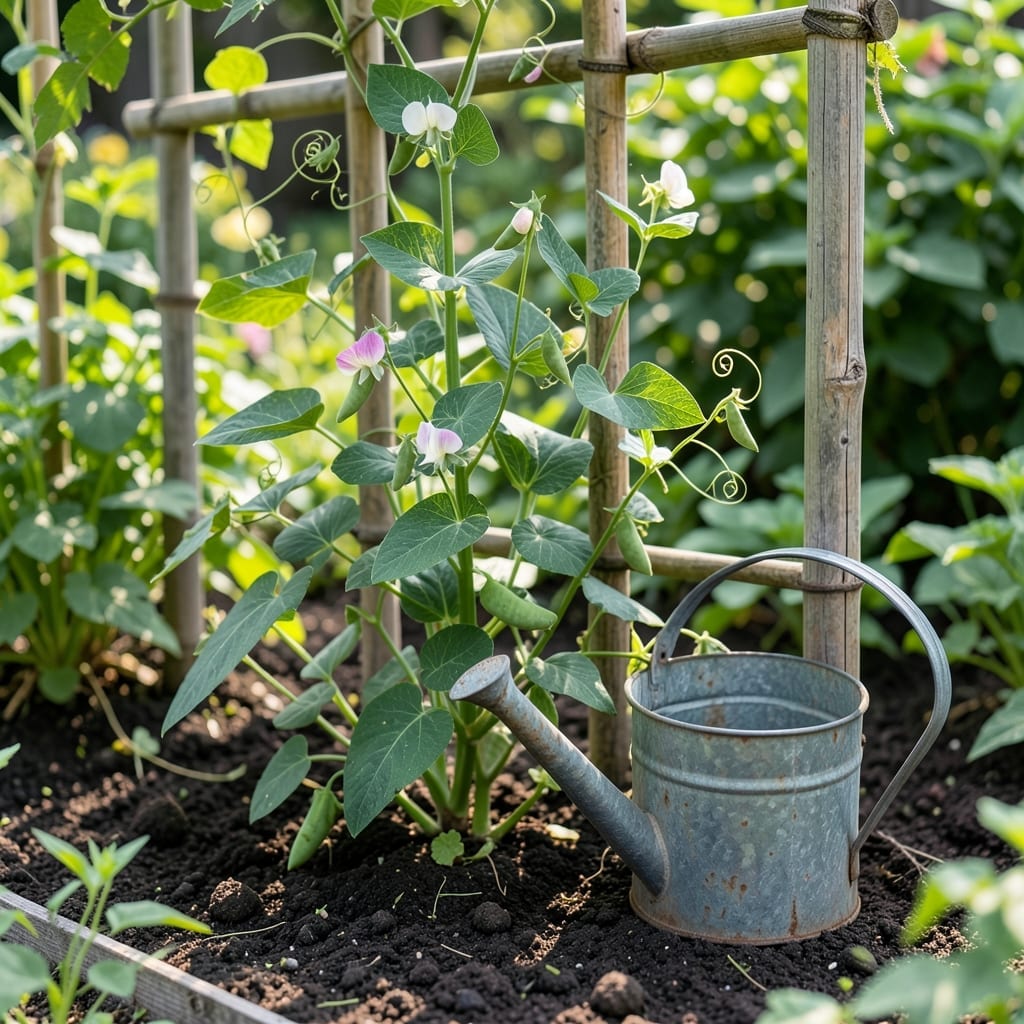
Watering your Pea plants correctly can make or break your harvest. Too much or too little water, and you risk stunting growth or inviting disease. I’ve seen it happen—healthy 🌱 Pea plants turn lackluster overnight because of inconsistent watering.
The good news? Getting it right isn’t complicated once you understand the basics. Your peas need steady moisture, especially during their critical growth stages, but they don’t like soggy soil.
Let me walk you through the most effective approach to keep your plants thriving. You’ll learn how to adjust your routine for different conditions and stages.
Getting your pea watering schedule right starts with understanding each growth phase. I’ve found that germination demands the most consistent moisture, while established plants need a more balanced approach. Pea seeds require even dampness to sprout properly.
Once your pea plants emerge, the focus shifts to maintaining steady soil moisture without waterlogging. This stage sets the foundation for strong root development and vigorous growth.
| Growth Stage | Watering Frequency | Water Amount | Key Notes |
|---|---|---|---|
| Germination | Daily | 1 inch per week | Keep soil evenly moist |
| Seedling | Every 2-3 days | 1 inch per week | Avoid soggy soil |
| Flowering | Every 4-5 days | 1-1.5 inches per week | Critical for pod formation |
| Pod Development | Every 5-7 days | 1.5 inches per week | Reduce as harvest nears |
During germination, I always check the soil daily. If the top inch feels dry, it’s time to water. This stage is critical because dry soil can prevent seeds from sprouting or cause uneven growth.
As your pea seedlings grow, you can ease up slightly. Water every 2-3 days, but always check the soil first. The goal is to keep it consistently moist but never waterlogged, which can lead to root rot.
When your pea plants start flowering, they’ll need more water to support pod development. I increase the frequency to every 4-5 days, ensuring the soil stays moist about 1-1.5 inches deep.
Once pods begin to form, maintaining steady moisture is key. Water every 5-7 days, but be careful not to overdo it. Too much water at this stage can cause the pods to split or rot.
In hot climates, you might need to water more frequently. I’ve found that in temperatures above 85°F, peas often need water every 2-3 days to prevent stress. Always water in the early morning to reduce evaporation.
For container-grown peas, the rules are a bit different. Pots dry out faster, so check the soil daily. Aim to keep it moist but not soggy, watering when the top inch feels dry to the touch. Drip irrigation works wonders here.
Remember, mulching can help retain moisture and reduce your watering frequency. I use a 2-3 inch layer of organic mulch around my pea plants to keep the soil cool and hydrated. 🌱
Recognizing watering issues in your peas early can save your crop. I’ve learned that pea plants show clear signs when they’re getting too much or too little water. Overwatering often leads to yellowing leaves and wilting, even when the soil is damp.
On the flip side, underwatered peas will have dry, cracked soil and drooping stems. The leaves may turn crispy, and the pods won’t develop properly. Catching these signs early is key to adjusting your watering schedule. 🌱
If you notice yellow leaves on your peas, check the soil. If it’s soggy, you’re likely overwatering. I recommend letting the soil dry out slightly between waterings and improving drainage with organic matter or raised beds.
For underwatered peas, the fix is simpler. Give them a deep watering immediately, and consider adding a layer of mulch to retain moisture. I use straw or grass clippings, which work wonders for keeping the soil damp.
Another tip: morning watering helps prevent fungal issues. Watering at the base of the plant, rather than overhead, keeps the leaves dry and reduces the risk of disease. I’ve found this method keeps my peas healthier and more productive. ☀️
Don’t forget to adjust based on your climate and soil type. Sandy soil drains quickly, so you may need to water more often. Clay soil holds moisture longer, so be cautious not to overdo it. Testing the soil with your finger is the best way to gauge moisture levels. 🌿