
Beautiful Plants For Your Interior
Beautiful Plants For Your Interior
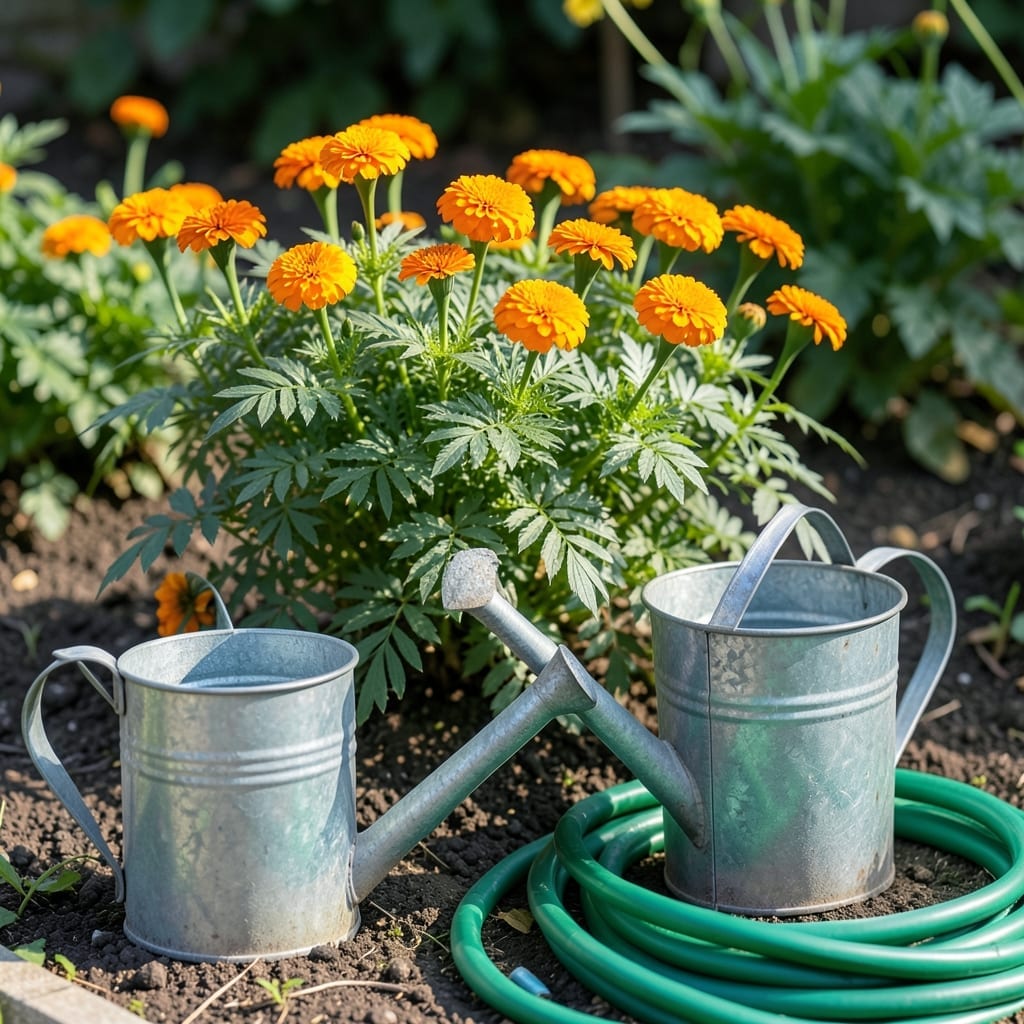
Marigolds bring vibrant color and pest-repelling benefits to any garden, but their beauty depends on proper watering. Get it wrong, and you’ll face wilted 🌼 blooms or root rot.
I’ve learned that finding the right balance is the key to keeping these cheerful flowers thriving. Whether you’re in Zone 6 or a different climate, timing and technique matter just as much as frequency.
Discover how to adjust your approach for spring planting and beyond. With these simple tips, your marigolds will reward you with months of stunning color.
Getting the watering schedule right ensures your marigolds stay vibrant and healthy. These hardy flowers have moderate water needs, but frequency changes with the seasons and your local climate.
In my experience, spring planting requires more attention as young plants establish roots. As temperatures rise, you’ll need to adjust to prevent stress or root rot. 🌼
Container-grown marigolds dry out faster than those in the ground. I recommend checking soil moisture daily during summer, especially if your pots are in full sun for 6+ hours.
For in-ground marigolds, a deep watering once or twice a week is usually sufficient. The key is to water deeply so the roots grow downward, making plants more drought-resistant.
In humid climates, you can often reduce frequency. Watch for yellowing leaves, a sign of overwatering. In arid regions, you may need to water every 2-3 days to keep soil evenly moist.
I always use the finger test: stick your finger 1-2 inches into the soil. If it feels dry, it’s time to water. This simple trick prevents both underwatering and overwatering. 🌱
Morning watering is ideal because it allows foliage to dry before evening, reducing disease risk. Avoid watering in the heat of the day to minimize evaporation.
Remember, well-draining soil is crucial. Marigolds hate soggy roots, so if your soil retains too much moisture, consider amending it with compost or planting in raised beds. ✂️
Finally, mulching helps retain moisture and regulate soil temperature. A 2-3 inch layer of organic mulch around your marigolds can reduce watering needs by up to 30%.
Your marigolds will tell you when they’re thirsty or drowning. I’ve found that drooping leaves and dry soil are classic signs of underwatering, while yellowing foliage often indicates too much water.
For container marigolds, check for crispy leaf edges or flowers that wilt even after watering. These are sure signs your potted plants need more frequent drinks, especially in hot weather. 🌼
The finger test works for both scenarios. If the top 1-2 inches of soil are dry, it’s time to water. But if the soil feels soggy or smells foul, hold off and let it dry out.
I’ve learned that morning wilting can be normal in extreme heat, but if your marigolds stay droopy all day, they likely need water. For overwatered plants, stop watering immediately and move to a sunnier spot to help dry the soil.
In my garden, I use mulch to help regulate moisture. A 2-inch layer of organic mulch prevents both rapid drying and waterlogging, giving your marigolds a more stable environment. ✂️
Remember, newly planted marigolds need more attention. They’re establishing roots and can’t handle drought or soggy conditions as well as mature plants. Keep the soil consistently moist but not waterlogged for the first 2-3 weeks. 🌱