
Beautiful Plants For Your Interior
Beautiful Plants For Your Interior
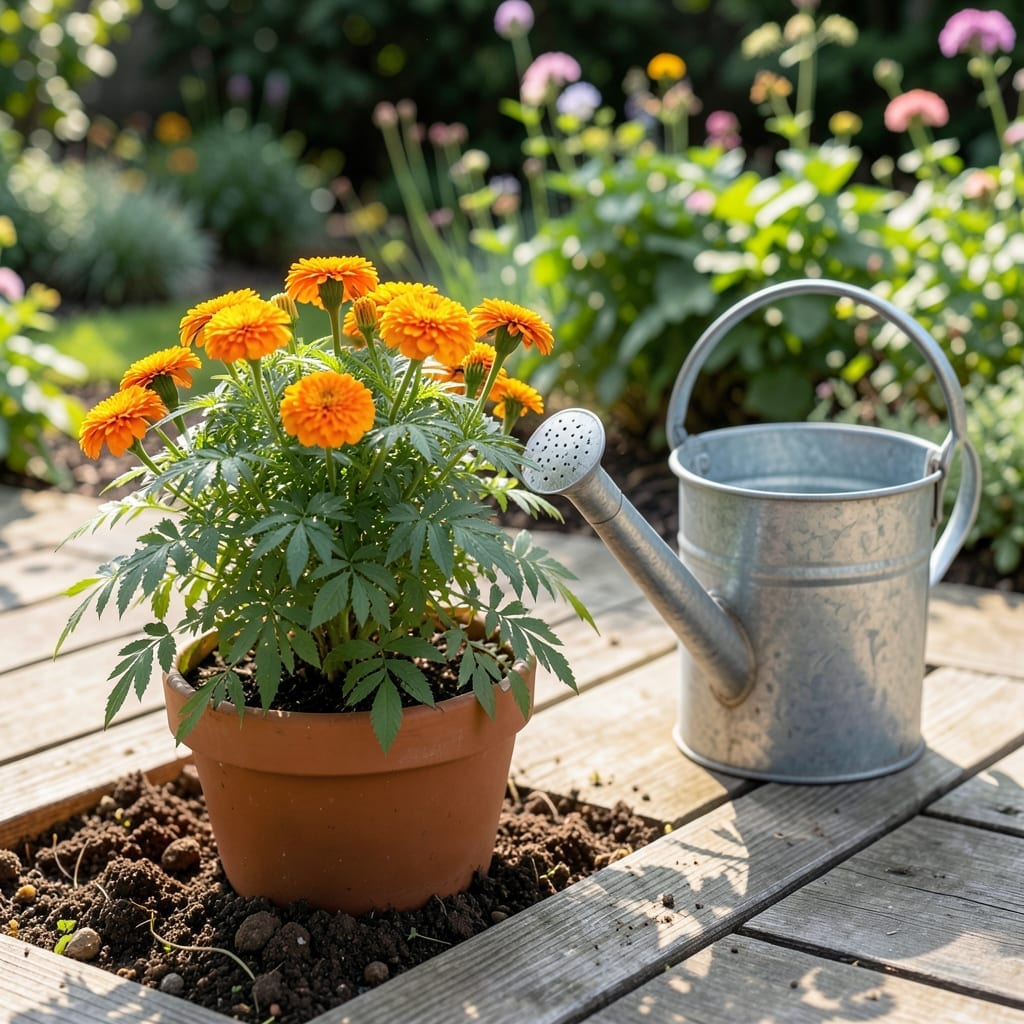
Marigolds bring vibrant color to any space, but potted 🌼 Marigold plants have very specific watering needs. One misstep with your watering can and those cheerful blooms quickly fade.
Unlike their in-ground cousins, container-grown Marigolds dry out faster and demand more attention. The difference between thriving and wilting often comes down to timing.
Discover the simple yet crucial schedule that keeps your potted Marigolds flourishing all season long. I’ll show you exactly what to watch for.
Potted marigolds need more frequent watering than in-ground plants because containers dry out faster. The soil volume is limited, and roots can’t reach deeper moisture.
I’ve found that seasonal changes dramatically affect watering needs. Hot summers demand more attention, while cooler months allow for less frequent care.
| Season | Watering Frequency | Key Notes |
|---|---|---|
| Spring | Every 5-7 days | Cool temps, moderate growth |
| Summer | Every 3-5 days | Hot weather, check daily |
| Fall | Every 7-10 days | Cooler temps, slower growth |
Pot size matters too. Small containers (6-8 inch pots) may need water every 2-3 days in peak summer heat. Larger pots hold moisture longer.
In hot climates, I check my marigolds daily by sticking my finger 1 inch into the soil. If it feels dry, it’s time to water. This simple test prevents both overwatering and underwatering.
For humid regions, you might stretch intervals slightly. But remember, potted plants still dry faster than those in garden beds. The container’s limited soil can’t retain moisture like open ground.
Clay pots breathe more than plastic, so they dry out quicker. If you love terra cotta, be prepared to water more often. I’ve learned this the hard way with wilted blooms.
Morning watering is ideal. It allows foliage to dry before evening, reducing fungal risks. I aim for before 10 AM when possible. This timing helps prevent disease while ensuring plants have moisture for the day.
Don’t forget that newly planted marigolds need more frequent watering. The first 2-3 weeks are critical for root establishment. After that, you can settle into a regular schedule.
Finally, always use pots with drainage holes. Without them, water pools at the bottom, suffocating roots. I’ve seen this ruin more marigolds than drought ever did.
🌼I always say potted marigolds will tell you when they’re thirsty. The trick is learning to read their signals before it’s too late. Drooping leaves and dry soil are classic signs of underwatering.
On the flip side, yellowing leaves and mushy stems often mean you’re overdoing it. I’ve ruined more than one pot by being too generous with the watering can.
Inconsistent watering is another common mistake. Marigolds thrive on routine, so try to water at the same time each day. I use a simple schedule to stay consistent.
Poor drainage is a silent killer. Always ensure your pots have drainage holes and use a well-draining potting mix. I learned this after losing several plants to soggy roots.
Another pitfall is watering the foliage instead of the soil. This can lead to fungal diseases. Always aim for the base of the plant, keeping leaves dry.
Finally, don’t forget that container size affects watering needs. Small pots dry out quickly, while large ones can hold too much moisture. I adjust my routine based on pot size.
🌼