
Beautiful Plants For Your Interior
Beautiful Plants For Your Interior
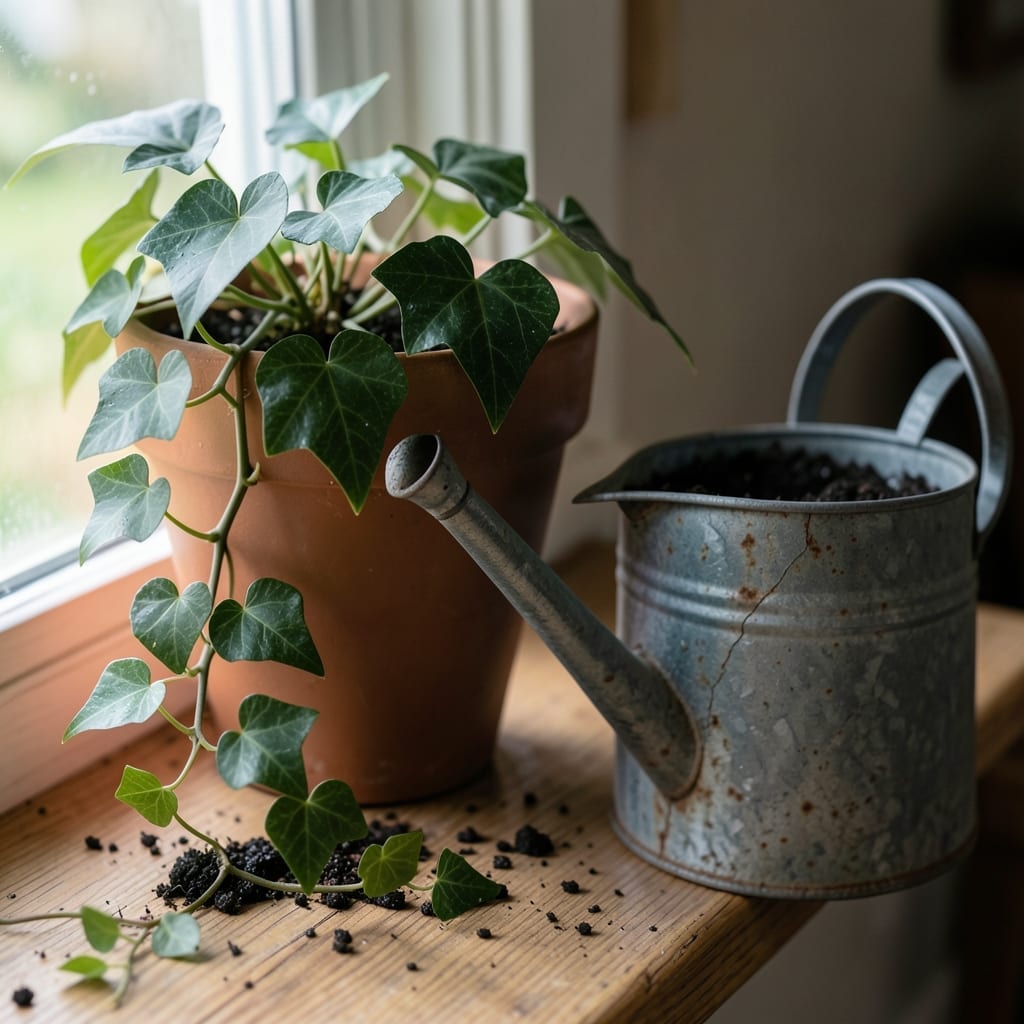
Overwatering or underwatering your 🌿 Ivy can be the difference between lush, vibrant foliage and a sad, wilting plant. It’s a delicate balance that many struggle to get right.
I’ve learned that the key lies in understanding your plant’s needs throughout the seasons. Whether your Ivy is indoors or out in zone 6, the approach changes.
Discover how to create the perfect watering rhythm that will keep your Ivy thriving year-round with these simple, proven techniques.
Getting the watering routine right for your ivy plants can feel tricky, but it’s all about matching the seasonal changes to your plant’s needs.
I’ve found that ivy thrives when you adjust your approach as the weather shifts, ensuring it gets just the right amount of moisture.
| Season | Watering Frequency | Key Notes |
|---|---|---|
| Spring | Weekly | New growth begins; keep soil moist |
| Summer | 2x per week | Hot weather; prevent dry soil |
| Fall | Weekly | Cooler temps; reduce frequency |
| Winter | Bi-weekly | Dormant phase; water sparingly |
In spring, your ivy wakes up from dormancy and starts growing rapidly. I recommend watering once a week to support this new growth, but always check the soil first.
The top inch of soil should be dry before you water again. This prevents root rot while keeping the plant hydrated.
When summer hits, the heat can dry out soil quickly. I switch to watering twice a week, especially if my ivy is in a container or exposed to full sun.
For outdoor ivy, a deep watering every 5-7 days works well, but morning watering is best to reduce evaporation.
Fall brings cooler temperatures, so I scale back to weekly watering. The plant’s growth slows, and too much water can lead to fungal issues.
Always feel the soil—if it’s still damp an inch down, wait another day or two before watering again.
In winter, ivy enters a semi-dormant state. I water every two weeks, just enough to keep the soil from completely drying out.
If your ivy is indoors, reduce watering even more, as indoor heating can dry the air but the plant needs less moisture overall.
Remember, these are general guidelines. Your ivy’s needs may vary based on humidity, soil type, and whether it’s in a pot or the ground. 🌿
Your ivy plant will often tell you when it’s thirsty or overwatered through subtle visual cues. I always keep an eye out for these signs to adjust my care routine accordingly.
Learning to read these plant signals helps prevent common issues like root rot or dehydration, ensuring your ivy stays healthy and vibrant.
When I notice dry, crispy leaves, it’s a clear sign my ivy needs more water. The soil will often pull away from the edges of the pot, creating visible gaps.
Drooping vines that don’t spring back when touched are another red flag. I check the soil with my finger—if the top 2 inches are bone dry, it’s time to water thoroughly.
On the other hand, yellow leaves often indicate overwatering. I look for mushy stems or a foul smell from the soil, which are sure signs of root rot.
An easy fix is to let the soil dry out completely before watering again. I also ensure my pots have drainage holes to prevent waterlogging.
Remember, ivy prefers consistently moist but not soggy soil. The key is finding that perfect balance between hydration and drainage. 🌿