
Beautiful Plants For Your Interior
Beautiful Plants For Your Interior
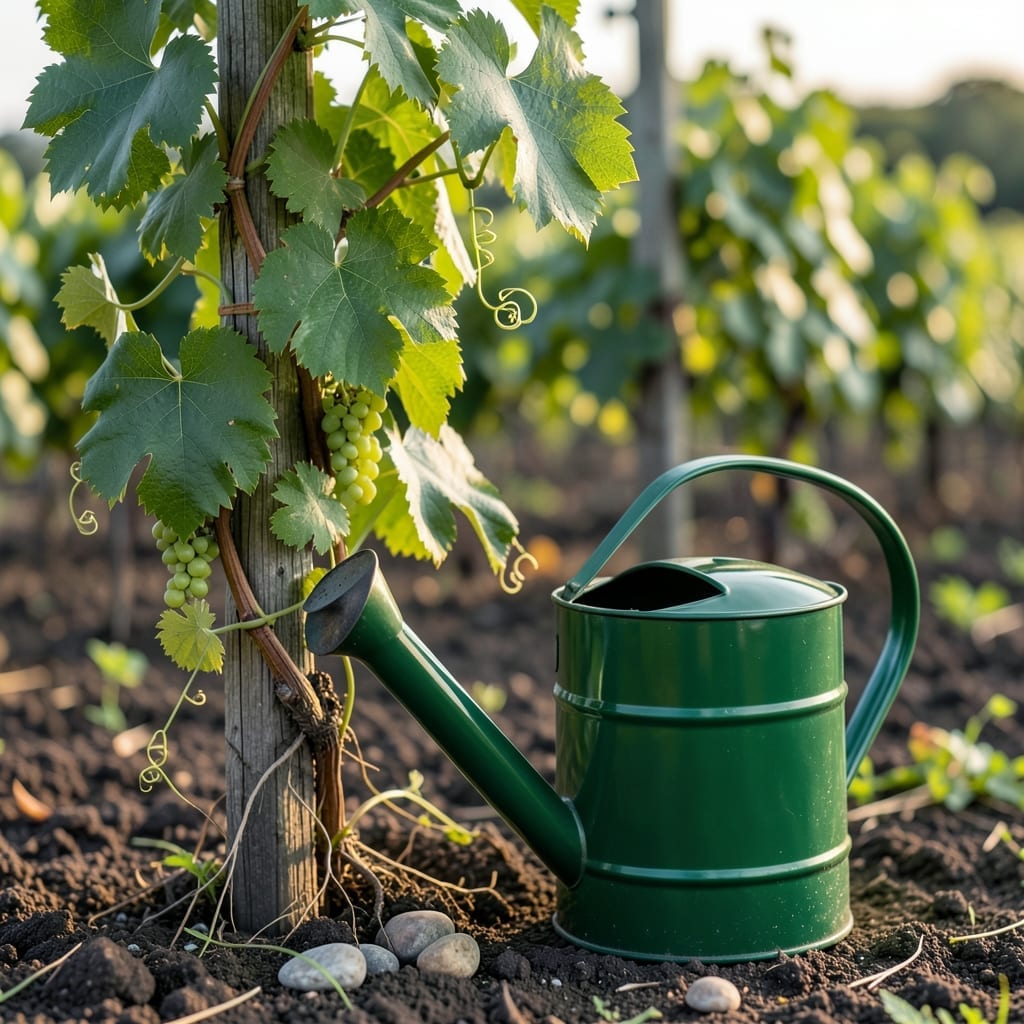
Watering your 🍇 Grape Vine correctly can make or break your harvest. Too little water leaves you with shriveled fruit, while too much invites rot and disease.
I’ve seen firsthand how a simple adjustment in watering frequency transforms struggling vines into thriving ones. The key is understanding your vine’s needs through each season.
Discover the easier way to keep your Grape Vine healthy with a seasonal schedule that ensures lush growth and a bountiful harvest.
Getting your grape vine watering schedule right is crucial for healthy growth and a plump harvest. Each season demands a different approach to meet your vine’s changing needs.
I’ve found that adjusting watering frequency based on the season prevents common issues like root rot or stunted fruit development. Let’s break it down by time of year.
| th” style=”color: #6fd544;”>Key Notes | td”>Weekly | tr”> | td”>2x per week | tr”> | td”>Weekly | tr”> | td”>Monthly | Only if soil is completely dry |
|---|
In spring, your grape vines are waking up from dormancy. I recommend a deep watering once a week to support new shoot growth. This helps establish a strong root system before summer.
When summer heat arrives, your vines will need more frequent watering. Aim for twice a week, but always check the soil moisture first. If it’s bone dry, it’s time to water.
As fall approaches, start tapering off. A weekly deep soak is usually enough, but reduce this as the leaves begin to turn. This helps the vine prepare for dormancy.
In winter, your vines need very little water. I only water mine once a month if the soil is completely dry. Overwatering now can lead to root rot.
Remember, these are general guidelines. Your local climate and soil type can affect how often you need to water. Sandy soil drains faster, while clay holds moisture longer.
For young vines, I suggest checking soil moisture more often. They have shallower roots and can dry out quickly. A simple moisture meter can be a game-changer.
Finally, always water in the early morning. This gives the vines time to absorb moisture before the heat of the day and reduces evaporation loss. 💧
Your grape vines can’t talk, but they give clear signals about their watering needs. I’ve learned to spot these signs early to prevent damage.
Watch for wilting leaves in the heat of the day—that’s often the first sign of underwatering. But don’t confuse it with natural evening droop.
Yellowing leaves are a red flag for overwatering. This happens when roots can’t breathe in soggy soil. I always check the soil moisture before adjusting my watering.
Cracked fruit is another common issue. This typically occurs when vines experience drought followed by heavy watering. Keep moisture levels consistent, especially during fruit development.
If you notice leaf drop or premature fruit drop, it might be a sign of water stress. This can happen with both too much and too little water, so check your soil.
For young vines, I pay extra attention to the soil at root depth. Stick your finger 2-3 inches into the soil—if it’s dry, it’s time to water.
Remember, these signs often appear gradually. Regular observation is key to catching issues early and keeping your grape vines thriving. 🌿