
Beautiful Plants For Your Interior
Beautiful Plants For Your Interior
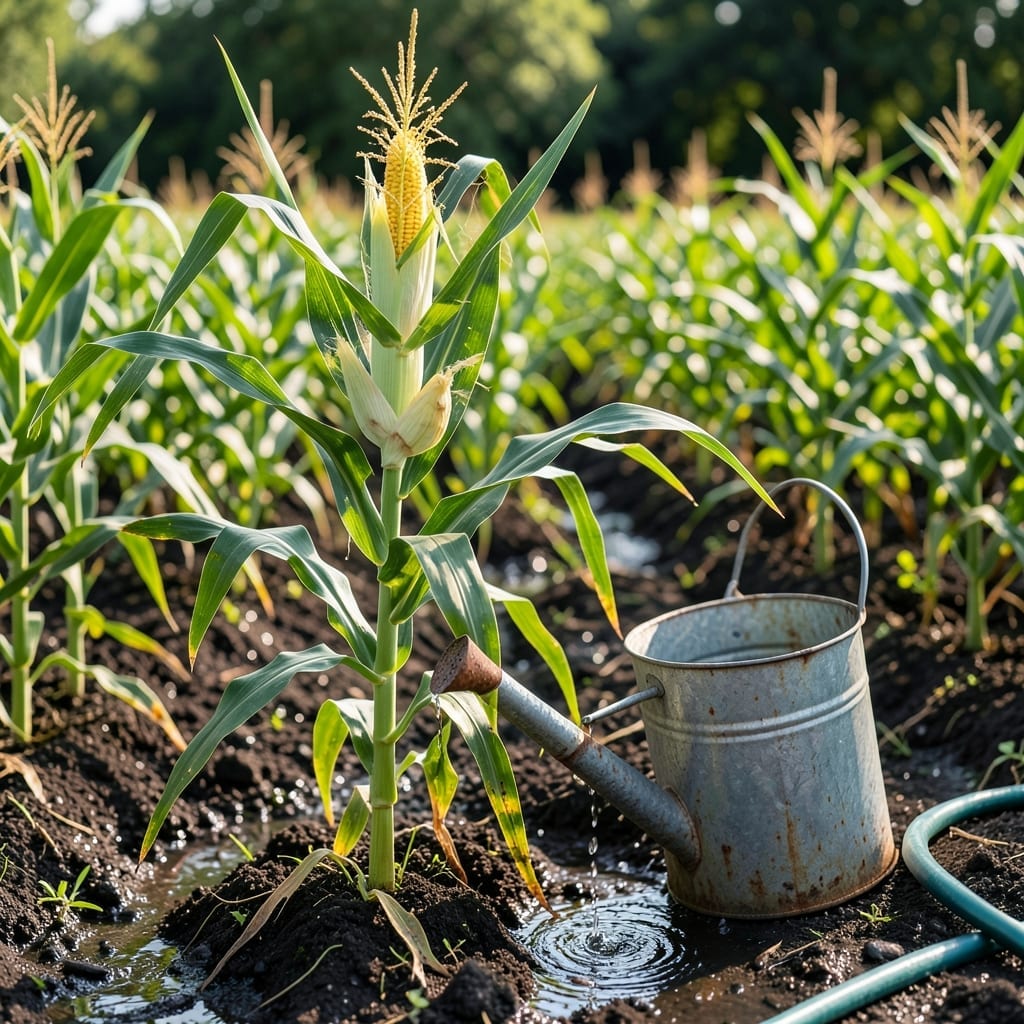
Watering corn correctly can mean the difference between a bountiful harvest and stunted, struggling stalks. Get the timing and technique wrong, and you risk wasting water or harming your crop.
The 🌽 Corn plant thrives with consistent moisture, but too much or too little can spell trouble. I’ve seen firsthand how a simple adjustment in watering habits can transform a mediocre yield into an abundant one.
What works for seedlings won’t cut it during tasseling, and understanding these stages is the key to success. Whether you’re a seasoned gardener or just starting out, nailing the watering schedule will set you up for healthy stalks.
Discover how to keep your Corn happy and hydrated all season long, from planting in April to harvest time in July. Let’s get it right from the start.
I’ve found that corn watering needs change dramatically as the plants grow. Early on, seedlings need consistent moisture to establish roots, but too much can rot them. As they mature, the water demands increase significantly.
During tasseling and ear development, your corn will be thirstiest. This is when 1-2 inches of water per week becomes critical. Missing this can lead to poor kernel development or stunted ears.
| Growth Stage | Water Frequency | Amount per Week | Key Notes |
| Germination | Every 2-3 days | 0.5 inches | Keep soil moist not soggy |
| Vegetative | Weekly | 1 inch | Deep root growth phase |
| Tasseling | 2-3 times | 1.5 inches | Critical period for yield |
| Maturity | Weekly | 1 inch | Reduce if rain is heavy |
In hot climates, I always check the soil 2 inches deep. If it’s dry, it’s time to water. Morning watering is best to prevent fungal issues and allow for maximum absorption before the heat.
For sandy soils, you may need to water more often as they drain quickly. Clay soils hold moisture longer, so adjust accordingly. I’ve seen drip irrigation work wonders for consistent moisture without water waste.
During drought conditions, don’t skimp. Corn is shallow-rooted and needs that top inch of soil to stay moist. A mulch layer can help retain moisture and reduce evaporation.
Remember, overwatering can be just as harmful as underwatering. Yellowing leaves and stunted growth can signal too much water, while wilting and dry leaf edges indicate thirst.
I always recommend testing soil moisture with your finger. If the top 1-2 inches are dry, it’s time to water. This simple test has saved me from both over and under-watering countless times.
Finally, adjust for rainfall. If Mother Nature provides 1 inch in a week, you can skip your scheduled watering. It’s all about consistency and observation in the garden. 🌽
I’ve learned that corn plants are pretty vocal about their water needs—you just need to know what to look for. Yellowing leaves can signal both overwatering and underwatering, but the pattern differs.
With too much water, leaves turn pale yellow and may feel soggy, while the soil stays wet long after watering. Root rot can set in, stunting growth.
For underwatered corn, leaves often curl inward and feel dry or brittle. The soil pulls away from the stalk, and growth slows noticeably.
I always check the soil moisture 2 inches deep—if it’s bone dry, it’s time to water. But if it’s muddy, I hold off for a day or two.
In hot climates, daily checks are a must, especially during tasseling and ear development. Morning watering helps prevent evaporation loss.
Remember, consistency is key. Corn thrives on steady moisture, so avoid letting the soil swing between extremes. A mulch layer can help retain moisture too 🌱